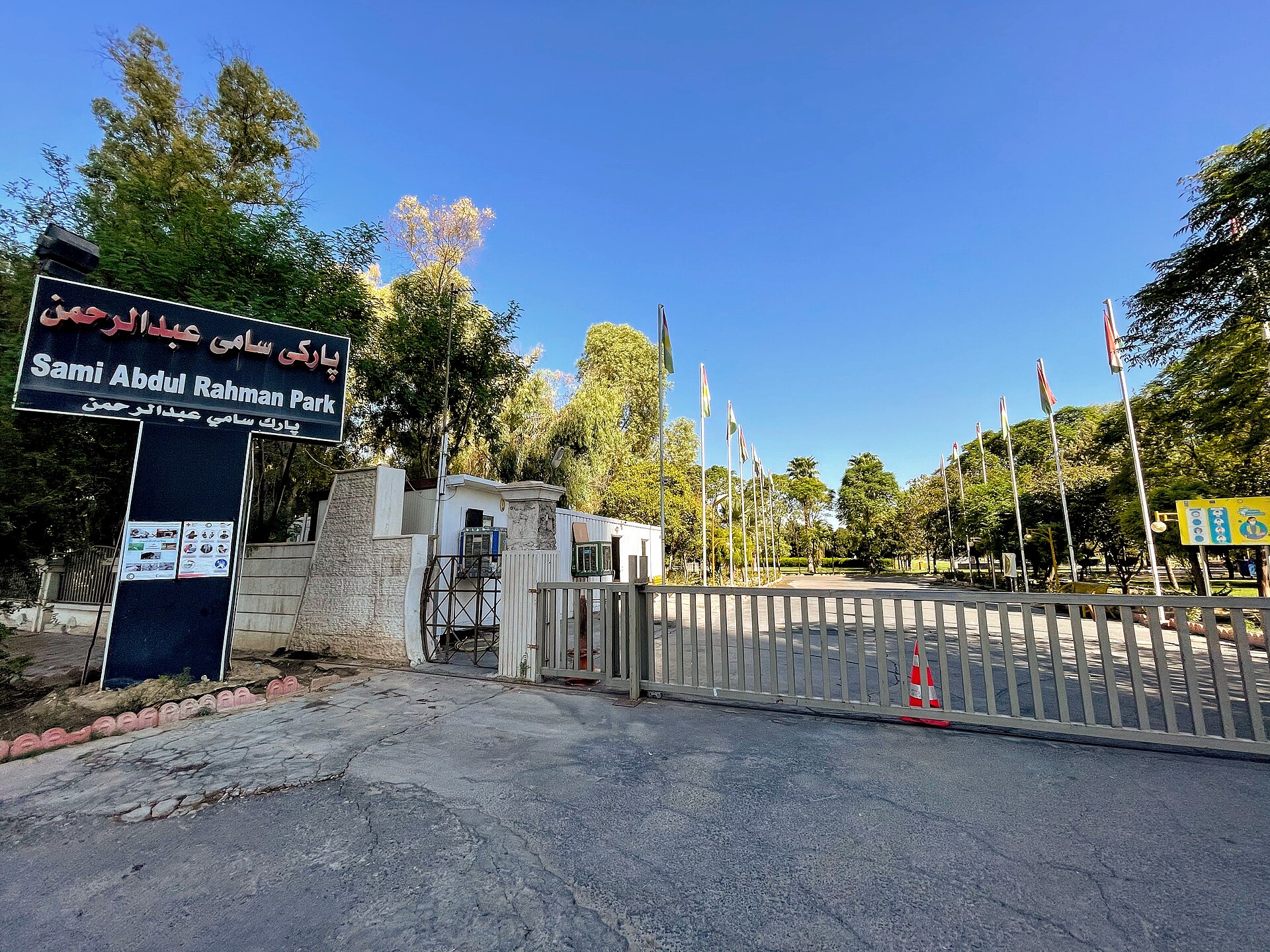
Sami Abdulrahman Park is one of those rare places in Erbil where the city’s usual hum fades into quiet greenery. It sits on land that once served a very different purpose—a former military complex, a relic of Iraq’s past. After the fall of Saddam Hussein’s regime, the site was handed over to Kurdish authorities, and today it bears the name of Sami Abdulrahman, a prominent Kurdish politician who was killed in a 2004 bombing. His name has become a quiet symbol of the changes that have reshaped the region over the past two decades.
The park’s design blends the old with the new in subtle ways. Some of the original military structures still stand, though they’ve been repurposed into cafes, exhibition spaces, and administrative offices. The main pathway, lined with neat lawns and classic-style lampposts, leads from the entrance to a central square. In the evenings, strings of lights add a soft glow, turning the space into something warm and inviting. The memorial to Sami Abdulrahman is simple but striking—a modest monument surrounded by flowers, a reminder of both loss and resilience.
Though not large, the park is carefully laid out to offer everything needed for a moment of rest. There are playgrounds with swings and slides for children, a small artificial pond with a fountain, and shaded pavilions where families and friends gather for picnics in the summer. When winter arrives, the park empties out, but even then, a walk along its paths can feel peaceful, especially when snow dusts the trees and benches.
One of the park’s greatest strengths is how easily it fits into daily life. Located just a short distance from Erbil’s center, it’s accessible on foot or by car, and there’s no entry fee, making it a favorite spot for locals. Public events—concerts, art exhibitions, and festivals—are often held here, drawing crowds, particularly during Kurdish national holidays when the park becomes a hub of celebration.
For many in Erbil, Sami Abdulrahman Park is more than just a green space; it’s a part of their routine. People meet here, stroll with their children, or simply sit on a bench to watch the day pass. On weekends, you might see elderly men playing backgammon under the trees while groups of young people chat on the benches. The atmosphere is unhurried, almost familial, a contrast to the busier, more tourist-oriented parts of the city.
Despite being relatively new—it opened in the early 2000s—the park has already become a familiar part of Erbil’s landscape. Its creation marked a shift in Iraqi Kurdistan, a quiet but meaningful transformation. There are no grand fountains or towering statues here, just well-kept paths, trees, and open spaces. It doesn’t try to impress; it simply exists, offering a pocket of calm in the middle of the city.
If you visit Iraqi Kurdistan, stopping by Sami Abdulrahman Park is worth it for one reason: it’s a place where you can see how locals live. There are no crowds of tourists, no guides trying to sell you a tour. Just a quiet corner where you can sit, listen to the birds, and feel the rhythm of a city that moves at its own pace. That’s its real value—not in grand monuments or historic landmarks, but in the way it quietly belongs to the people who use it every day.