Photo: ARKADIUSZ MARKIEWICZ, CC BY-SA 3.0
Ustroń Health Resort
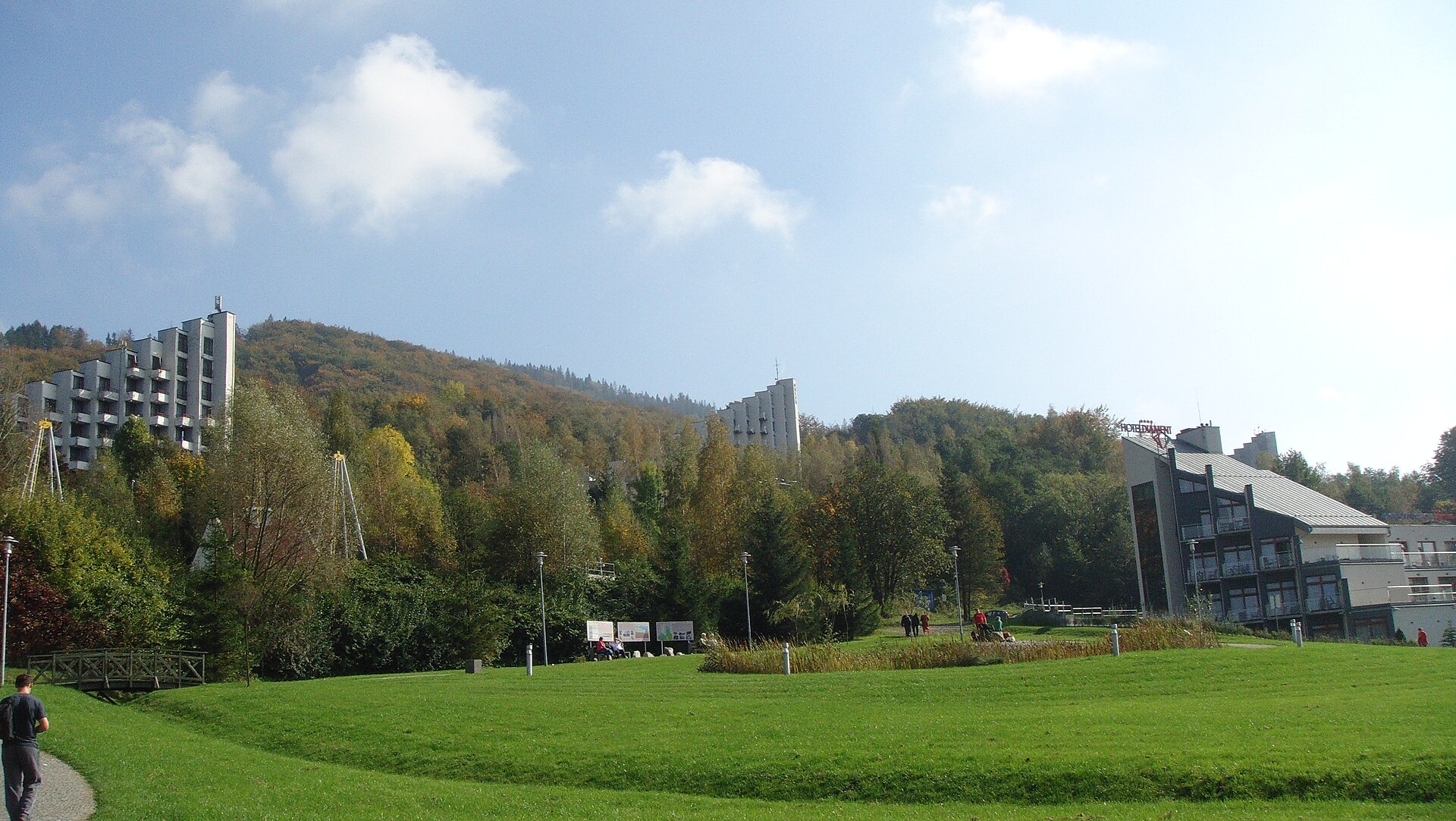
out of 5 0 ratingsPerched on the slopes of Równica mountain, the sanatorium in Ustroń feels like a place where time slows. The forest around it muffles the outside world, and the buildings—Art Nouveau with local craftsmanship—seem to belong here. Tall windows let in soft light, while wooden balconies and stone terraces add warmth. The complex sits in the landscape as if it grew from the earth.
The sanatorium opened in 1897, when Ustroń was becoming known as a mountain retreat. Back then, people came for lung ailments and nervous disorders, drawn by mineral springs and clean air. Patients arrived from across Europe, and it became one of the region’s key healing centers. Even through two world wars, it stayed open, changing only the languages spoken and the names on its signs.
The main building’s architecture shows an era when convalescence meant comfort. High ceilings stretch over spacious halls, marble staircases curve, and antique chandeliers glow. Some wings still have stained glass and carved woodwork, details that have seen generations of visitors. You can almost picture the people who once stayed here—those who treated rest as a way of life.
Today, the sanatorium still welcomes guests, though its focus has changed. Tuberculosis is no longer treated here, but wellness programs remain: mineral baths, massages, and restorative therapies using the same natural resources. Unlike modern spas, this place keeps the unhurried feel of an old retreat. Guests can walk through the park, visit the spring where water was once collected, or sit on a terrace with herbal tea, watching the mountains shift color.
Ustroń is a quiet town. It lacks the bustle of tourist hubs—no souvenir shops or crowds. Instead, there are narrow lanes, old villas, and small cafés with homemade pastries. The sanatorium sits slightly apart, though the main square is a twenty-minute walk away. The Beskidy mountains are modest but striking—rolling hills covered in forests that turn gold in autumn, good for hiking or skiing.
The sanatorium is part of the town’s history. It has survived wars, political changes, and economic shifts. Old radiators hum in the rooms, black-and-white photographs line the corridors, and the dining hall serves dishes that have been on the menu for generations. Some updates have been made, but the feel remains much the same. For those who remember it, it’s like stepping back into a slower world.
For some, Ustroń evokes nostalgia. For others, it’s a quiet escape. There are no crowds, no noise. Just long walks, quiet tea, and the sense that time can stretch if you let it. That’s why people return—not just for the treatments or the scenery, but for the feeling of a gentler pace.
Day around this place
Where else to go on the same day
Building the day…
Where it is
49.71865, 18.82511