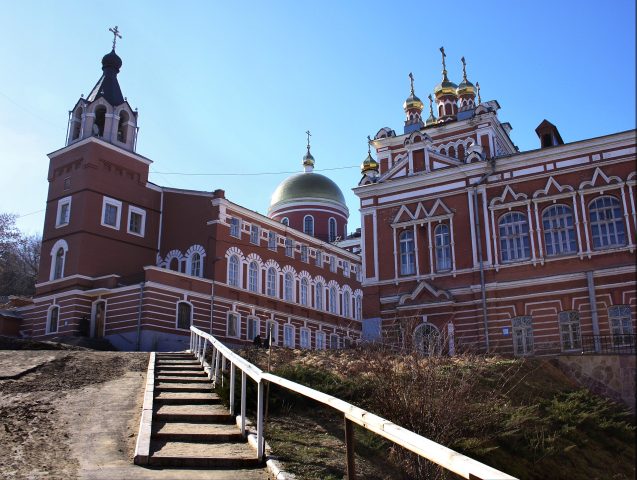
Samara Art Museum is the kind of place that doesn’t immediately demand attention but slowly reveals its depth to those who take the time to look. Tucked away in the heart of the city, it occupies a former merchant’s mansion built in the late 19th century, a structure that embodies the architectural style of Samara at the time. High ceilings, intricate plasterwork, and large windows fill the rooms with soft, natural light, creating an atmosphere where the art feels almost alive. From the outside, the building appears unassuming, but inside, it holds a collection that can surprise even those who don’t consider themselves art enthusiasts.
The museum’s origins trace back to 1897, when local patrons and artists first envisioned a public art collection for Samara. For decades, the growing assortment of works moved between temporary spaces until 1937, when it found a permanent home in the mansion on Kuybyshev Street. What began as a modest exhibition has since expanded into a full-fledged artistic center, showcasing Russian masters from the 18th century to the present day. Visitors can find works by well-known names like Aivazovsky, Shishkin, and Levitan, alongside pieces by lesser-known artists from the Samara region, whose contributions are no less significant.
One of the museum’s most compelling sections is its collection of Russian icons. Spanning the 16th to 19th centuries, these works include rare examples that have survived wars, revolutions, and the passage of time. Some icons once hung in local churches and monasteries, while others entered the collection through private donations. They aren’t just historical artifacts—they represent a living tradition, a reminder of how deeply art was woven into the fabric of daily life.
The museum also offers a fascinating look at Soviet art. The collection includes works from the 1920s and 1930s, a period when artists were experimenting with new forms of expression, as well as Socialist Realist pieces that reflect the ideals of their era. Some paintings were created by local artists, while others arrived through exchanges with major museums in Moscow and St. Petersburg. Walking through these galleries, you can see how artistic perspectives shifted over the 20th century—from the grand, revolutionary narratives of early Soviet art to more intimate, personal scenes.
Though smaller in scale, the museum’s Western European collection is equally intriguing. It features works by Dutch, Flemish, and Italian masters from the 17th and 18th centuries. These meticulously crafted paintings—still lifes, landscapes, and genre scenes—transport viewers to a time when every detail in a work of art carried meaning. Many of these pieces once adorned the homes of European aristocrats, and their presence in Samara adds an unexpected layer to the museum’s narrative.
Beyond its permanent collection, the museum regularly hosts temporary exhibitions that keep the space dynamic. These range from retrospectives of established artists to experimental projects by emerging creators. Such exhibitions ensure that the museum remains a living institution, where art isn’t confined to the past but continues to evolve. The rotating displays often draw connections between historical works and contemporary practices, making each visit feel fresh.
The museum also houses a department dedicated to decorative and applied arts. Here, visitors can explore everyday objects—furniture, porcelain, glassware, and metalwork—that offer a glimpse into how people lived in different eras. Particularly noteworthy are the items tied to the Samara region, such as local ceramics, embroidery, and crafts. These pieces serve as a reminder that art isn’t limited to paintings on walls; it’s also found in the objects people used and cherished in their daily lives.
A visit to the Samara Art Museum is more than just an encounter with art—it’s a chance to see the city in a new light. Known primarily as an industrial hub, Samara reveals its cultural depth here, a place where art has always played a vital role. The museum’s halls hold the stories of those who built and preserved the collection, of artists whose works survived upheavals, and of visitors for whom art remains an essential part of life.
The museum’s layout makes it easy to spend hours exploring without feeling rushed. The spacious rooms, gentle lighting, and thoughtful arrangement of exhibits create an environment where you can linger over details. Unlike the crowded halls of major museums in larger cities, this space allows for quiet reflection, letting the art speak for itself. In the end, the Samara Art Museum is a place where history, culture, and the present converge under one roof.