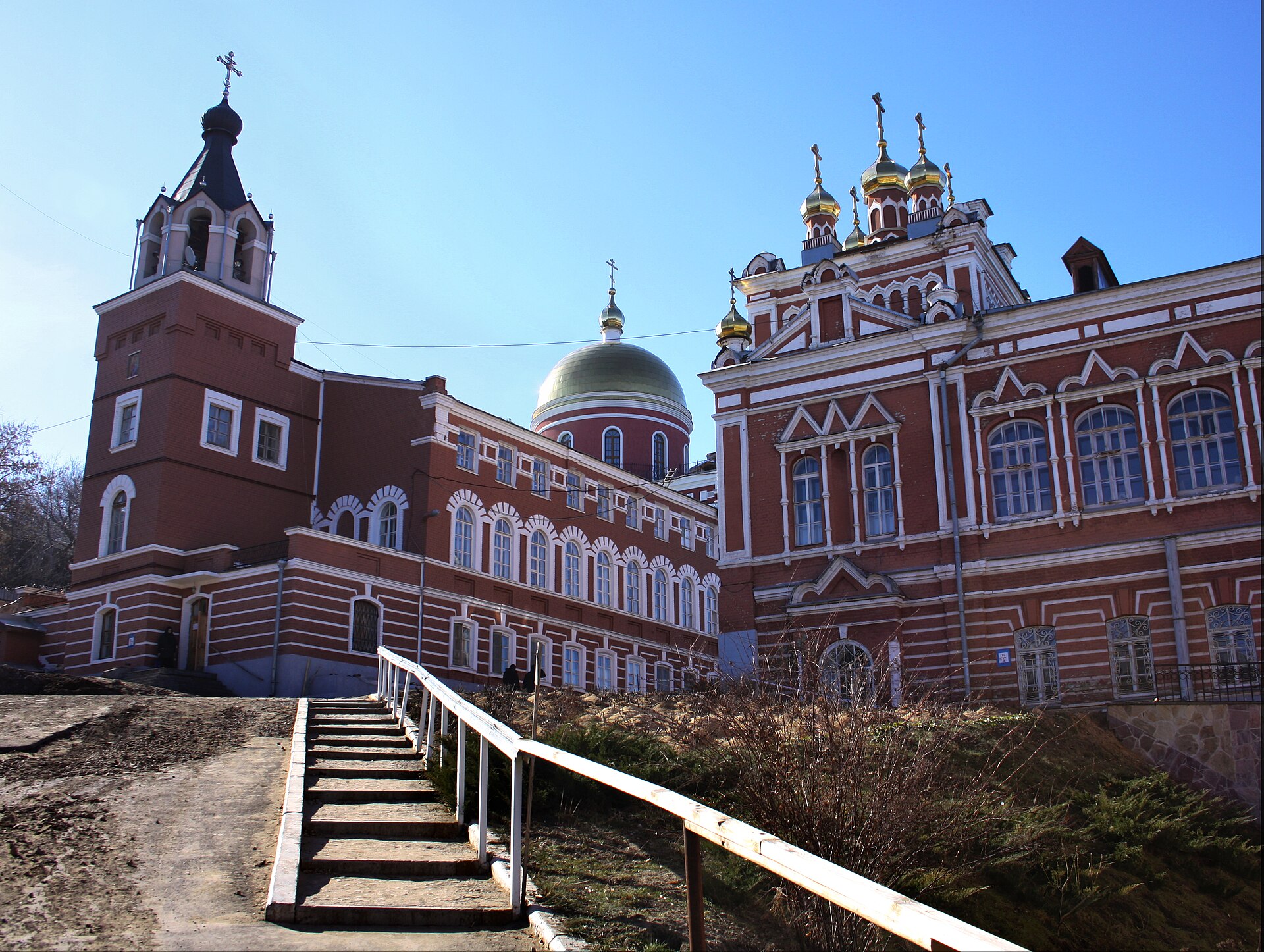
Iverian Convent in Samara is one of those rare places where time seems to slow down, as if the world beyond its walls moves at a different pace. Perched on the high banks of the Volga, its white walls and golden domes catch the sunlight from afar, standing out against the river’s vast expanse. The convent was founded in the late 19th century, when Samara was already a bustling commercial hub, yet still retained the quiet rhythm of provincial Russia—a city where merchants, officials, and pilgrims crossed paths, and where faith was woven into the fabric of everyday life. For many, the convent became a sanctuary, a place of stillness amid the relentless flow of time.
The convent’s origins trace back to 1861, when a small community of nuns settled here under the blessing of the local bishop. The early years were modest, marked by hard work and patience. Funds were gathered slowly, and construction progressed at a deliberate pace, as was fitting for a place built not for haste, but for devotion. The main church, dedicated to the Iverian Icon of the Mother of God, was completed two decades later. Its architecture reflects the era’s blend of traditional Russian church design and the subtle influences of European styles that had begun to seep into the country’s aesthetic.
The heart of the convent is the Church of the Iverian Icon, its walls adorned with frescoes depicting scenes from the lives of Christ and the Virgin Mary. The iconostasis, dark and richly gilded, commands attention with its solemn beauty. A revered copy of the Iverian Icon, brought from Moscow, holds a place of honor here. This icon has long been one of Russia’s most venerated, believed to offer protection and intercession. Its arrival in Samara was a significant event, and even now, people come to pray before it, seeking comfort or giving thanks for answered prayers.
The convent has never turned its back on the world. Even during the Soviet era, when many churches were destroyed or repurposed, the nuns continued their life of prayer in secret. They hid icons, crafted vestments from whatever materials they could find, and held services in defiance of the risks. After the Soviet Union’s collapse, the convent experienced a revival. Crumbling buildings were restored, frescoes repainted, and most importantly, the quiet, steadfast life of the community returned. Today, the convent welcomes all who seek solace, reflection, or a connection to the past.
Life here follows a strict rhythm, governed by the tolling of bells that call the nuns to prayer from dawn until dusk. Between services, the convent is wrapped in silence, broken only by birdsong or the rustle of leaves in the garden. The nuns tend to their daily tasks with quiet diligence—working in the garden, baking prosphora, sewing vestments, or crafting handmade goods. Their labor is unhurried, infused with prayer, as work here is seen as an extension of spiritual devotion. Visitors are often invited to share in the simple meals, tasting the convent’s bread or herbal tea made from plants gathered in the surrounding meadows.
Samara has long been known for its churches and monasteries, but the Iverian Convent stands apart. Its location on the high Volga bank offers sweeping views of the river and the distant landscapes beyond. There’s something about the atmosphere here—an absence of rush, a sense of timelessness, as if the place exists in its own unhurried rhythm. In summer, the convent is especially beautiful, with apple trees in bloom and the air filled with the scent of wildflowers. Winter transforms it into a snowy retreat, where the crisp air carries the clear sound of church bells.
For many in Samara, the convent is more than just a landmark. It’s a place tied to personal memories—childhood visits with grandparents, moments of grief or gratitude, life’s milestones like baptisms, weddings, and farewells. The convent has become woven into the city’s story, its history intertwined with the lives of countless people. Though Samara has grown into a modern metropolis with towering buildings and busy streets, the Iverian Convent remains a place where time seems to stand still, offering a quiet counterpoint to the rush of the outside world.
Visiting the convent isn’t just about admiring its architecture or learning its history. It’s about stepping into a different kind of space, where the silence feels light and inviting, as if encouraging you to pause and listen. You can sit on a bench in the courtyard, gaze at the Volga, and let the rustling leaves and distant sounds of the river remind you that there are still places where the soul can find rest. The Iverian Convent is one of them.