Saihuite is one of those rare places where the past doesn’t just feel distant—it feels alive. Tucked away in the Apurímac region of Peru, not far from the quiet town of Tamburco, this archaeological site sits in the folds of the Andes like a secret waiting to be discovered. There are no crowds here, no tour buses, no vendors hawking souvenirs. Just the wind moving through the grass, the weight of ancient stones, and the quiet hum of a landscape that has witnessed centuries unfold.
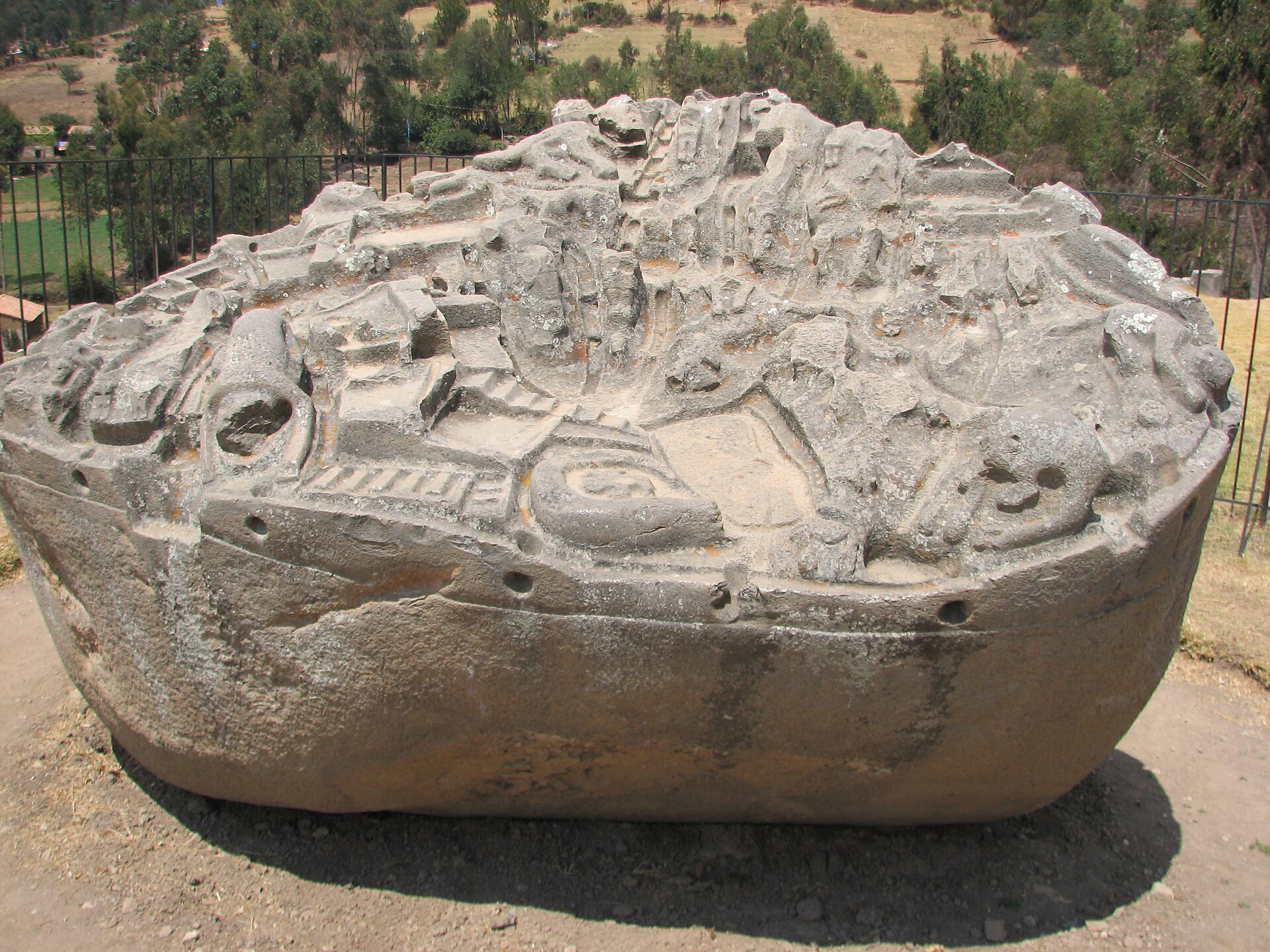
At the heart of Saihuite is a massive monolith, carved from a single slab of rock. Its surface is a labyrinth of intricate patterns—grooves, symbols, and figures that seem to shift under the light. No one knows for certain what they represent. Some scholars suggest it might be a map of the surrounding terrain, others see an astronomical calendar, and a few believe it served a ritual purpose, perhaps even a sacred one. The precision of the carvings is astonishing, especially considering the tools available to its creators. The stone itself is enormous, weighing several tons, and the question of how it was shaped and transported remains unanswered. Scattered around it are other stone structures—platforms, steps, hollows—that hint at a larger complex, though their exact function is just as mysterious.
The people who built Saihuite belonged to the Wari culture, a civilization that thrived between the 6th and 11th centuries, long before the rise of the Inca Empire. The Wari were one of the first true empires of the Andes, known for their advanced road networks, urban planning, and artistic achievements. Yet they left behind few written records, and much of what we know about them comes from the ruins they abandoned. Saihuite is one of those ruins—a tangible link to a society that once dominated vast stretches of what is now Peru. The site doesn’t offer easy answers, but it does provide a glimpse into how the Wari saw the world, how they marked their place in it, and what they considered sacred.
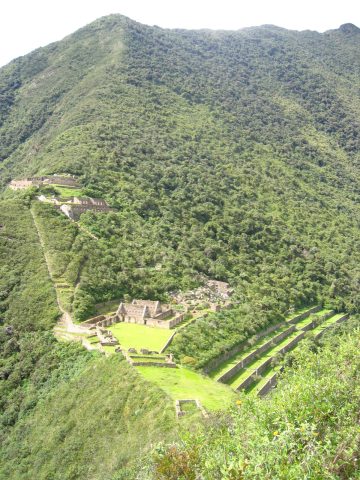
The journey to Saihuite is as much a part of the experience as the site itself. Apurímac is a region of stark beauty, where the land rises and falls in dramatic ridges, and rivers carve deep canyons into the earth. The road winds through small villages where life moves at a different pace. Women in brightly colored traditional dress spin wool as they walk, children herd sheep along the hillsides, and the houses, built from clay and stone, seem to grow out of the landscape rather than stand upon it. The air is thin and cool, carrying the scent of eucalyptus and woodsmoke. By the time you reach Saihuite, the modern world feels far away.
There are no signs here explaining what you’re looking at, no neatly labeled exhibits. That absence of interpretation is part of what makes the place so compelling. The monolith stands in silence, its carvings speaking in a language no one has fully deciphered. Locals treat the site with reverence, leaving offerings of coca leaves, flowers, or small coins at its base—a quiet acknowledgment of its spiritual significance. On clear days, the sunlight catches the grooves in the stone, making the patterns appear almost three-dimensional, as if the figures might step out of the rock at any moment.
Saihuite isn’t the kind of place you visit for a quick photo opportunity. It demands time and attention. Some travelers spend hours sitting on the grass, tracing the carvings with their fingers, trying to imagine the hands that shaped them centuries ago. Others simply stand in silence, listening to the wind and the distant sound of a stream cutting through the valley. There are no hotels nearby, no restaurants with printed menus. If you stay overnight, it’s likely in a family’s home, where dinner is cooked over an open fire and the conversation turns to stories of mountain spirits and ancient rituals.
What makes Saihuite special is the way it resists easy understanding. It doesn’t offer a neat narrative or a clear lesson. Instead, it presents a series of questions. Why was this place chosen? What ceremonies took place here? How did the Wari perceive the world, and what did they hope to capture in stone? Archaeologists may one day uncover more clues, but for now, Saihuite remains a place where history and myth blur. The stones don’t give up their secrets easily, and perhaps that’s the point. Some mysteries aren’t meant to be solved—only experienced.
For those who make the journey, Saihuite is more than a destination. It’s a reminder of how much of the past remains hidden, how much we still don’t know. It’s a place where the land itself feels like a witness to something greater, where the weight of time is tangible. You don’t just see Saihuite—you feel it. And long after you’ve left, the memory of those carved stones lingers, as if the place has left its mark on you in return.