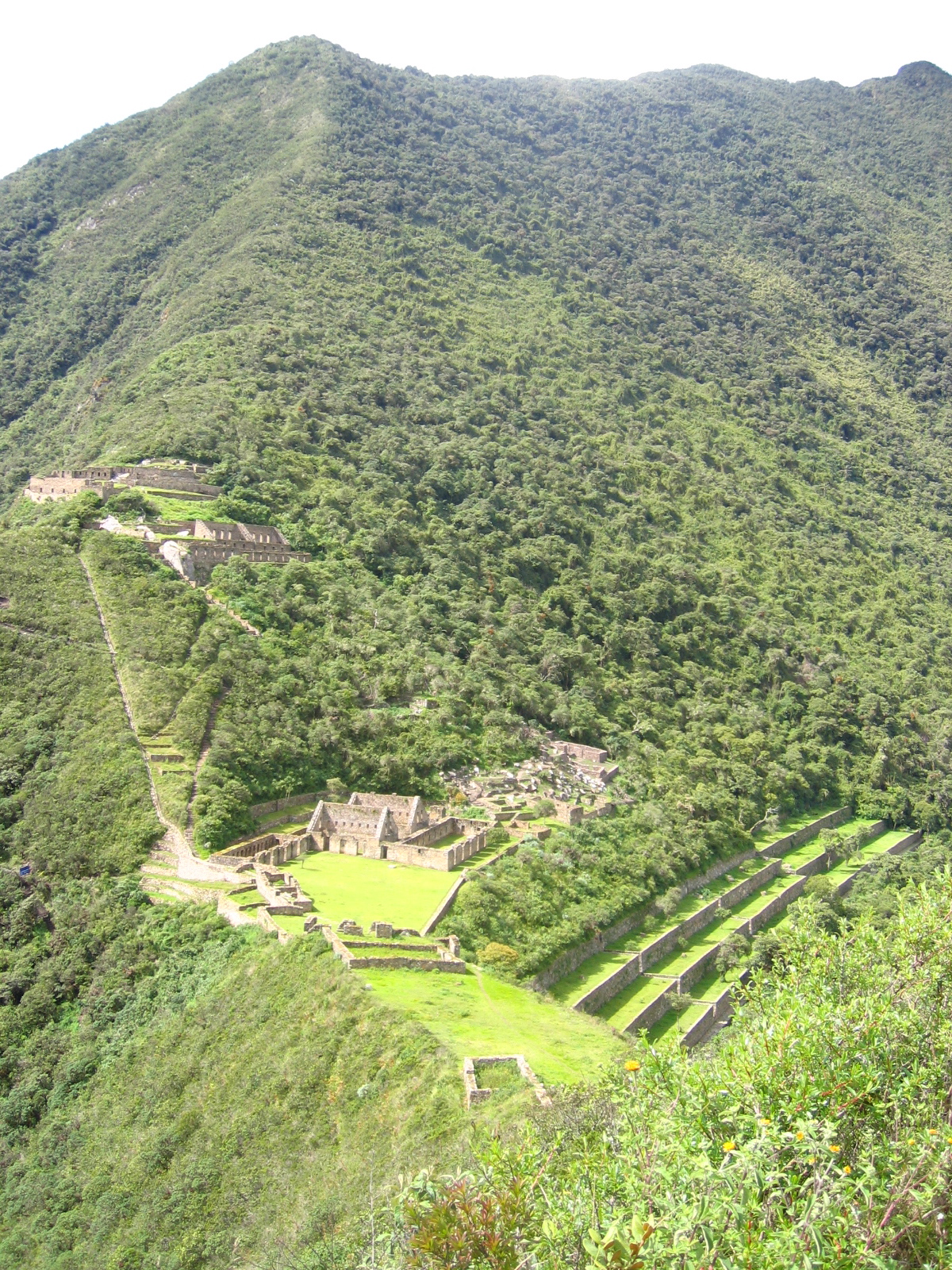
Choquequirao sits quietly in the Peruvian Andes, a place where the past lingers in the mist and the stones whisper stories of the Inca Empire. Unlike its more famous counterpart, Machu Picchu, this archaeological site remains largely untouched by mass tourism, offering a rare glimpse into a civilization that once thrived in these rugged mountains. Perched at around three thousand meters above sea level, it was built in the fifteenth century during the reigns of Pachacuti and Túpac Yupanqui, when the Inca Empire was at its peak. The name, meaning "Cradle of Gold" in Quechua, hints at the wealth that once flowed through these lands, though its true value lies not in gold but in the layers of history etched into its terraces and plazas.
The city was more than just a ceremonial retreat—it was a living, breathing hub of activity. While Machu Picchu may have served as a royal estate, Choquequirao was a practical stronghold, home to artisans, farmers, and priests who kept the empire running. Its strategic location allowed it to function as an administrative center, a religious site, and a storage point for food supplies that sustained both the army and the local population. The Incas designed it with purpose, dividing the complex into residential, agricultural, and ceremonial zones, each serving a distinct role in the daily life of the city. The precision of their stonework, with blocks fitted so tightly that not even a blade can slip between them, speaks to their mastery of engineering—a craft that has allowed these structures to endure centuries of earthquakes and erosion.
What makes Choquequirao truly remarkable is how seamlessly it blends into the landscape. The terraces, cascading down the mountainside like giant steps, were not just for farming; they were a testament to the Inca’s deep understanding of their environment. These platforms prevented soil erosion while providing space to grow maize, potatoes, and other crops that fed the empire. Some scholars believe the terraces also held symbolic meaning, representing the connection between the earth and the heavens. The city’s layout follows the natural contours of the land, with buildings aligned to capture the sun’s movement and the flow of water. Even today, the harmony between architecture and nature is striking, as if the mountains themselves dictated where each stone should be placed.
Reaching Choquequirao is part of the experience. There are no trains or buses here—only a multi-day trek that begins in the small town of Cachora. The journey winds through cloud forests, across high-altitude passes, and into deep valleys where the Apurímac River carves its way through the landscape. Along the way, travelers pass through villages where locals offer simple meals and a place to rest, their lives still tied to the rhythms of the land. The trek is demanding, but the reward is a sense of discovery that few places can offer. By the time you arrive, the effort feels like a pilgrimage, a slow unraveling of the Inca’s world.
Despite being known to explorers since the nineteenth century, much of Choquequirao remains unexplored. Archaeologists continue to uncover new structures beneath the earth and vegetation, making each visit feel like a step into the unknown. The site’s remote location has preserved its sense of mystery, and while the Peruvian government has taken steps to improve access, it remains far less crowded than other Inca ruins. There are no souvenir stalls or guided tours here—just the quiet hum of the wind and the occasional call of a bird echoing through the valleys. For those willing to make the journey, it offers something increasingly rare: a place where history feels alive, not just preserved.
The people who live in the surrounding villages are descendants of the Incas, and their connection to Choquequirao runs deep. Many still speak Quechua and maintain traditions that have been passed down for generations. They see the ruins not as a relic of the past but as a living part of their heritage, a place where their ancestors’ stories are still told. Visitors who take the time to talk with them often leave with a deeper understanding of what this site means—not just as a historical monument, but as a testament to resilience and continuity.
Choquequirao is not a place for those seeking convenience or instant gratification. It demands time, effort, and a willingness to step away from the well-trodden path. But for those who make the journey, it offers something far more valuable: a chance to see Peru beyond the postcards. Here, the mountains are not just a backdrop but a living presence, shaping the way people have lived for centuries. The ruins themselves are a reminder of what the Incas achieved—how they carved a civilization out of the wilderness and left behind a legacy that still resonates today.
Spending time at Choquequirao is like stepping into a different era. You can wander through the plazas, trace the outlines of ancient buildings, or simply sit on a stone and watch the light change over the valley. The Apurímac River, far below, rushes through the canyon, its sound a constant reminder of the power of nature. As the sun sets, the mountains take on a golden hue, and for a moment, it’s easy to imagine what it must have been like to stand here hundreds of years ago. The Incas chose this place for a reason—its beauty, its isolation, its sense of timelessness. And for those who follow in their footsteps, it remains just as compelling.