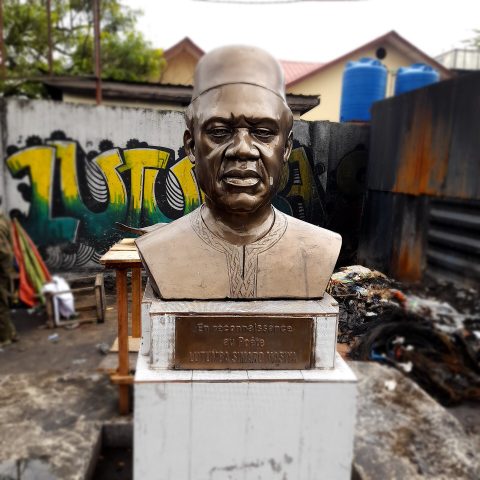
Zongo Market is one of those places in Kinshasa where the city’s energy feels most alive. It’s not just a market—it’s a sprawling, chaotic heartbeat of daily life, where trade, culture, and history collide in a way that’s both overwhelming and fascinating. If you want to understand Kinshasa beyond the surface, this is where you’ll find it: in the shouts of vendors, the scent of grilled fish and spices, the endless negotiation over prices, and the way people move through the narrow alleys as if they’ve memorized every step.
The market’s origins trace back to the mid-20th century, when Kinshasa was still Léopoldville, a city growing at an explosive pace under Belgian colonial rule. As the population swelled with migrants from rural areas and neighboring countries, informal trading hubs like Zongo emerged to meet the demand for goods and services. The name itself comes from the Lingala word *zongo*, which historically referred to settlements of West African traders—often Hausa or Yoruba—who established themselves in Central African cities. Over time, the term stuck, and Zongo became synonymous with this particular market, though its character has evolved far beyond its early roots.
Walking through Zongo is like stepping into a living organism. The market stretches across several blocks, with no clear boundaries—just a gradual transition from the relative calm of the surrounding streets into the dense, pulsing core of activity. Stalls are packed tightly together, some little more than a tarp stretched over a wooden frame, others more permanent structures made of corrugated metal or concrete. You’ll find everything here: fresh produce stacked in pyramids of color, secondhand clothes spilling out of bales, electronics of questionable origin, traditional medicines in glass jars, and piles of household goods that seem to have been sourced from every corner of the world. The sheer variety is staggering, but it’s the way things are sold that makes Zongo unique. There’s no fixed pricing, no polite haggling—just a constant, fluid exchange where the value of an item is whatever buyer and seller agree on in the moment.
The market is also a social space, a place where Kinshasa’s diversity is on full display. Here, you’ll hear Lingala, Swahili, French, and a dozen other languages spoken in a single conversation. The crowd is a mix of locals doing their daily shopping, traders from other parts of the country, and the occasional foreigner brave enough to venture in. It’s not uncommon to see a group of women in bright pagnes bargaining over fabric, while nearby a young man flips through a stack of pirated DVDs, or a street food vendor fries plantains over an open flame. The atmosphere is one of controlled chaos, where everyone seems to know their role and the unspoken rules of how to navigate the crowd.
For all its vibrancy, Zongo is not an easy place to visit if you’re unprepared. The sheer scale can be disorienting, and the lack of signage or clear organization means you’ll need to rely on instinct—or the kindness of strangers—to find your way. Pickpockets are a reality, as they are in any crowded market, so keeping an eye on your belongings is essential. The heat and humidity can be oppressive, especially in the middle of the day, and the air is thick with dust, exhaust fumes, and the smell of cooking oil. But those who take the time to observe rather than just pass through will notice the small moments that make Zongo special: the way a vendor might offer a free sample of fruit to a regular customer, or how a group of children weave through the stalls playing a game of tag, completely at home in the madness.
Zongo’s significance goes beyond commerce. It’s a place where Kinshasa’s resilience is on full display. The market has survived economic crises, political upheaval, and even periods of neglect, yet it continues to thrive because it serves a fundamental need. For many Congolese, Zongo is not just a place to buy goods—it’s a lifeline. Small traders depend on it for their income, families rely on it for affordable food, and artisans use it as a showcase for their crafts. In a city where formal employment is scarce, the market provides opportunities that might not exist elsewhere. It’s also a space where tradition and modernity coexist. You might see a vendor selling hand-carved wooden masks next to a stall offering the latest Chinese smartphones, or a group of elders debating politics over a game of checkers while teenagers scroll through their phones nearby.
The architecture of Zongo, if you can call it that, is purely functional. There’s no grand design, no attempt at aesthetic cohesion—just a patchwork of structures built to serve their purpose. Some stalls are little more than a table and an umbrella, while others are more elaborate, with shelves and counters displaying their wares. The ground is uneven, often littered with discarded packaging or the occasional puddle from a recent rain. Yet there’s a certain beauty in this lack of pretense. Zongo doesn’t try to impress; it simply *is*, and that authenticity is part of its appeal. It’s a place where the city’s raw, unfiltered reality is on display, unmediated by tourism or gentrification.
Visiting Zongo is not about ticking off a sightseeing checklist. It’s about experiencing Kinshasa in its most unvarnished form. There are no guided tours here, no neatly packaged narratives about the market’s history or significance. Instead, you’re left to piece together the story yourself, through observation and interaction. If you’re lucky, you might strike up a conversation with a vendor who’s been working here for decades, or find yourself invited to share a meal at one of the makeshift food stalls. These moments are fleeting but memorable, offering a glimpse into the lives of the people who keep Zongo running.
In many ways, Zongo is a microcosm of Kinshasa itself: loud, messy, unpredictable, but full of life. It’s not a place for those seeking comfort or order, but for those willing to embrace the chaos, it offers an experience that’s hard to find anywhere else. The market doesn’t exist to cater to outsiders—it exists because the city needs it, and that’s what makes it so compelling. Whether you come to shop, to people-watch, or simply to soak in the atmosphere, Zongo leaves an impression that lingers long after you’ve left its crowded alleys behind.