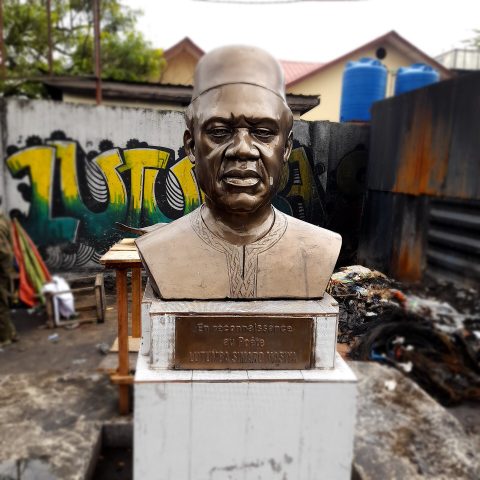
The Patrice Lumumba Monument stands in the heart of Kinshasa, a quiet but powerful reminder of Congo’s turbulent journey toward independence. Unveiled in 1967, the statue honors Patrice Lumumba, the country’s first democratically elected prime minister, whose life and death became symbols of both hope and the violent struggles that followed colonial rule. The monument is simple in design—a bronze figure of Lumumba with an outstretched arm, as if addressing a crowd—but its presence carries weight far beyond its physical form. For many Congolese, it represents not just a man, but an era of idealism cut short by political betrayal and foreign intervention.
Kinshasa itself is a city of contrasts, where the past and present collide in unexpected ways. The monument is located in what was once the administrative center of Léopoldville, the colonial name given to the city under Belgian rule. The area around it still bears traces of that history, with wide boulevards and grand buildings that once served as symbols of European authority. Yet today, the streets hum with the energy of a modern African metropolis, where vendors sell everything from fresh mangoes to secondhand electronics, and the sound of soukous music drifts from open-air bars. The monument, though often overlooked by hurried passersby, remains a focal point for those who pause to reflect on what it means to build a nation.
Lumumba’s story is one of tragedy and defiance. Born in 1925 in the Kasai region, he rose from modest beginnings to become a leading voice in Congo’s fight for independence. His speeches, fiery and unapologetic, captured the frustration of a people long oppressed by colonial rule. When Congo gained independence in 1960, Lumumba’s tenure as prime minister was brief but intense. His calls for true sovereignty, including control over the country’s vast mineral wealth, alarmed both Belgian interests and the Cold War powers. Within months, he was deposed in a coup, arrested, and ultimately executed in 1961 under circumstances that remain shrouded in controversy. The exact details of his death are still debated, but what is clear is that his murder marked the beginning of decades of instability in Congo.
The monument itself is unassuming, almost overshadowed by the bustle of the city. Unlike grand memorials that dominate public squares, it blends into the urban landscape, as if waiting for those who seek it out. The statue depicts Lumumba in a suit, his posture confident, his gaze directed toward the future. The base is often adorned with flowers or small offerings, left by visitors who see him as a martyr for African liberation. Nearby, the streets tell their own stories—of students rushing to class, of market women haggling over prices, of the occasional political rally where old grievances are aired anew. The monument is not just a tribute to one man, but a quiet witness to the ongoing struggles of a nation still finding its footing.
For many Congolese, Lumumba’s legacy is complicated. Some revere him as a national hero, a man who dared to challenge the status quo when few others would. Others see him as a flawed leader, whose idealism clashed with the harsh realities of post-colonial politics. His name is invoked in speeches, his image appears on murals and posters, and his words are still quoted by those who believe in a Congo free from foreign interference. Yet his story is also a cautionary tale, a reminder of how easily progress can be derailed by greed and external forces. The monument, then, is not just a static memorial but a living part of Kinshasa’s identity, a place where history is both honored and debated.
The area around the monument has changed over the years, reflecting the broader transformations of the city. In the 1960s and 70s, Kinshasa was a hub of Pan-African culture, a place where artists, musicians, and intellectuals gathered to imagine a new future for the continent. The monument was part of that era, a symbol of the optimism that followed independence. Today, the city is larger, louder, and more chaotic, with a population that has swelled to over ten million. The streets around the monument are lined with shops and cafes, where young Congolese gather to discuss everything from politics to football. Yet despite the changes, the monument remains a constant, a small but significant marker of the past in a city that is always moving forward.
Visiting the Patrice Lumumba Monument is not like visiting a typical tourist site. There are no guided tours, no gift shops, no grand ceremonies. Instead, it is a place for quiet reflection, a spot where locals and visitors alike can pause to consider the weight of history. On any given day, you might see an elderly man stopping to pay his respects, or a group of students taking photos for a school project. The monument is not roped off or heavily guarded; it is part of the city’s fabric, as much a part of Kinshasa as the Congo River that flows nearby. For those who take the time to visit, it offers a glimpse into the soul of a nation that has endured so much yet still dares to hope.
In many ways, the monument is a microcosm of Congo itself—unfinished, resilient, and full of contradictions. It stands as a testament to the ideals of independence and self-determination, even as the country continues to grapple with the challenges of governance, corruption, and foreign exploitation. Lumumba’s vision of a united, prosperous Congo remains unrealized, but his legacy endures in the hearts of those who refuse to give up on that dream. The monument, then, is not just a tribute to the past, but a call to the future—a reminder that the struggle for true freedom is never truly over. For anyone who visits Kinshasa, it is a place worth seeking out, not for its grandeur, but for the stories it holds and the questions it leaves unanswered.