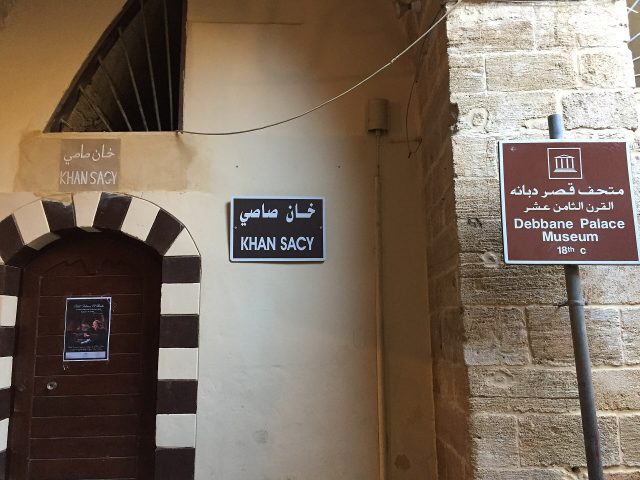
Tyre’s Old City souk is one of those rare places where the past isn’t just remembered—it’s still being lived. Walking through its narrow alleys feels less like visiting a historical site and more like stepping into a story that hasn’t quite ended. The stones underfoot are worn smooth by centuries of footsteps, the walls of the sandstone buildings bear the marks of time, and the air carries the scent of spices, fresh bread, and woodsmoke. This is where Tyre, once one of the most powerful cities of the ancient world, still breathes.
The souk isn’t laid out in any orderly fashion. Instead, it sprawls organically, a maze of tight passageways where shops, workshops, and homes blend together without clear distinction. A spice merchant’s stall might stand next to a family’s living quarters, while a few steps away, a craftsman hammers copper into shape using techniques passed down through generations. There’s no grand design here, just the slow accumulation of life, layer upon layer. Some of the buildings incorporate fragments of older structures—Roman columns, Byzantine arches—leftovers from the city’s long history that were simply absorbed into the fabric of daily existence.
One of the most striking things about the souk is how little has changed in the way things are made. In a small workshop, you might watch glass being blown using methods that would have been familiar to Phoenician artisans thousands of years ago. The famous Tyrian purple dye, once worth its weight in gold, is no longer produced here, but the skill of the craftsmen remains. Nearby, a coppersmith shapes pots and trays with the same tools his ancestors would have used, while a potter turns clay into vessels decorated with patterns that echo those found on ancient amphorae. These aren’t just demonstrations for tourists; this is how people still earn their living.
Mornings in the souk start early. By dawn, the first vendors have already set up their stalls, arranging pyramids of pomegranates, figs, and olives, or hanging bunches of fresh herbs. Fishermen arrive with the day’s catch, their baskets filled with sea bass, sardines, and octopus, while bakers pull flatbreads from wood-fired ovens, the dough still steaming. The market hums with activity long before most visitors arrive, a rhythm of bargaining, gossip, and the clatter of metal trays being stacked. Arabic is the dominant language, but you’ll hear French and English too, along with the universal language of haggling—raised eyebrows, dramatic sighs, and the occasional burst of laughter.
Spices are one of the souk’s great attractions. They’re sold in bulk, piled high on wooden platters in vibrant heaps: golden turmeric, deep red paprika, earthy cumin, and the warm, citrusy scent of cardamom. Dried herbs like za’atar, sumac, and mint are staples of Lebanese cooking, and the vendors are usually happy to explain how to use them. If you’re lucky, you might stumble upon a rare find—a bottle of small-batch olive oil from a nearby village, or a wheel of fresh halloumi, still damp from the brine. Sampling is encouraged, and it’s not uncommon to leave with a few extra purchases after being persuaded by a particularly enthusiastic seller.
The souk isn’t just a place to shop; it’s where the city’s social life unfolds. Locals come here as much for conversation as for commerce. A group of old men might sit outside a café, sipping thick, sweet coffee from tiny cups while debating politics or football. Women gather around a fruit stall, comparing prices and swapping recipes. Children dart between the stalls, dodging carts and baskets, while teenagers pause to check their phones before disappearing into the crowd. The market has always been the heart of Tyre, a place where news travels faster than any newspaper and where deals are struck over a shared meal.
As the day wears on, the souk takes on a different character. The midday heat drives some vendors to close their shutters for a few hours, while others press on, fanning themselves with newspapers or sipping cold drinks. By late afternoon, the pace picks up again, with shoppers stopping by after work or school. The light softens, casting long shadows across the uneven stones, and the sounds of the market mingle with the call to prayer drifting from nearby mosques. If you linger into the evening, you might hear the strains of a oud or buzuq, traditional instruments that connect modern Tyre to its ancient past as a center of music and culture.
For outsiders, the souk can feel overwhelming at first. There’s no map to follow, no clear path, and the sheer volume of sights, sounds, and smells can be disorienting. But that’s part of its charm. This isn’t a sanitized tourist attraction; it’s a place that has grown and adapted over centuries without losing its essence. The buildings may lean a little crookedly, the streets may twist in unexpected directions, and the air may be thick with dust and the scent of grilled meat, but that’s what makes it real. It’s messy, alive, and unapologetically itself.
Walking through the souk, you get the sense that Tyre has always been like this—a city of layers, where the past and present coexist without much fuss. The Phoenicians who once traded purple dye and cedar wood across the Mediterranean would recognize the rhythm of the place, even if the goods on offer have changed. The Romans and Byzantines who left their mark on the architecture would find familiar echoes in the way the city still functions. And the people who call Tyre home today carry on traditions that have been passed down through generations, even as they adapt to the modern world.
The souk doesn’t just tell the story of Tyre; it is the story. It’s where history isn’t confined to museums or ruins but is woven into the fabric of everyday life. You can see it in the way a shopkeeper arranges his spices, in the way a grandmother haggles over the price of tomatoes, in the way a young boy runs an errand for his father. This is a place where time moves differently—not in a rush, but in a steady, unhurried flow, as it has for thousands of years. And if you let yourself get lost in its labyrinth of alleys, you might just find something far more valuable than a souvenir: a glimpse of what it means to be part of a city that has endured, adapted, and thrived across the centuries.