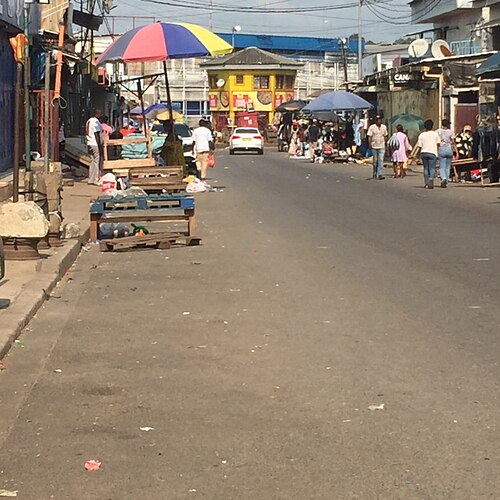
Market Mont-Boué in Owendo isn’t just a place where goods change hands—it’s the city’s beating heart, where daily life unfolds in all its messy, vibrant reality. This is where the rhythms of Gabon’s economy and culture converge, where fishermen haul in their catch from the Atlantic, farmers lay out piles of cassava and plantains, and vendors display everything from handwoven textiles to simple, handmade jewelry. The market hums from dawn until well after dark, long past the official closing time, as deals are struck, gossip is exchanged, and glasses of palm wine are sipped under the flickering glow of bare bulbs.
Owendo, just a short distance from Gabon’s capital, Libreville, has always been a city of trade. Historically, it served as a vital link between the country’s interior and the coast, a role that shaped its identity. Mont-Boué grew naturally from this tradition, its roots stretching back to colonial times when commerce here was already thriving. After independence, the market expanded, absorbing new goods, new people, and new influences, yet it never lost its essential character. Today, it’s more than just a shopping destination—it’s a living record of how Gabon’s economy has evolved over the decades, where the past lingers in the way business is still done.
The market’s layout is practical, even utilitarian. Rows of corrugated metal roofs provide shelter from the sun and sudden downpours, while narrow alleys twist between stalls, barely wide enough for two people to pass. Open spaces are stacked with sacks of rice, dried fish, and spices, every inch of space put to use. At first glance, it might seem chaotic, but there’s an order to it. Regulars know exactly where to find their preferred vendors, and each section has its own logic—fresh produce in one corner, fabrics in another, household goods somewhere else entirely. The market doesn’t feel cramped so much as alive, a place where every square meter serves a purpose.
What draws people to Mont-Boué isn’t just the goods on offer, but the atmosphere. There’s none of the polished, tourist-friendly veneer you might find in Libreville’s shopping malls. Even visitors who wander in by accident quickly realize they’re not here to shop—they’re here to observe. Vendors don’t push their wares, but if you show genuine interest, they’ll happily explain the difference between varieties of cassava, why one type of fish is prized over another, or how to drape a traditional Gabonese cloth. The market invites you to linger, to listen to the chatter in Fang and French, to watch the rituals of bargaining and friendship, and to taste the food cooked right there on the spot—grilled fish with fiery pepper sauce, cassava fritters, or stews simmering in large pots.
Food is at the center of Mont-Boué’s identity. Gabonese cuisine blends African traditions with French influences, and nowhere is that clearer than here. The stalls overflow with fresh fish—barracuda, captain, and tilapia—alongside bushmeat, though that’s becoming harder to find due to hunting restrictions. Cassava, the staple of Gabonese meals, is sold in every form imaginable: whole roots, grated and dried into flour, or pounded into the doughy paste used for fufu. Nearby, small grills send up smoke as vendors cook meals to order, the scent of charred fish and spices mingling in the air. It’s the kind of food that’s meant to be eaten with your hands, standing up, while the market buzzes around you.
Mont-Boué also offers a glimpse into modern Gabon. Alongside the traditional goods—handmade baskets, wooden carvings, and locally grown produce—you’ll find stacks of Chinese-made electronics, secondhand clothing from Europe, and imported cosmetics. Many traders travel to Libreville or even abroad to source their inventory, and the market reflects the country’s shifting economic landscape. In recent years, imported goods have become more common, yet Mont-Boué hasn’t lost its traditional ways. Prices are often negotiated on the spot, based on relationships rather than fixed rates, and many deals are still sealed with a handshake rather than a receipt.
For locals, the market is more than just a place to work—it’s a social hub. This is where people catch up with friends, share news, and sort out family matters. You might overhear plans for a wedding, discussions about politics, or even job offers being made on the fly. In many ways, Mont-Boué functions like markets across Africa, where the line between work and life blurs. It’s a place where time moves differently, where hours can slip by in conversation over a shared meal or a cup of strong, sweet coffee.
Of course, the market has its challenges. During the rainy season, some areas turn into muddy quagmires, and the metal roofs don’t always keep out the downpours. Vendors grumble about rising rents, while shoppers complain about inflation. Yet Mont-Boué endures because it’s indispensable. It’s not just a market—it’s a piece of Owendo’s soul, a place where the past and present coexist. The colonial-era trading posts may be gone, but the spirit of commerce that defined them lives on in the way people gather here, day after day.
If you find yourself in Owendo, don’t just stick to the waterfront or the beaches. Make your way to Mont-Boué, wander the aisles, and let the market pull you in. You won’t find neatly packaged souvenirs or air-conditioned comfort, but you will find something far more valuable: a slice of real life. This is where Gabon reveals itself—not in the polished narratives of guidebooks, but in the unscripted moments of daily existence. And that, more than anything, is what makes Mont-Boué worth experiencing.