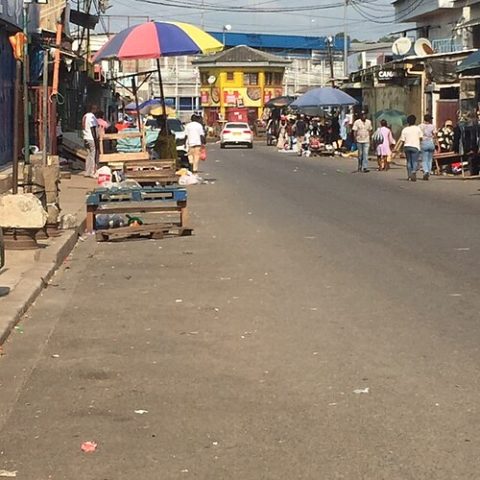
Port Owendo is more than just Gabon’s gateway to the Atlantic—it’s where the country’s history, economy, and daily life intersect in a way that feels both ordinary and essential. A short drive from Libreville, this port handles the bulk of Gabon’s imports and exports, from timber and manganese to oil, the raw materials that keep the nation’s economy afloat. Yet beyond the statistics and cargo volumes lies a place with its own rhythm: the clatter of cranes, the briny tang of saltwater, the unhurried routines of dockworkers for whom Owendo isn’t just a workplace but a chapter in their own lives.
The town of Owendo grew up around the port, its fortunes tied to the ebb and flow of maritime trade. When Gabon was still a French colony in the mid-20th century, the first docks were built here, and after independence in 1960, the port became one of the young nation’s most critical pieces of infrastructure. Today, Owendo is a mix of industry and quiet urban life—markets, cafés, and residential neighborhoods where the pace is slower than in the capital. There’s less hustle here, but a stronger sense of connection to something larger: the economic lifeline that links Gabon to the rest of the world.
The architecture of the port and its surroundings isn’t grand or polished, but that’s part of its charm. Low-slung warehouses, weathered containers, and aging cranes give the place a lived-in, unpretentious feel. There are no traditional tourist attractions, but for those curious about the real Gabon, Owendo offers glimpses of life that are hard to find elsewhere. You might watch a ship being unloaded, see fishermen mending nets, or buy fresh catch straight from the docks. Time here moves to the tides and the schedules of arriving and departing vessels, not the clock.
Owendo’s importance extends beyond Gabon’s borders. The port serves as a transit point for goods destined for neighboring countries like Congo, Cameroon, and Equatorial Guinea, making it a strategic hub for Central Africa. This role often puts it at the center of regional economic and political discussions. In recent decades, Gabon has pushed to modernize the port, aiming to boost capacity and attract foreign investment. Progress, however, has been slow, hampered by bureaucracy, corruption, and funding shortages.
Life in Owendo is inseparable from the sea. Locals spend time on the beaches, though they’re not the postcard-perfect stretches found elsewhere along the Atlantic coast. Here, the ocean is more about work than leisure—fishing boats, drying nets, and the occasional catch laid out to dry. On weekends, dockworkers and their families gather by the water to grill fish, relax, or simply watch the waves. For many, the sea isn’t just a livelihood but a cultural touchstone, woven into myths, traditions, and a way of life that has endured for generations.
Despite its industrial role, Owendo retains a small-town feel. There are no skyscrapers, nightclubs, or upscale restaurants—just modest cafés serving fresh seafood and local beer, markets brimming with fruit and spices, and quiet streets where life unfolds at its own pace. The people here are generally warm and open, especially if you show genuine interest in their culture. Owendo isn’t a tourist destination, so visitors are more likely to feel like observers than guests, witnessing the unfiltered rhythm of daily life.
The port is a place where different eras and cultures collide. Modern container ships share the water with traditional fishing canoes, French mingles with local languages, and the pace of life is dictated as much by the tides as by economic demands. For travelers who venture beyond Gabon’s beaches and nature reserves, Owendo offers a different kind of experience—one that’s not about spectacle but about seeing the country as it truly is, without embellishment or pretense. It’s a place where the past and present coexist, where the mundane and the meaningful intertwine.