- Home
- Bahrain
- Citadel Park
- Manama Souq

Photo: Beni-Sakur-Six, Public domain
Manama Souq
out of 5 0 ratingsThe Manama Souk isn’t just a market—it’s the heartbeat of Bahrain’s capital, a place where the city’s past and present collide in a tangle of narrow alleys and the scent of spices. Unlike the gleaming malls that have sprung up across the Gulf, the souk feels untouched by time, its labyrinthine streets lined with stalls that have stood for generations. Here, the air hums with the sounds of bargaining, the hiss of coffee pots, and the murmur of conversations in Arabic, Hindi, and Farsi. It’s a place where the old ways persist, even as the skyline of Manama looms in the distance, a reminder of how far the city has come from its days as a small fishing village.
The souk’s history stretches back centuries, to a time when Bahrain was a vital stop on the trade routes linking the East and West. Merchants from Persia, India, and beyond once crowded these streets, trading in pearls, silk, and frankincense. Pearls, in particular, were the lifeblood of the island’s economy—divers risked their lives in the Persian Gulf to harvest them, and their value was determined in the very stalls that still stand today. Though the pearl trade has faded, its legacy lingers in the souk’s jewelry shops, where artisans still string beads by hand, their techniques passed down through families for generations. The market has weathered wars, economic shifts, and the rise of modern commerce, yet it remains a place where history isn’t just remembered—it’s lived.
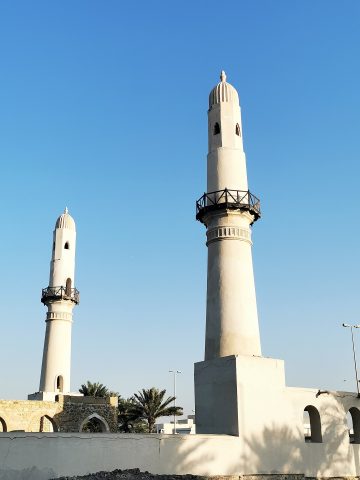
Walking through the souk is like stepping into a living museum. The architecture is a patchwork of old and new: crumbling coral-stone buildings with intricate wooden balconies stand beside modern shopfronts, their signs in Arabic and English. The streets twist and turn without logic, as if the market grew organically over time, each stall claiming its own space. At the heart of it all is an old mosque, its minaret a landmark for those navigating the maze of alleys. The mosque isn’t just a place of worship—it’s the anchor of the souk, the spot where trade first took root centuries ago. Around it, the market sprawls in every direction, a chaotic but charming mix of tradition and necessity.
The souk wakes early. By dawn, vendors are already setting up their stalls, arranging piles of fresh produce—dates from the local palm groves, pomegranates, and figs so ripe they burst with sweetness. The fruit sellers are the first to start shouting, their voices competing with the clatter of metal trays and the hiss of gas burners. By mid-morning, the market is in full swing. Locals come for their daily shopping, haggling over prices with a familiarity that suggests this is as much a social ritual as a transaction. Tourists wander through, wide-eyed at the sheer variety of goods—handwoven textiles, copper pots, and mountains of spices in every shade of red, yellow, and brown. By afternoon, the pace slows slightly, but the energy never fades. The souk is at its liveliest in the evening, when the heat of the day gives way to cooler air, and the scent of grilled meat and cardamom coffee fills the streets.
Beyond the buying and selling, the souk is a place where crafts still thrive. In dimly lit workshops, potters shape clay into jugs and bowls, their hands moving with practiced ease. Blacksmiths hammer out knives and tools, the rhythm of their work echoing through the alleys. Weavers sit at looms, their fingers deftly guiding threads into intricate patterns. Many of these artisans are among the last of their kind, their skills preserved through sheer stubbornness and the passing of knowledge from one generation to the next. Visitors can watch them work, or even commission a piece—a hand-stitched *thobe*, a copper tray engraved with traditional motifs, or a set of spices blended to a family recipe. These aren’t just souvenirs; they’re fragments of a culture that refuses to be forgotten.
The spice stalls are some of the most vibrant in the souk. Here, sacks overflow with saffron, cardamom, and turmeric, their colors so vivid they seem almost unreal. Vendors take pride in their wares, offering samples and explaining the uses of each spice—how sumac adds tang to salads, how baharat blends flavor grilled meats. Some will even share recipes, scribbling them on scraps of paper for curious customers. Spices aren’t just ingredients here; they’re part of Bahrain’s identity. Turmeric and cinnamon are symbols of hospitality, stirred into coffee as a gesture of welcome. Others, like fenugreek and cumin, are staples in dishes that have been cooked the same way for centuries. The scent of these spices lingers in the air, a constant reminder of the souk’s role as a crossroads of cultures.
Coffee is another ritual that defines the souk. It’s not the quick, bitter espresso of modern cafés, but something slower, richer, and far more deliberate. Prepared in a *dallah*—a long-spouted copper pot—it’s brewed with cardamom and sometimes a pinch of saffron, then poured into tiny, handleless cups. Drinking it is an experience in itself: the first sip is strong, almost jolting, but the flavors mellow with each subsequent taste. Coffee stalls are gathering places, where men sit for hours, sipping and talking. They discuss politics, family, or nothing at all, the conversation flowing as freely as the coffee. For outsiders, it’s an invitation to slow down, to sit and observe the rhythm of life in the souk. There’s no rush here—just the steady hum of voices and the occasional clink of cups.
As night falls, the souk transforms. The main stalls close, but the streets don’t empty. Instead, they fill with a different kind of energy. Street vendors set up their carts, selling roasted nuts, corn on the cob, and sticky sweets drizzled with honey. Children dart between the crowds, their laughter mixing with the calls of the vendors. The air grows cooler, and the glow of lanterns casts long shadows on the walls. This is when the souk feels most intimate, a place where the day’s hustle gives way to something quieter, more reflective. It’s the perfect time to grab a bite at one of the small eateries tucked into the alleys. The food is simple but unforgettable—*machboos*, a fragrant rice dish with meat and spices, or *harees*, a creamy wheat porridge slow-cooked with chicken. The recipes haven’t changed in decades, and neither has the way they’re served: on communal plates, meant to be shared.
What makes the Manama Souk special isn’t just what you can buy here, but what you can’t find anywhere else. There are no tourist traps, no scripted performances, no attempts to sanitize the experience. It’s raw, unfiltered, and utterly real. The souk doesn’t exist for visitors—it exists for the people who have shopped, worked, and lived within its walls for generations. That authenticity is what draws people in, whether they’re looking for a handcrafted souvenir or just a moment of connection. You can spend an hour wandering the alleys, or you can sit on a bench with a cup of coffee and watch the world go by. Either way, you leave with something intangible—a sense of having glimpsed the soul of Bahrain, a place where the past isn’t just preserved, but still very much alive.
Day around this place
Where else to go on the same day
Building the day…
Where it is
26.23862, 50.57300