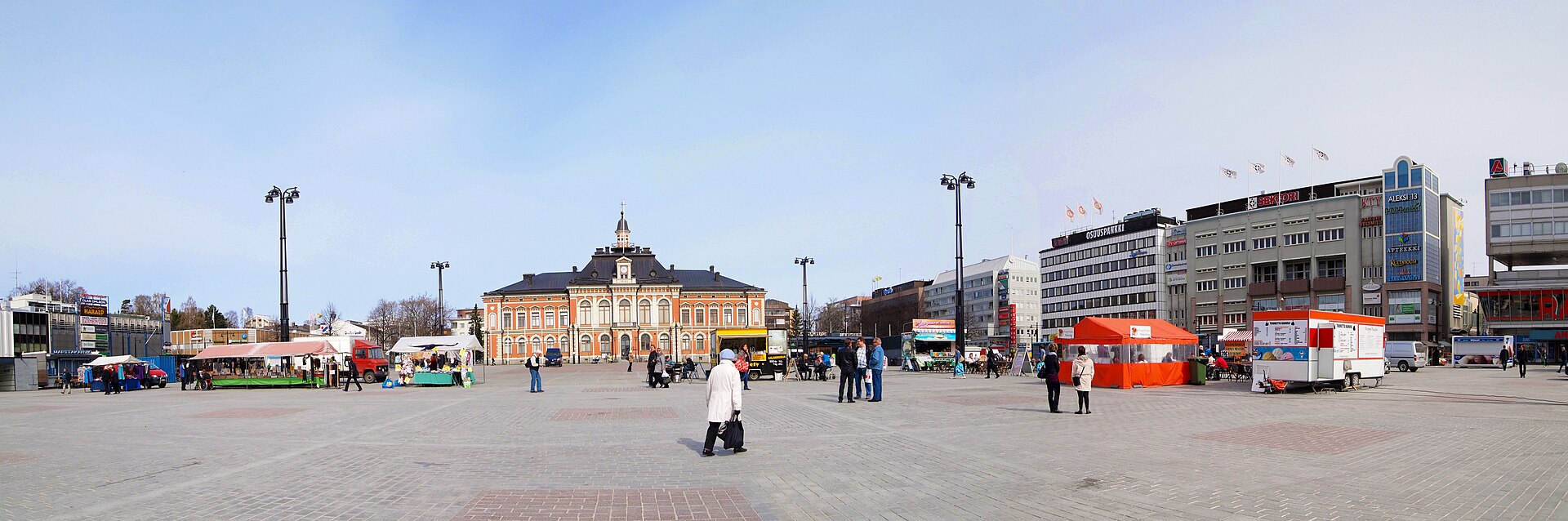
Kuopio’s market square isn’t just a place to buy vegetables or fish—it’s the heart of the city, where history, daily life, and the quiet resilience of the North come together. Perched on the shore of Lake Kallavesi, it’s where the main streets converge, and where Finland reveals itself not as a postcard of snow-covered forests, but as a place where people gather over coffee, debate the news, and haggle over the last bunch of smoked vendace. The square has been here for over two centuries, evolving from a simple marketplace into a public space where city affairs were settled, festivals were held, and even political rallies took place.
The architecture here is unassuming but striking in its simplicity. Low wooden and stone buildings, painted in muted tones, frame the open space with a sense of warmth. Among them stands the old town hall, built in the late 19th century, its neat facade and tower once serving as a fire lookout. Nearby, the market pavilion from the 1930s reflects the functional style of its time. These buildings don’t dazzle with grandeur, but their modesty has its own charm—they suggest that what matters isn’t outward splendor, but the life that unfolds around them.
Winter transforms the square into something magical. Snow blankets the stalls and benches, while strings of lights cast a soft glow over the frozen lake. Trade doesn’t stop—vendors sell hot glögi, freshly baked pulla, and hand-knit mittens, while locals come not just to shop but to soak in the approaching Christmas spirit. In summer, the air fills with the scent of ripe strawberries, smoked fish, and freshly brewed coffee. On a good day, you could spend hours here: sampling local delicacies, sitting by the water with an ice cream, or simply watching the city go about its unhurried, everyday rhythm.
Kuopio has always been a city of fishermen and loggers, and that heritage is palpable here. The market offers everything tied to traditional Finnish life, from dried fish to hand-carved wooden spoons. The star of the show is vendace—a small lake fish smoked on the spot and sold in bunches. Its aroma mingles with the smoke from grills cooking salmon and whitefish, creating a scent that’s become synonymous with the square. Locals know the best vendace is the kind just off the fire, and they’ll happily wait in line for it, chatting about the weather or the latest news.
But the market isn’t just about food. You’ll find everything from fresh berries and mushrooms to woolen socks and ceramics. Many vendors are local farmers and artisans who travel in from nearby villages. They know their customers by name, share stories about how they grew or made their goods, and often offer samples. This turns shopping into something more than a chore—it’s a small event where everyone, from the seller to the passerby stopping for a chat, takes part.
The square isn’t just a place to trade; it’s where the city gathers. People meet here for dates, stroll with their children, and enjoy impromptu concerts and festivals. In summer, street musicians perform, while winter brings ice shows and sleigh rides. During holidays, the square hosts fairs where you can try national dishes, join workshops, and buy souvenirs. Even on ordinary days, it draws people simply because there’s always something to see or someone to talk to.
For visitors, Kuopio’s market square is a window into everyday Finnish life. There are no grand monuments here, and that’s precisely what makes it feel real. You could spend hours watching locals haggle over lingonberries, children feed seagulls bits of bread, or elderly men play chess by the fountain. Nothing about it is exotic, yet that’s what makes the square special. It doesn’t try to impress—it just exists, lively and a little chaotic, but somehow perfectly balanced.
Kuopio is a city that moves at its own pace, and the market square is the best place to experience that. There’s no rush here, no big-city frenzy. In the morning, the square wakes up with the city: vendors set up their stalls, the first shoppers arrive, and by midday, it’s bustling. By evening, the trading slows, but the life doesn’t—some sit on benches with books, others stroll along the shore, and a few simply enjoy the quiet, gazing at the lake. There’s something soothing in this rhythm, and perhaps that’s why people keep coming back—not just for the goods, but for the sense that time here flows differently.