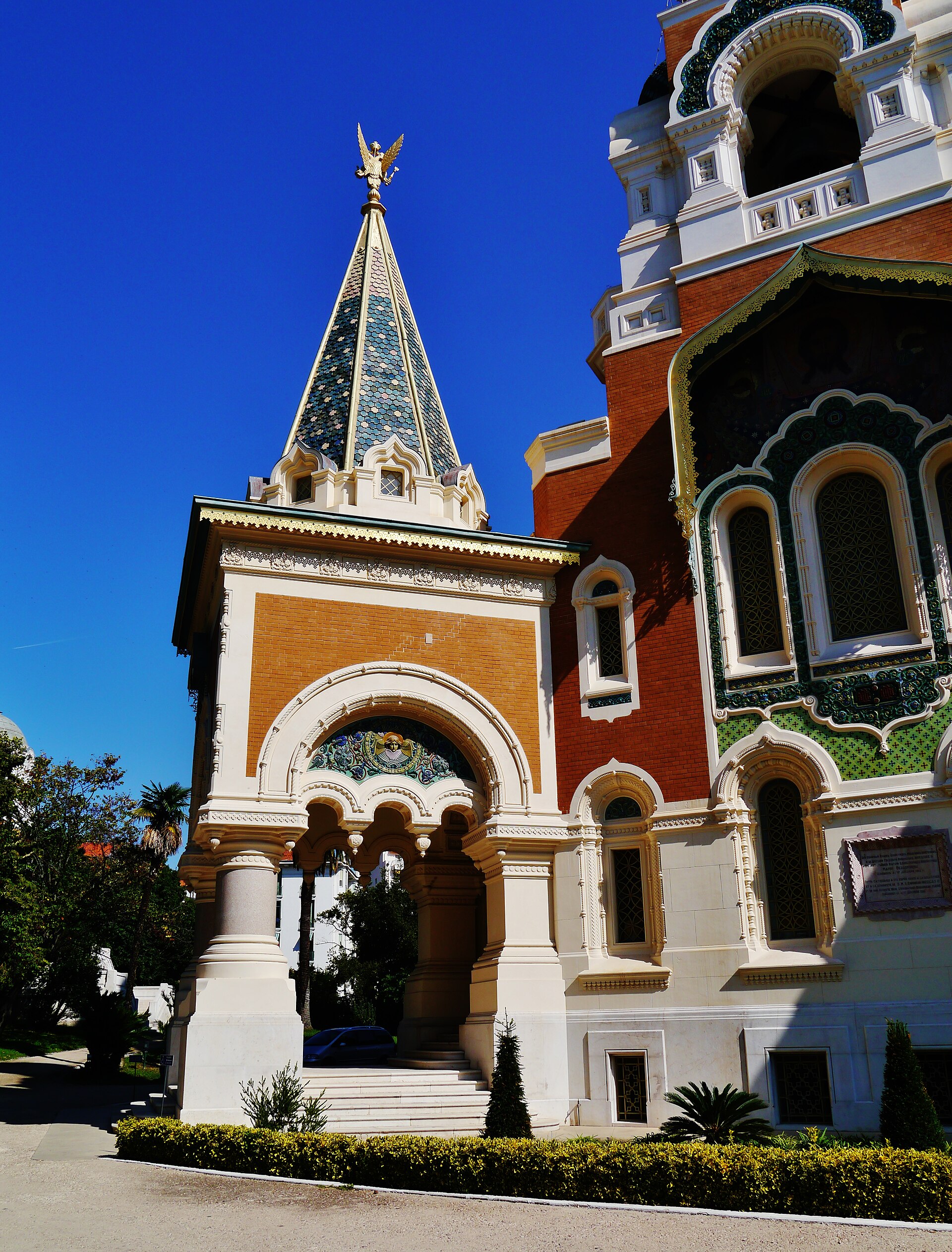
Nice has long been a city of sun, sea, and Mediterranean charm, but tucked away in its quiet streets stands a place that feels worlds apart from the Riviera’s usual rhythm. The Saint Nicholas Orthodox Cathedral is an unexpected piece of Russia on the French coast, a building that carries the weight of history in its golden domes and white stone walls.
The cathedral was built in the early 20th century, a time when the Russian diaspora in France was growing rapidly. After the revolution, many aristocrats, intellectuals, and ordinary Russians found refuge along the Côte d’Azur. Nice, with its mild winters and elegant villas, became a second home for those who had lost theirs. The cathedral wasn’t just a place of worship—it was a sanctuary, a fragment of the world they had left behind. Its construction was funded by the Russian community, and its very presence in Nice speaks to the deep ties between the city and the exiles who settled here.
Architecturally, the cathedral is a striking example of the Neo-Russian style, which flourished in the late 19th and early 20th centuries. The design draws from Byzantine traditions, with its white stone facade, onion-shaped domes crowned with golden crosses, and intricate decorative details. Inside, the space opens up into a soaring interior, where light filters through stained glass and falls upon the richly carved iconostasis. Frescoes and mosaics by Russian artists cover the walls, depicting saints and biblical scenes in vivid colors. Among the most revered icons is that of Saint Nicholas the Wonderworker, a focal point for prayer and reflection.
The cathedral’s location in Nice is no accident. In the 19th century, the city became a winter retreat for Russian nobility, including members of the imperial family. Tsar Alexander II and his court spent seasons here, drawn by the climate and the growing Russian community. After the revolution, Nice became one of the most significant centers of Russian emigration in Europe. The cathedral was built not just as a religious site but as a symbol of continuity, a place where exiles could gather, worship, and remember the country they had lost. Even today, services are held in Church Slavonic, and the cathedral’s bookshop offers Orthodox literature, icons, and religious artifacts, keeping the traditions alive.
The area around the cathedral still holds traces of its Russian past. Nearby is the Russian Cemetery of Caucade, where many prominent figures from the diaspora are buried, including members of the imperial family. The neighborhood itself is quiet, with narrow streets lined with old villas, some of which retain the atmosphere of the early 20th century. Walking through these streets, it’s easy to imagine the world of the Russian émigrés—artists, writers, and aristocrats who once called Nice home.
Today, the cathedral remains a living part of the city’s cultural fabric. It’s not just a historical monument but an active place of worship, where services, concerts of sacred music, and exhibitions on Orthodox traditions are regularly held. On major religious holidays, the cathedral fills with worshippers—both Russian expatriates and locals curious about its history. For some, it’s a place of pilgrimage; for others, a connection to their heritage. And for many visitors, it’s simply a beautiful and unexpected sight, a reminder that Nice has always been more than just a sunny getaway.
One of the most interesting aspects of the cathedral is its ecclesiastical status. Unlike many Russian Orthodox churches abroad, it falls under the jurisdiction of the Ecumenical Patriarchate of Constantinople rather than the Moscow Patriarchate. This reflects the complex history of the Russian emigration, particularly the divisions that arose after the revolution. Yet despite these differences, the cathedral has remained a vital spiritual center for Orthodox Christians in southern France, welcoming all who seek its peace.
Visiting the Saint Nicholas Cathedral is a chance to see Nice from a different perspective. The city is famous for its beaches, its festivals, and its vibrant street life, but this quiet corner offers something deeper—a glimpse into the stories of those who came here seeking refuge, and the ways they shaped the place they now called home. Whether you’re drawn by faith, history, or simply curiosity, the cathedral stands as a testament to resilience, memory, and the enduring power of culture across borders.