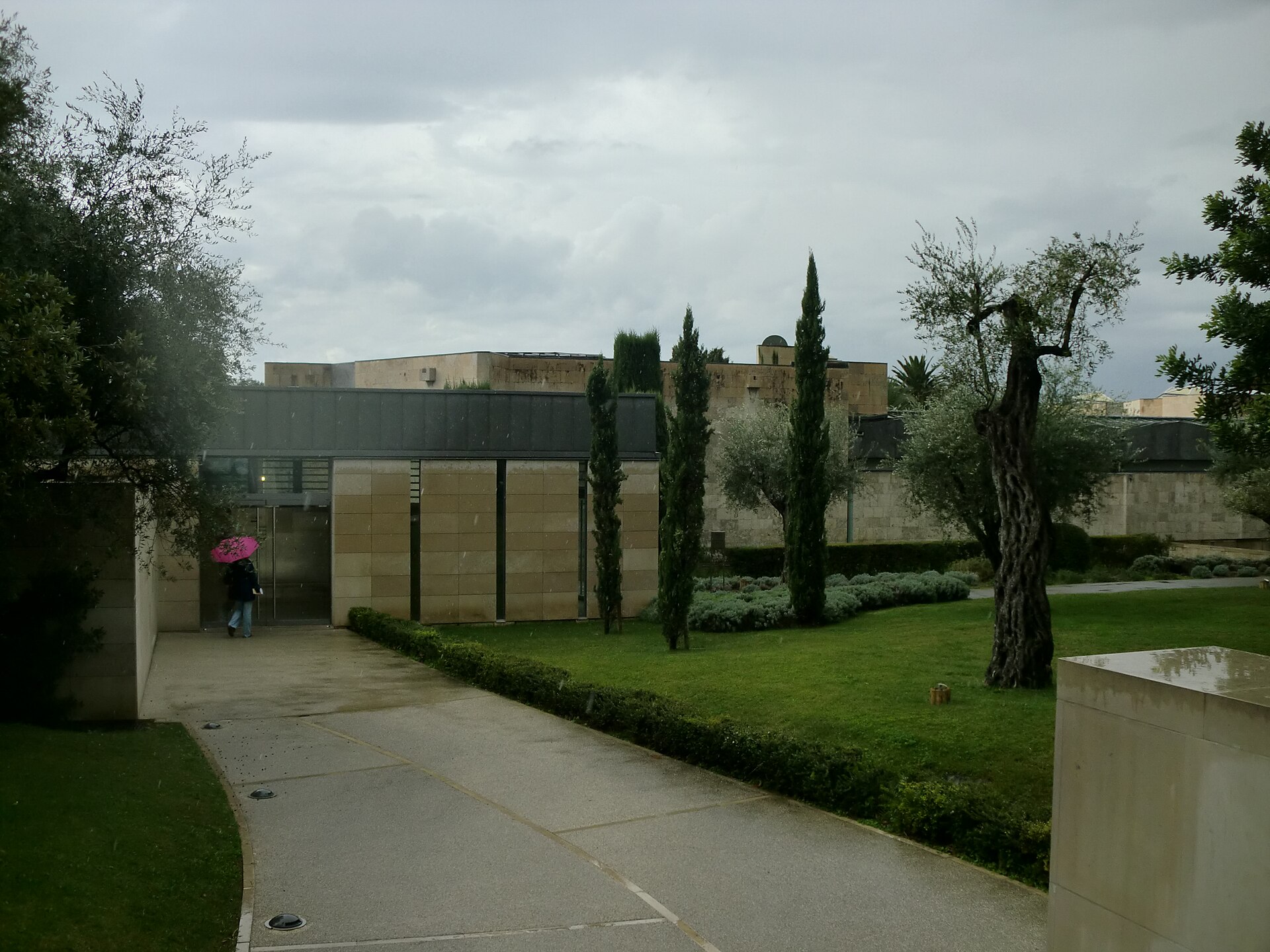
The Marc Chagall Museum in Nice is one of those rare places where art and intention feel perfectly aligned. Opened in 1973, it was the first museum in France built during an artist’s lifetime specifically to house their work—and Chagall himself was deeply involved in its creation. He chose the location, oversaw the construction, and even directed how his paintings should be displayed. When the museum opened, he was there in person, a quiet but unmistakable presence shaping the way visitors would experience his art.
At the heart of the collection is *The Biblical Message*, a series of seventeen large canvases that Chagall worked on for over a decade. These paintings retell stories from Genesis and Exodus, not with the grandeur of traditional religious art, but with his signature dreamlike intimacy—figures floating in deep blues, lovers entwined in golden light, angels hovering over scenes of creation and exile. Chagall donated the series to the French state on the condition that the works would always be shown together, in a space designed just for them. That space had to be simple, almost austere, so that nothing would compete with the color and emotion of the paintings.
The building itself reflects this restraint. The galleries are low and bright, with soft, diffused light filtering in from above. There are no ornate details, no grand staircases—just white walls and quiet rooms where the paintings can breathe. Outside, the museum is surrounded by a garden of olive trees and lavender, their silvery greens and muted purples echoing the hues in Chagall’s work. A mosaic of the prophet Elijah, set into an exterior wall, shimmers in the reflection of a shallow pool, as if the art extends beyond the walls.
One of the most striking features is the concert hall, its walls lined with deep blue stained-glass windows depicting the creation of the world. The space is still used for chamber music performances, and sitting there, listening to a string quartet or a solo piano piece while surrounded by those luminous blues, feels like stepping into one of Chagall’s own compositions. The music and the art don’t just coexist—they seem to converse.
Beyond the main collection, the museum holds sketches, lithographs, and ceramics, offering a glimpse into Chagall’s process. The works on paper, in particular, reveal how his ideas evolved—how a fleeting image in a sketch might later bloom into a full, vibrant painting. There’s also a small bookshop with art books and prints, and a café where visitors can sit with a coffee and let the morning’s impressions settle.
The museum is tucked into the Cimiez neighborhood, a short walk uphill from Nice’s bustling center. The area has a different rhythm—quieter, slower, with the scent of pine and the sound of cicadas in the summer. It’s worth spending a day here, as the neighborhood is home to other cultural landmarks: the ruins of a Roman amphitheater, a monastery with a peaceful cloister, and the Matisse Museum, which sits just a few minutes away. Sometimes, a single ticket grants access to multiple museums, making it easy to wander between them.
There are rarely crowds at the Chagall Museum, even in peak season. The lack of queues means you can take your time, lingering in front of a painting without feeling rushed. The garden, with its benches and dappled shade, is a good place to pause, especially on a warm afternoon. In the summer, the museum stays open later, allowing for a more leisurely visit.
The experience of being here isn’t just about seeing Chagall’s work—it’s about feeling the space he helped create. The building, the light, the way the art is arranged—it all carries his touch. Even the small details, like the way the mosaic outside catches the sunlight, or the way the concert hall’s windows glow in the late afternoon, make the visit feel personal, as if Chagall himself had considered how each visitor might move through the rooms. It’s not a grand, imposing museum, but that’s part of its charm. It’s a place where art feels alive, not just preserved.