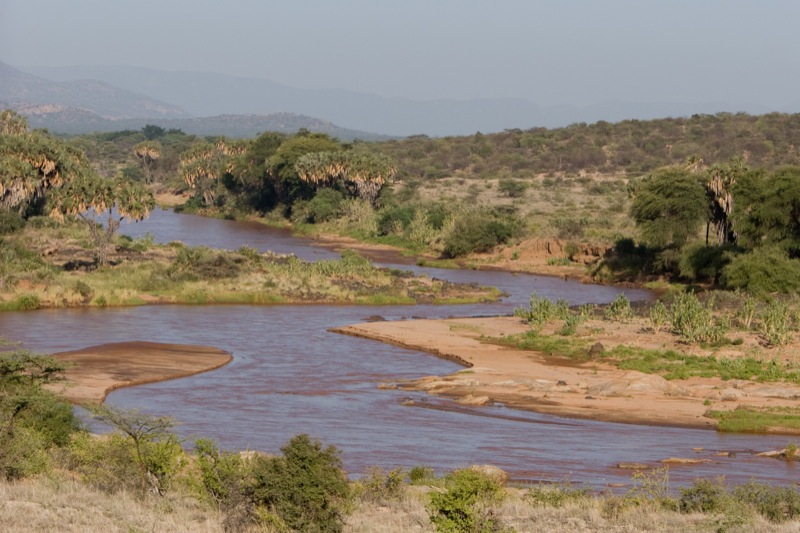
The Ewaso Ng'iro River is one of those rare natural arteries that doesn’t just flow through the landscape but shapes it, breathing life into the savannas, forests, and settlements along its course. It begins far to the south, in the misty foothills of the Aberdare Range, where small streams merge into a swift current before gathering strength as it cuts through central Kenya. By the time it reaches the arid plains of the north, its waters have slowed, though they remain full enough to sustain lush vegetation and a thriving ecosystem. Near Nanyuki, the river becomes especially visible—no longer the raging torrent of its upper reaches, but still powerful enough to carve a green ribbon through the dry earth.
For the communities that depend on it, the Ewaso Ng'iro is more than just water. The Maasai, who have herded cattle across these lands for generations, rely on it as a lifeline, especially during the dry season when other water sources vanish. You’ll often see them guiding their livestock to the riverbanks, where the animals drink alongside women washing clothes or filling clay pots. For farmers cultivating the fertile soils of the floodplain, the river is the difference between harvest and hunger. Without it, the land would be little more than dust.
The river’s history is woven into the fabric of the region. Long before colonial roads and trading posts, its banks were home to ancient settlements. Later, it served as a natural boundary and a route for early explorers and traders. In the 20th century, the first tourist camps sprang up along its shores, drawn by the promise of wildlife and untouched landscapes. Today, while its practical importance has shifted, its symbolic weight remains. It stands as a reminder of the deep, often fragile connection between people and the land—a bond that still feels tangible here.
There’s little in the way of grand architecture along the Ewaso Ng'iro. Nature dominates, and human structures are sparse, designed to blend rather than impose. The Maasai manyattas—clusters of mud-and-dung huts encircled by thorny fences—dot the banks, built to keep predators at bay. Near Nanyuki, small lodges and campsites follow a similar philosophy: low-slung buildings of wood and stone, thatched roofs, and wide verandas that frame the view of the water. These places don’t demand attention; they simply exist as part of the landscape, unobtrusive yet deeply rooted in their surroundings.
Wildlife thrives along the river in a way that feels almost effortless. Hippos lurk in the reeds, their presence announced by sudden splashes or the deep, rumbling grunts that carry across the water at dawn and dusk. Crocodiles sun themselves on the banks, while fish eagles and herons glide overhead. Elephants come to drink, their massive forms moving silently through the undergrowth, and in the fading light, giraffes and buffalo emerge from the bush. For those who come to observe, the river offers a rare gift: the chance to see these animals not as exhibits in a reserve, but as part of a living, breathing world.
The river’s mood shifts with the seasons. During the rains, it swells into a forceful current, flooding its banks and turning the landscape a vibrant green. In the dry months, the water recedes, leaving behind sandy shoals where children play and fishermen cast their nets. Yet no matter the time of year, there’s a quiet rhythm here—a sense of timelessness that comes from water moving steadily through the land, shaping it in small, imperceptible ways.
For travelers, the Ewaso Ng'iro offers more than just a scenic backdrop. You can walk along its banks, paddle a canoe through its calmer stretches, or simply sit on a sandbar with a picnic, watching the light change over the water. Near Nanyuki, there are places to stay that range from rustic campsites to more comfortable lodges, all sharing a commitment to blending into the environment rather than overpowering it. The unspoken rule here is respect—for the land, the wildlife, and the people who call this place home.
What makes the Ewaso Ng'iro special isn’t just its beauty, but its resilience. In a region where many rivers struggle under the pressures of drought and development, this one endures, a rare pocket of stability where life continues much as it has for centuries. It’s a place that doesn’t just show you the wild side of Kenya, but reminds you of the delicate balance that keeps it alive. And perhaps that’s why, for those who take the time to stop and listen, the river feels less like a destination and more like a conversation—one that’s been going on long before we arrived, and will continue long after we’re gone.