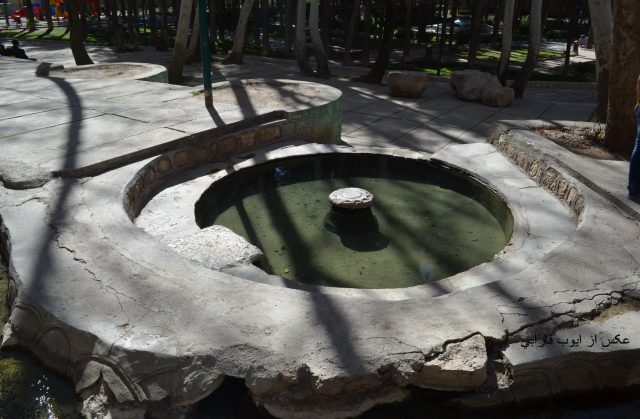
Taj Square doesn’t announce itself with grand monuments or flashy signs. It sits at the heart of Khersin, where the main streets intersect. Here, people meet, stroll, and go about their daily lives. The square shows the unfiltered rhythm of provincial Iran, where time moves slowly and buildings tell their stories without hurry.
The space is small, shaped like many Iranian town squares. A fountain or patch of greenery stands at its center, shaded by trees. Elderly men play backgammon under them; children kick a ball nearby. The surrounding buildings are two or three stories high, with flat roofs and facades of pale stone or brick. Windows have wooden latticework, and balconies cast shade over the sidewalks when the sun is high.
Khersin has a long history. Taj Square isn’t ancient, but it carries traces of the region’s past. Once, it was an important stop on trade routes connecting western Iran’s major cities. Caravans paused here to rest. Today, that history lingers in the narrow alleys leading to the bazaar, in old caravanserais now used as homes or workshops, and in the way locals gather in the evenings.
The buildings around the square aren’t ornate. Many facades have traditional plasterwork with simple geometric patterns. Doors often feature metal plates with engravings. Some structures show signs of earlier eras—thick stone foundations or arches that hint at the city’s rebuilding over time. Newer buildings have appeared in recent decades, but they don’t disrupt the square’s quiet character.
Taj Square comes alive as the day cools. Cafes open, serving tea and local sweets. Street vendors sell fresh fruit or hot flatbread. This is when you see the city’s life unfold: women in headscarves with groceries, men debating over tea, teenagers outside an internet cafe. There’s no rush here, and that’s why locals keep returning.
Khersin isn’t a major tourist destination. Taj Square offers something rare: a chance to see Iran beyond the usual highlights. No crowds, just the rhythm of a provincial town. Sit on a bench and watch. Step into a shop selling spices or handmade crafts. The people are friendly if you show interest in their way of life.
Around the square, a few places are worth exploring. The old bazaar still sells carpets, ceramics, and dried fruits. A mid-20th-century mosque feels older than it is. A small park nearby offers shade. Everything is within walking distance. Wandering these spots shows how life is lived here.
Taj Square doesn’t dazzle at first glance. That’s what makes it special. It’s a simple city square where paths, stories, and lives intersect. No staging, just the everyday life of Khersin. For travelers who want more than sights, it might be a quiet revelation.