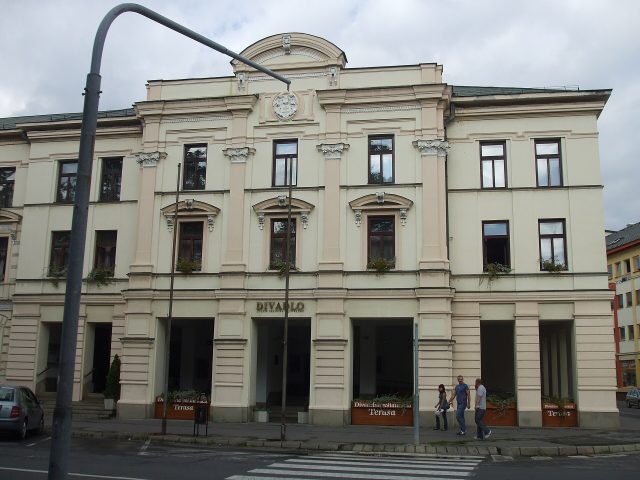
Banská Bystrica’s main square, known as Námestie SNP, is where the city’s past and present intersect in the most ordinary yet profound ways. This isn’t just a pedestrian zone or a collection of old buildings—it’s the living core of the town, where locals and visitors alike gather for morning coffee, evening strolls, or impromptu conversations. The square has seen centuries of trade, gossip, and quiet revolutions, and if you pause beneath the arched facades, you can almost hear the echoes of merchants haggling, craftsmen calling out their wares, and townspeople debating the news of the day.
The architecture here tells a story of shifting influences and eras. The most striking building is the town hall, a Renaissance structure with Gothic touches, its facade adorned with faded frescoes and coats of arms. The clock tower has long been a landmark, its chimes marking the hours just as they did hundreds of years ago. Nearby stands the Church of St. Francis Xavier, built by Jesuits in the 17th century, its Baroque curves a stark contrast to the more restrained lines of the surrounding buildings. The square also features neoclassical townhouses and early 20th-century structures, each layer adding to the sense that this place has always been a crossroads of styles and ideas.
The square’s name—Slovak National Uprising Square—hints at its role in more recent history. In August 1944, Banská Bystrica became the heart of resistance against Nazi occupation, and for a few months, the city served as the headquarters of the uprising. A modest plaque on one of the buildings commemorates the event, but the real memorial is the square itself. Unlike places frozen in time, this one carries the weight of history without feeling like a museum. The past isn’t just preserved here; it’s woven into the daily rhythm of life.
In summer, the square transforms into an open-air living room. Cafés spill onto the pavement, serving local beer and hearty Slovak dishes, while street musicians play folk tunes or jazz. Winter brings a different kind of magic—strings of lights, the scent of mulled wine, and the crackle of roasting chestnuts. The Christmas tree here isn’t just for show; it’s a gathering point, a reminder that this square has always been a place for celebration, not just observation. There’s no rush, no pressure to perform for tourists. It’s simply a space where life unfolds at its own pace.
What makes the square truly special are the small details that reveal themselves slowly. The ornate 19th-century lampposts, the bronze plaques embedded in the cobblestones honoring notable townspeople, the sundial on a building’s wall—each one feels like a quiet nod to the past. Even the city’s coat of arms, featuring a miner and a smelter, hints at Banská Bystrica’s origins as a mining town, when its wealth was literally dug from the earth. Walking here isn’t just a stroll; it’s a scavenger hunt, with something new to discover around every corner.
Unlike many historic sites, this square doesn’t feel like a stage set. There are no ropes or signs dictating where you can go or what you can touch. You can sit by the fountain, browse a tiny shop selling handmade ceramics, or wander down the narrow side streets that branch off in every direction. It’s in these unscripted moments that the square’s true character emerges—not as a monument, but as a place where history is lived, not just remembered.
Banská Bystrica isn’t a city that draws crowds, and that’s part of its charm. Námestie SNP isn’t a box to tick off a tourist checklist; it’s a place to linger, to soak in the unhurried pace of life. There are no tour groups rushing past, no vendors hawking trinkets. Instead, there’s space to breathe, to watch the world go by, or to simply do nothing at all. Whether you spend an hour or a whole day here depends entirely on how deeply you want to connect with the place.
As evening falls, the square takes on a different mood. The streetlights cast a warm glow over the buildings, softening their edges and deepening the shadows. The past feels closer then, as if the centuries-old stones are holding their breath. It’s easy to imagine the square as it was decades or even centuries ago—alive with the same quiet energy, the same sense of being at the heart of something real. That’s what makes it so compelling. It doesn’t try to be a postcard-perfect snapshot of history. It’s just a place where the past and present coexist, side by side.