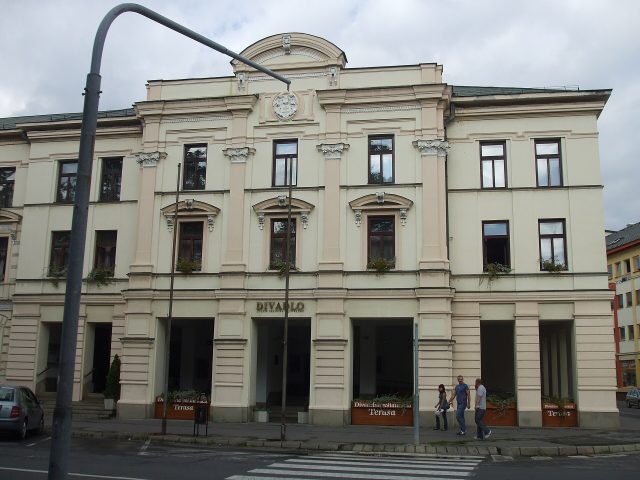
Banská Bystrica sits quietly in the heart of Slovakia, a place where the past lingers without demanding attention. Nestled in a valley between gentle hills, the city is cradled by the Hron River, its waters winding through streets lined with buildings that have stood for centuries. Unlike Bratislava’s bustling energy or the tourist-heavy charm of Poprad, Banská Bystrica moves at its own pace—a rhythm shaped by history, yet firmly rooted in the present. There’s no rush here, no need to perform for visitors. The city simply exists, offering glimpses of a life that feels both timeless and deeply human.
The first written records of Banská Bystrica date back to the 13th century, when German settlers arrived, drawn by the promise of silver and copper beneath the earth. What began as a small mining outpost soon flourished into one of the most important industrial centers in the Kingdom of Hungary. By the 15th century, the city had earned the status of a royal free town, its wealth built on the backs of miners and craftsmen who turned raw ore into coins, tools, and trade goods. Merchants from across Europe gathered here for fairs, exchanging not just goods but stories, ideas, and the kind of gossip that travels with caravans. The city’s prosperity was written into its streets—narrow, winding lanes designed for horse-drawn carts, and squares where every stone seemed to hum with the echoes of haggling voices.
Today, the old town center is a testament to that era. The buildings crowd together, their facades narrow but tall, as if competing for space in the sky. The most striking of them is the Church of St. Francis Xavier, a Gothic structure that dominates the skyline with its slender tower. Inside, the air is cool and dim, the light filtering through stained glass to illuminate altars painted by local artists in the 17th century. Nearby, the Old Town Hall stands with its arched walkways and clock tower, a building that once housed the city’s decision-makers. Now it’s a museum, though little else has changed—the heavy wooden doors, the vaulted ceilings, the worn stone steps all speak of a time when this was the heart of civic life.
Just a short walk away, the city’s castle offers a different kind of history. Built in the 16th century as a defense against Ottoman raids, it’s a sturdy, no-nonsense structure, far less ornate than the castles of northern Slovakia. Its thick walls and simple design reflect the practical needs of the time—protection over grandeur. Today, the castle houses the Slovak Mining Museum, where visitors can see the tools and techniques that once sustained the city’s economy. The exhibits are straightforward, even modest, but they tell a story of hard work and ingenuity, of men who spent their lives underground in pursuit of metal that would shape empires.
Yet Banská Bystrica isn’t just a relic of the past. It’s a living city, one that adapts to the seasons without losing its character. In summer, the squares fill with the sound of street musicians, and cafés spill onto the sidewalks, their tables shaded by umbrellas. Locals and visitors alike linger over coffee, watching the world go by at a pace that feels unhurried, almost deliberate. Winter brings a different kind of magic—snow dusts the rooftops, and the nearby slopes of the Low Tatras become a playground for skiers. The city center glows with holiday lights, but there’s none of the frenetic energy of larger tourist destinations. Instead, there’s a quiet warmth, the kind that makes you want to pull your coat tighter and stay a little longer.
The surrounding landscape is just as much a part of Banská Bystrica’s appeal. A short walk from the center leads to forests and hills where the air smells of pine and damp earth. In autumn, the trees blaze with color—gold, russet, and deep red—while the crisp air carries the scent of woodsmoke from distant chimneys. The Hron River, which cuts through the city, is a favorite spot for picnics in the warmer months. Locals often escape here on weekends, spreading out blankets on the grassy banks or simply sitting by the water with a book. There’s no grand spectacle, just the simple pleasure of being outside, away from the noise of modern life.
The city’s history isn’t confined to the Middle Ages. During World War II, Banská Bystrica became the epicenter of the Slovak National Uprising, one of the largest anti-fascist resistance movements in Europe. The streets that had once echoed with the footsteps of medieval merchants now bore witness to gunfire and defiance. The uprising was brutally suppressed, but its legacy endures in the form of a memorial on Slovak National Uprising Square. A tank stands as a silent sentinel, and a monument honors those who died fighting for freedom. It’s not a place that inspires awe like the old churches, but it’s a necessary one—a reminder of the cost of the peace that followed.
What makes Banská Bystrica special is its refusal to be anything other than itself. There are no grand hotels or flashy attractions, no attempts to dazzle visitors with spectacle. Instead, there are small, unassuming pleasures: a bakery selling *trdelník*, the sweet, cinnamon-dusted pastry that’s a staple of Slovak street food; a museum showcasing the works of 20th-century Slovak artists; a park where children play soccer while elderly men feed pigeons. The city doesn’t reveal itself all at once. It unfolds slowly, like a conversation with an old friend—one who doesn’t need to impress, because they know their worth.
In a world where so many places seem designed for Instagram moments, Banská Bystrica feels refreshingly real. It’s a city that remembers its past without being trapped by it, that embraces the present without chasing trends. There’s no need to rush here, no checklist of must-see sights. Just the quiet satisfaction of wandering down a cobblestone street, stopping for a coffee in a café that’s been serving customers for decades, or watching the sunset from a bench by the river. It’s the kind of place that stays with you long after you’ve left, not because it was extraordinary, but because it felt like coming home.