Plaza de Armas in Yungay is one of those places where the past and present exist side by side, not as separate layers, but as something woven together. Tucked into the heart of this small Andean town, the square feels like the natural center of everything—the kind of place where locals gather without thinking, where conversations drift between Spanish and Quechua, and where the air carries the scent of woodsmoke and fresh bread. The surrounding peaks of the Cordillera Blanca loom in the distance, their snow-capped summits a constant reminder of the raw power of the mountains. Here, time moves differently, shaped by the rhythm of the highlands rather than the urgency of the outside world.
Yungay’s history is marked by a defining moment that reshaped the town forever. In 1970, a devastating earthquake triggered a massive avalanche from Mount Huascarán, burying the original settlement under tons of rock and ice. Thousands perished, and what remained was a landscape forever altered. The town was rebuilt a short distance away, and Plaza de Armas became the symbolic heart of this new beginning. It wasn’t just a square; it was where survivors came together to rebuild not just buildings, but a sense of community. The simplicity of the architecture reflects that urgency—no grand colonial facades, no ornate details, just straightforward, functional structures that served a purpose. Yet there’s a quiet dignity in the way the buildings frame the square, their bright shutters and tiled roofs adding a touch of warmth to the otherwise austere surroundings.
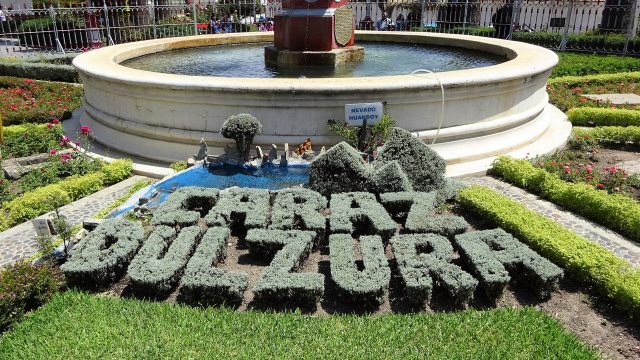
The square itself is unassuming. A modest fountain sits at its center, surrounded by flowerbeds that bloom in bursts of color during the warmer months. Nearby, a small monument honors those lost in the disaster, its presence a subtle but constant reminder of what came before. The plaza isn’t designed to impress; it’s designed to serve. In the mornings, vendors set up stalls selling everything from tropical fruits to handmade cheeses, their voices blending with the laughter of children heading to school. By afternoon, the square fills with people taking a moment to rest, chat, or simply watch the world go by. There’s no rush here, no sense of time slipping away unnoticed. Even when the square is crowded, the atmosphere remains calm, as if the mountains themselves have tempered the pace of life.
For visitors, Plaza de Armas often serves as a starting point for exploring the region. From here, trails lead into Huascarán National Park, where glaciers glint under the sun and high-altitude lakes mirror the sky. Many come to Yungay for the adventure—trekking ancient Inca paths, spotting condors soaring overhead, or simply breathing in the thin, crisp air. But those who linger soon realize the town has its own quiet appeal. There are no tourist traps, no aggressive vendors, just the everyday life of a place that has found its footing again. The square, in particular, offers a glimpse into that life: the way neighbors greet each other by name, the way old men play chess on benches in the shade, the way families stroll arm in arm as the sun sets behind the peaks.
What makes Plaza de Armas special isn’t any single feature, but the way it embodies the spirit of Yungay. It’s where the town celebrates and mourns, where festivals and processions unfold, where the past is acknowledged without being dwelled upon. On national holidays, the square comes alive with music, dancing, and fireworks that light up the night sky. But even on ordinary days, it remains a gathering place—a spot where someone might sit with a cup of coca tea, watching the world go by, or where a group of friends might meet to plan the next community event. It’s the kind of place that doesn’t demand attention but quietly earns it.
There’s a resilience to Yungay that’s hard to miss. The town could have become a memorial, a place frozen in tragedy, but instead, it chose to keep moving forward. Plaza de Armas is a testament to that choice. It’s not a grand monument, but a living space, shaped by the people who use it every day. The buildings may be simple, the fountain unremarkable, but together they create something far more meaningful. Here, history isn’t confined to plaques or museums; it’s part of the air, the conversations, the way the light falls across the cobblestones in the late afternoon.
For those who visit, the square offers more than just a photo opportunity. It’s a chance to step into a place where life is lived deliberately, where the mountains dictate the pace, and where the past is never far from the present. There’s no need for grand gestures or dramatic scenery—just the quiet beauty of a town that has found a way to carry its history without being weighed down by it. Plaza de Armas isn’t just the heart of Yungay; it’s the place where the town’s story continues to unfold, one day at a time.