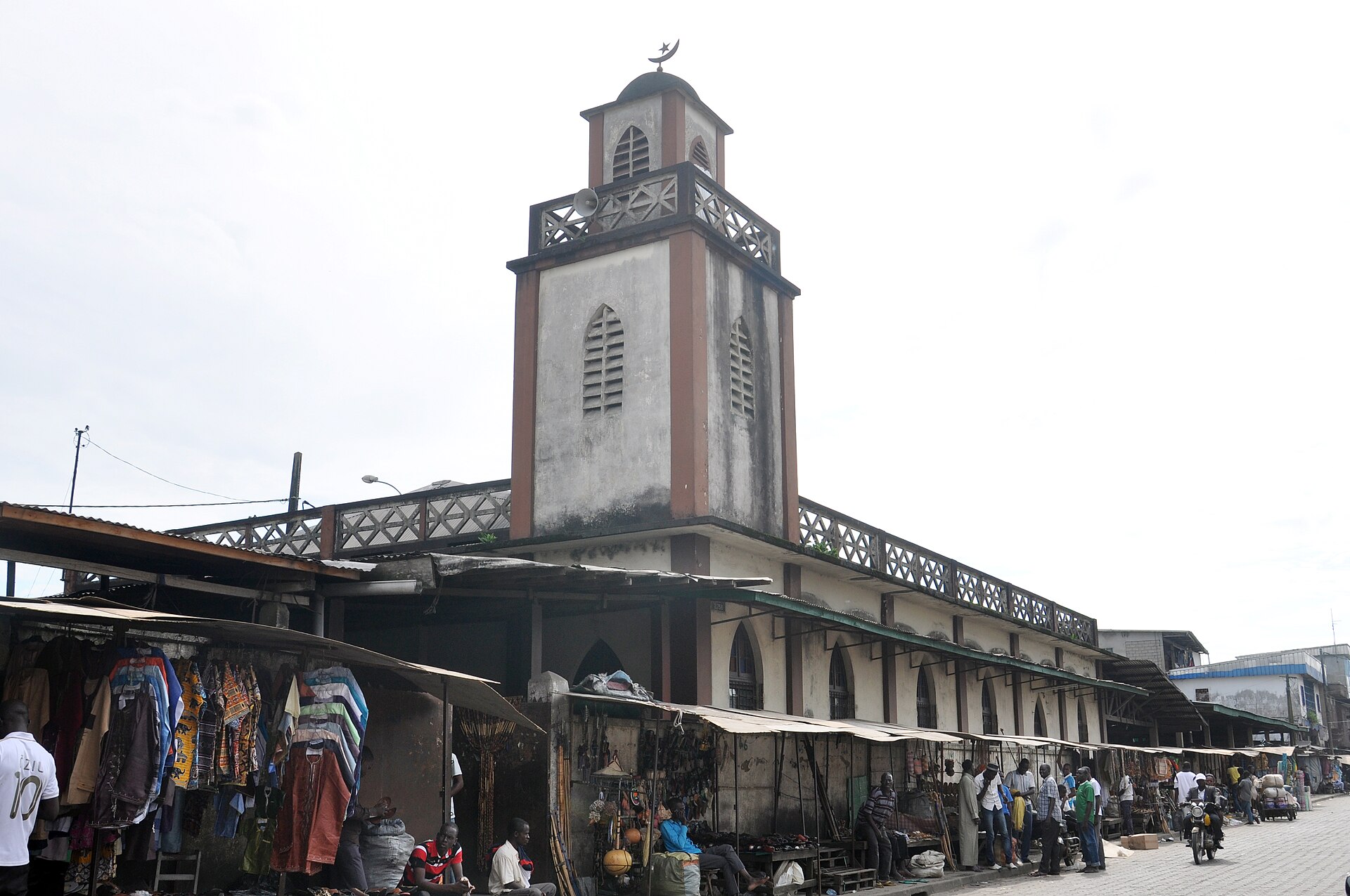
Independence Square in Edéa is one of those quiet places where a country’s past and its everyday life come together without fanfare. There are no grand monuments here, no crowds of tourists, just the unassuming rhythm of a town that has always been more about movement than spectacle. Edéa sits in southern Cameroon, a small but significant city split by the Sanaga River, and the square lies at its heart—a natural gathering point where roads, people, and time intersect.
The architecture is simple but telling. At the center stands a modest stele, marking Cameroon’s independence in 1960. It doesn’t dominate the space; instead, its clean lines and national colors give it a quiet presence. Around it, low colonial-era buildings still stand, their weathered facades hinting at the years when Edéa was part of French Cameroon. These structures once housed administrative offices, banks, and the post office. Now, some have been repurposed into local shops, cafés, or small guesthouses, but the old town’s character lingers in the details—the peeling paint, the arched doorways, the way the light falls across the cracked pavement.
This isn’t a place frozen in history, though. Independence Square is very much alive. In the mornings, vendors set up makeshift stalls, selling everything from fresh fruit and spices to handmade crafts. The scent of fried plantains mingles with the buttery aroma of bread baked in outdoor ovens. By midday, the square fills with people—some hurrying to work, others meeting friends, a few simply sitting on benches, watching the day unfold. On weekends, the energy shifts. Children play, music drifts from open windows, and occasionally, a small market or local performance spills into the open space.
Edéa isn’t a tourist hub like Douala or Yaoundé, and Independence Square isn’t the kind of place you visit for a photo op. There are no guided tours, no souvenir stands, no plaques explaining its significance. What you’ll find instead is something rarer: a glimpse of how ordinary life in Cameroon unfolds. The square doesn’t separate the past from the present; it weaves them together. Here, history isn’t a relic—it’s part of the daily fabric.
The city has always been tied to the Sanaga River, which flows just a short walk away. During colonial times, the river was a vital trade route, carrying goods from the interior to the coast. Later, a hydroelectric dam was built nearby, supplying power to much of the country. The square sits close enough to the riverbank that you can hear the water lapping against the docks, where fishermen mend their nets and small boats bob in the current. In the evenings, when the heat eases, locals often gather by the water, watching the sunset or chatting under the fading light.
Despite its historical weight, the square doesn’t feel like a museum. It evolves with the city—new cafés open, old buildings get fresh coats of paint, and sometimes, community events bring people together. Yet it retains a sense of intimacy, the kind you lose in bigger cities. Neighbors greet each other by name, children race across the pavement, and the air hums with the easy familiarity of a place where everyone belongs. For outsiders, it might feel like stepping into someone else’s routine, but that’s part of its charm.
Independence Square isn’t just a monument; it’s a starting point for understanding Cameroon beyond the usual travel narratives. There are no luxury hotels or high-end restaurants here, just the quiet pulse of local life. You could spend an hour sipping strong coffee at a streetside café, watching the world go by, or wander the nearby streets, where old wooden balconies and flower-filled courtyards still hint at the town’s colonial past. The buildings might be worn, but they tell a story—one of resilience, adaptation, and the slow, steady rhythm of a place that has always been a crossroads.
Edéa doesn’t try to impress visitors, and neither does its square. It exists for the people who live here, which is precisely why it feels so authentic. There’s no forced atmosphere, no polished tourist experience—just the unfiltered reality of a town that has seen history pass through its streets and chosen to keep moving forward. Whether you linger for an afternoon or just pause for a moment, the square leaves its mark not through spectacle, but through the quiet, enduring sense of a place that is still very much alive.