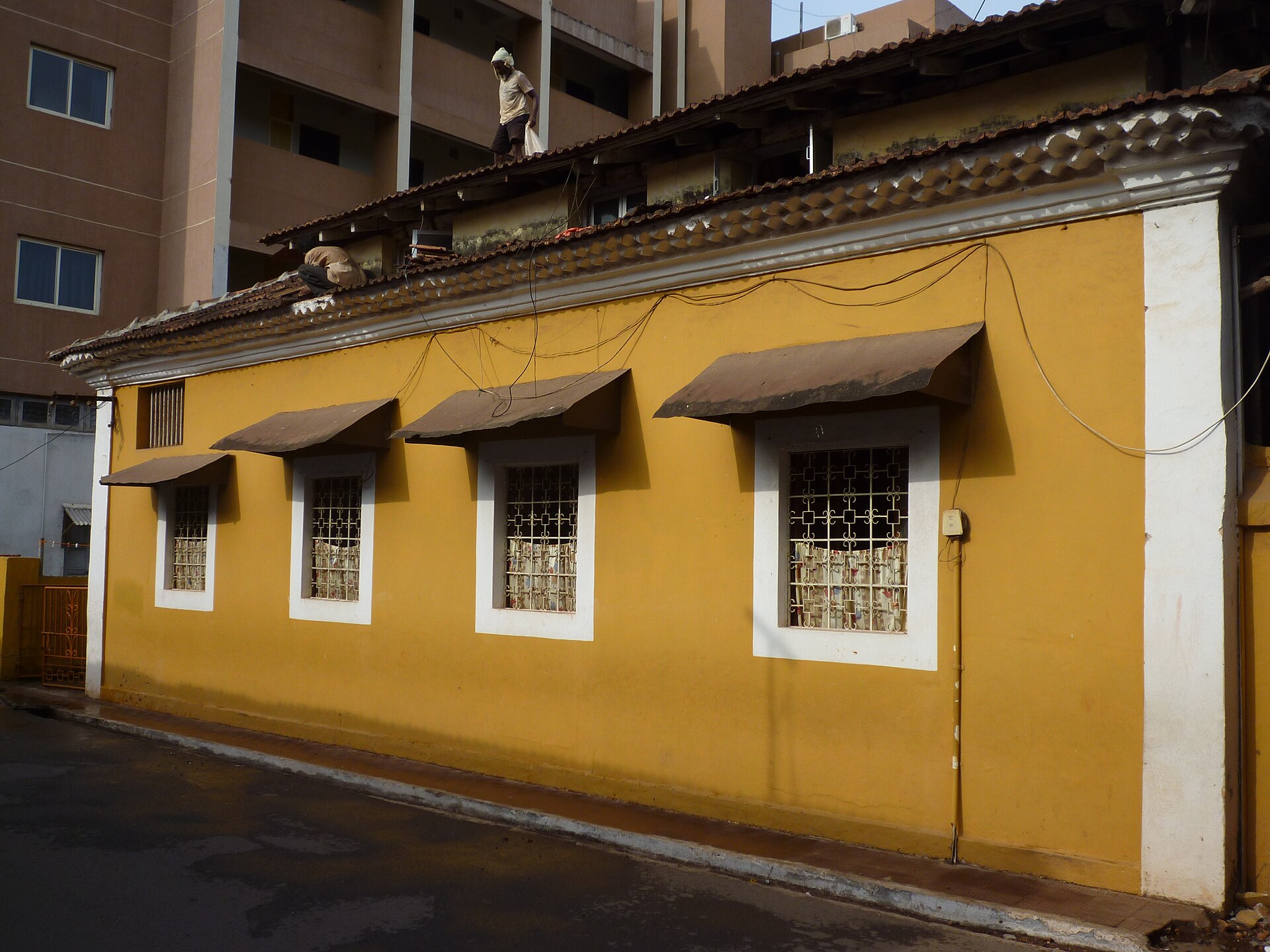
Fontainhas in Panaji is one of those rare places where time seems to soften, where the past lingers without feeling like a relic. This neighborhood, tucked away from the more tourist-heavy parts of Goa, carries the quiet charm of Portugal’s colonial legacy while still being very much alive with the rhythms of everyday Indian life. The narrow, cobbled streets wind between two-story houses painted in faded pastels—blues, pinks, yellows—each with its own character, its own story. The red-tiled roofs, the wrought-iron balconies, the occasional patch of peeling plaster—it all feels like stepping into a different era, one where the pace of life was slower, where the details mattered.
The area dates back to the late 18th century, when the Portuguese, who had ruled Goa for over four hundred years, decided to expand Panaji. Fontainhas takes its name from a small fountain that once stood here, supplying water to the neighborhood. The fountain is long gone, but the spirit of old Goa remains. The houses were built in the Portuguese colonial style, with high ceilings, wide verandas, and wooden shutters designed to keep out the harsh sun. Many of these homes are still owned by families with Portuguese ancestry, though the neighborhood has long since become a mix of cultures. Walking through Fontainhas, you can almost hear the echoes of the past—merchants haggling, sailors returning from long voyages, the clatter of horse-drawn carriages on the stone streets.
What makes Fontainhas special is that it isn’t just a preserved historical site; it’s a living, breathing part of the city. Unlike the crowded beaches or the more commercialized areas of Goa, this neighborhood feels authentic. The streets are too narrow for cars to pass easily, so life here moves at a walking pace. Locals still shop at the small grocers, sip tea in tiny cafés, and chat on doorsteps. In the mornings, you might see women in saris carrying baskets of fresh fruit, while in the evenings, older men gather on benches to play cards. The air is filled with the scent of freshly baked bread from the local bakeries and the sharp, sweet aroma of spices from the nearby shops.
The architecture of Fontainhas is a blend of Portuguese colonial design and local influences. The houses are often painted in soft, muted colors, giving the neighborhood a dreamy, almost Mediterranean feel. Some facades are adorned with intricate plasterwork, while others bear the marks of time—faded family crests, old Portuguese street signs, or the occasional weathered inscription. The wooden shutters on the windows are a common feature, thrown open in the mornings to let in the breeze. If you glance through an open doorway, you might catch a glimpse of a high-ceilinged room with marble floors and antique furniture, remnants of a bygone era.
Fontainhas is also a cultural hub within Panaji. The neighborhood hosts art exhibitions, classical music concerts, and literary events, often held in the very homes that have stood here for centuries. The Fontainhas Institute, located in one of the old houses, works to preserve the area’s heritage, ensuring that the stories of the past aren’t forgotten. On some evenings, you might hear the strains of fado music drifting through the streets—Portugal’s melancholic folk songs, which somehow feel right at home here. Small galleries display works by local artists, many of whom draw inspiration from the neighborhood’s unique atmosphere.
As the sun sets, Fontainhas takes on a different character. The street lamps cast a warm glow over the cobblestones, and the cafés and restaurants begin to fill up. This is one of the few places in Goa where you can still find a quiet corner to enjoy a meal without the usual tourist crowds. The food here reflects the neighborhood’s mixed heritage—Goan dishes with a Portuguese twist. You might try a rich coconut curry, fish marinated in vinegar, or savory pastries filled with spiced meat or vegetables. Many of the restaurants have open-air seating, where the sound of rustling trees and the distant murmur of the Mandovi River add to the ambiance.
The Mandovi River, which flows alongside Fontainhas, has always been a vital part of the neighborhood’s identity. In the past, it was the main route for transporting goods from the port, and the riverbanks were bustling with activity. Today, the river is quieter, but it still shapes the character of the area. The promenade along the water is a popular spot for evening walks, where you might see fishermen mending their nets or families enjoying the cool breeze. The water isn’t always pristine, but the river adds a sense of continuity, a reminder that Fontainhas has always been tied to the sea and the world beyond.
What makes Fontainhas truly special is its authenticity. There are no grand tourist attractions here, no pushy vendors, no staged performances. Instead, there’s a sense of real life unfolding at its own pace. The neighborhood feels like a secret, a place where history isn’t just something you read about but something you can touch, see, and feel. Walking through these streets, it’s easy to forget that you’re in the 21st century. For a little while, you can imagine yourself as a traveler from another time, stepping off a ship into the old port of Goa, ready to explore a world that feels both familiar and entirely new.