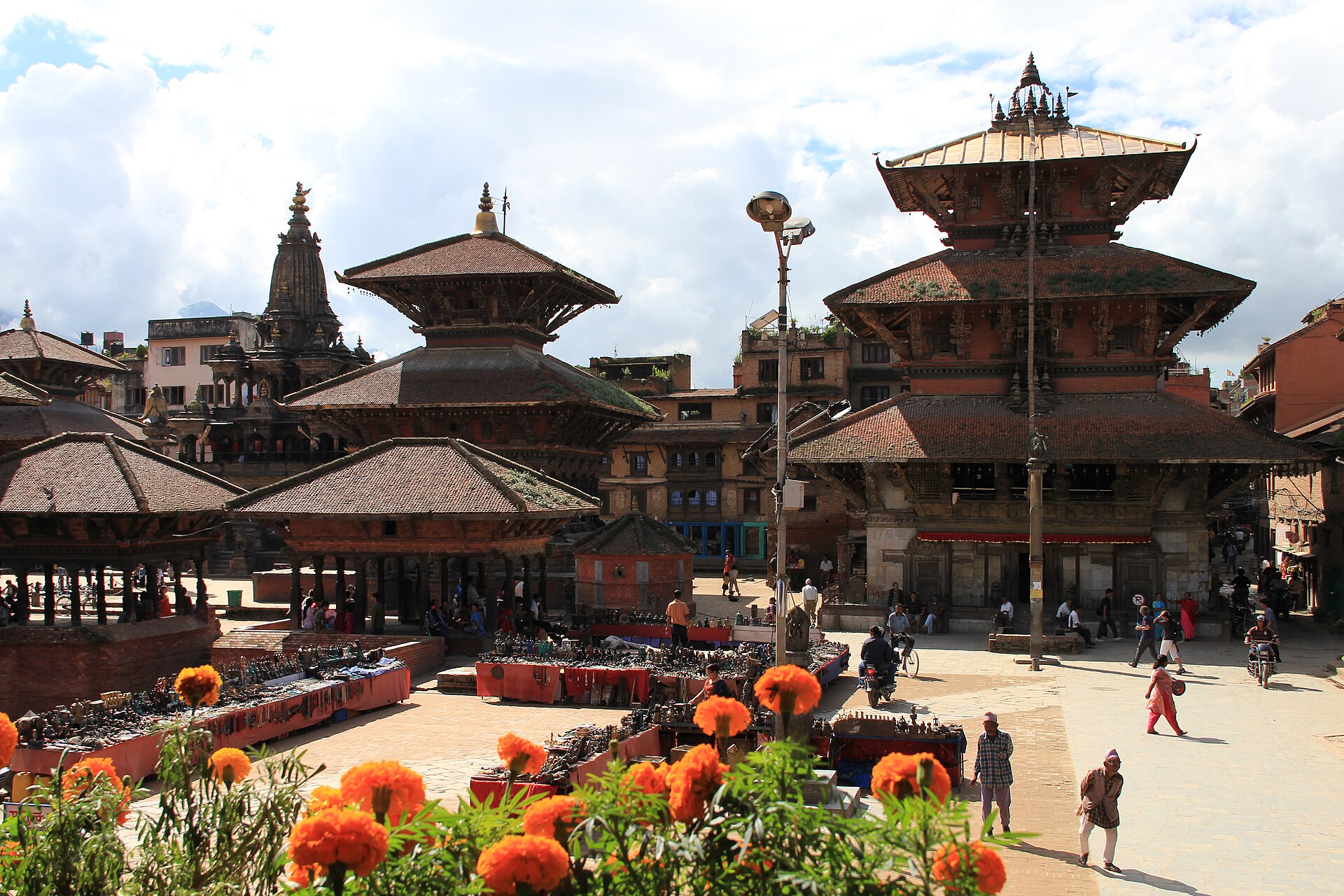
Photo: R.M. Calamar, CC BY 2.0
Durbar Square
out of 5 0 ratingsDurbar Square in Bhaktapur feels like a place where time has learned to slow down. At the heart of this ancient Nepali city, every stone, every carved beam, and every patterned tile carries the weight of centuries—back when Bhaktapur wasn’t just a city but the capital of the powerful Malla kingdom. Today, the square remains an open-air museum where history isn’t just preserved behind glass but woven into the daily lives of the people who still call it home.
The architecture here is a conversation between eras and beliefs, blending Hindu and Buddhist traditions into something uniquely Nepali. The centerpiece is the Palace of Fifty-Five Windows, built in the 17th century by King Bhupatindra Malla. Its intricately carved wooden facade once housed royalty, and now it stands as a testament to the craftsmanship of a bygone era. The balcony itself is a marvel—each of the fifty-five windows is distinct, their delicate patterns shifting with the light, casting intricate shadows that change as the day progresses.
Nearby, the Nyatapola Temple rises above the square, Nepal’s tallest tiered pagoda. Its five stories, crowned with gilded spires, seem to reach for the sky, symbolizing the connection between the earthly and the divine. Dedicated to the goddess Siddhi Lakshmi, climbing its steep steps feels like both a physical and spiritual ascent. Each level is guarded by mythical figures—lions, elephants, griffins—believed to ward off evil spirits. Locals still come here to pay their respects, leaving offerings of flowers, rice, or flickering oil lamps at the temple’s base.
What makes the square truly alive, though, are the people who move through it every day. In the mornings, artisans set up stalls with clay pots and copperware, while vendors spread out fresh vegetables and spices on woven mats. Children play in the shade of the temples, elders gather on wooden benches to chat, and sometimes, musicians with traditional instruments strike up an impromptu tune. It’s a place where the past and present coexist effortlessly, neither overshadowing the other.
The square is at its most magical at dawn or dusk, when the sun bathes the ancient walls in gold and rose. At these hours, the crowds thin, and you can wander the narrow lanes leading to the square, watching the city wake up or wind down. If you’re lucky, you might hear the chime of temple bells or see monks in saffron robes making their way to prayer. The air carries the scent of incense and freshly baked bread from nearby bakeries, a quiet reminder that life here has flowed in much the same rhythm for centuries.
Bhaktapur and its Durbar Square have endured their share of hardships. The 2015 earthquake damaged many of the historic buildings, but through the efforts of restorers and locals, much of the architecture has been carefully repaired. Walking through the square today, you’ll notice patches of new brick among the old, fresh carvings where others were lost—subtle signs of resilience. These marks don’t detract from the beauty of the place; instead, they serve as a reminder that history here isn’t frozen in time but continues to evolve.
For those trying to understand the soul of Nepal, Durbar Square in Bhaktapur offers something rare. There’s no frenetic energy like in Kathmandu, no tourist traps like in Pokhara. Instead, there’s a quiet rhythm—a way of life where every gesture, every sound feels deliberate. You could spend hours sitting on the steps of a temple, watching the light shift, the shadows lengthen, the air fill with the scent of spices and smoke. This isn’t a place for quick photos; it’s a place to slow down, to let its pace seep into you.
Bhaktapur is more than just Durbar Square, of course. From here, you can wander into the surrounding alleys, where traditional Newari houses stand with their intricately carved windows and hidden courtyards. In one, you might stumble upon a potter at work; in another, you could taste *juju dhau*, the rich, creamy yogurt made from an old local recipe. The city has a life of its own, and the square is just its heart—a starting point from which the threads of history, culture, and daily life radiate outward.
What makes this place special, in the end, is its authenticity. There’s no performance here, no attempt to cater to tourists. Just a city that has existed for over a thousand years and the people who have kept its spirit alive. Durbar Square isn’t just a landmark; it’s a window into another time, a chance to touch something that has endured, unchanged in all the ways that matter.
Day around this place
Where else to go on the same day
Building the day…
Where it is
27.67213, 85.42820