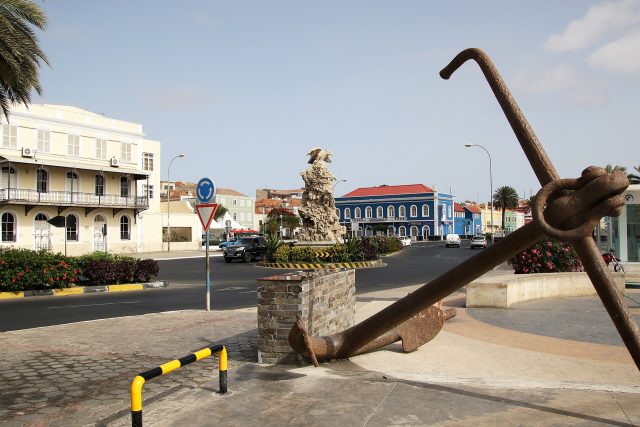
Amílcar Cabral Square in Mindelo is one of those places where the city unfolds at its own unhurried pace, like flipping through the pages of an old photo album. There’s no tourist rush here, no crowds jostling for the best view—just the quiet rhythm of island life, where time seems to slow just enough to let you catch your breath. Tucked in the heart of Mindelo, the square changes with the hours: sleepy and still in the early morning, humming with voices by midday, and alive with conversation by evening, when locals gather for coffee or a glass of grogue, the local rum.
The square takes its name from Amílcar Cabral, a central figure in Cape Verde’s and Guinea-Bissau’s struggle for independence from Portuguese colonial rule. His legacy here is one of quiet reverence. The monument at its center is simple, almost austere, as if reminding visitors that history isn’t made in grand gestures but in the steady, determined steps of those who came before. Around it, life moves at its own pace—people chatting on benches, children playing, the occasional stray dog weaving between the legs of passersby. The square doesn’t demand attention; it simply exists, a quiet witness to the everyday.
The architecture surrounding the square is a blend of colonial charm and local character. The buildings are low-slung, their facades painted in faded pastels that have weathered into something more interesting than perfection. Wooden balconies sag slightly, shutters creak in the breeze, and the occasional wrought-iron railing bears the marks of decades of salt air. The town hall stands out with its neoclassical columns and wide veranda, a relic of Mindelo’s 19th-century heyday, when the city was a key stop for ships crossing the Atlantic. These days, the veranda hosts impromptu concerts or art displays, but even when it’s empty, the building feels like the square’s anchor.
This is where Mindelo’s cultural life pulses strongest. On festival days, the square transforms—music spills from open windows, dancers in bright costumes move to the beat of drums, and the scent of grilled corn and spices fills the air. Even on ordinary afternoons, you might hear the strains of a morna melody drifting from a nearby bar or a street musician tuning his guitar. Mindelo has long been called Cape Verde’s cultural capital, and the square is its stage, whether for a full-blown carnival or just the quiet hum of daily life.
For locals, the square is where generations meet. Elders play dominoes under the shade of trees, teenagers cluster by the fountain to gossip, and toddlers dart around the monument, their laughter blending with the clink of coffee cups from nearby cafés. Weekends bring families strolling, stopping for a drink or a bite to eat at one of the small eateries tucked into the ground floors of the old buildings. There’s no formality here, no sense of being on display—just the easy familiarity of a place where everyone knows their neighbors, and visitors are greeted with a nod or a smile.
A short walk from the square leads to the waterfront, where Mindelo’s maritime past is still visible. In the 19th century, the city was a vital port for transatlantic ships, a place where sailors rested and restocked before continuing their journeys. Some of the old warehouses have been repurposed into bars and restaurants, their high ceilings and thick walls a reminder of another era. The fish market is still active, with vendors selling the day’s catch straight from the boats. Yet even here, the square’s presence lingers, as if everything in Mindelo eventually circles back to it.
Evenings are when the square feels most alive. As the sun sets, the streetlights cast a warm glow over the cobblestones, and the music from nearby bars grows louder. The air carries the scent of grilled fish, spicy stews, and fresh bread, mingling with the salty tang of the ocean. This is when locals and visitors alike might order a glass of grogue, sipping it slowly as the night unfolds. Sometimes, a musician will set up near the monument, and before long, others join in—clapping, singing, or simply listening as the square becomes an open-air concert hall.
Amílcar Cabral Square isn’t the kind of place that dazzles at first glance. Its charm lies in its unassuming authenticity, in the way it reveals itself slowly, like a story told in layers. There are no luxury hotels or flashy storefronts here, just the quiet dignity of a place that has seen history unfold and chosen to carry on. It’s where the past and present coexist without fanfare, where the architecture speaks in whispers of another time. To spend time here is to understand that Mindelo isn’t just a city on an island—it’s a living, breathing entity, shaped by the people who call it home. And the square is its heart, beating in time with the city’s rhythm.