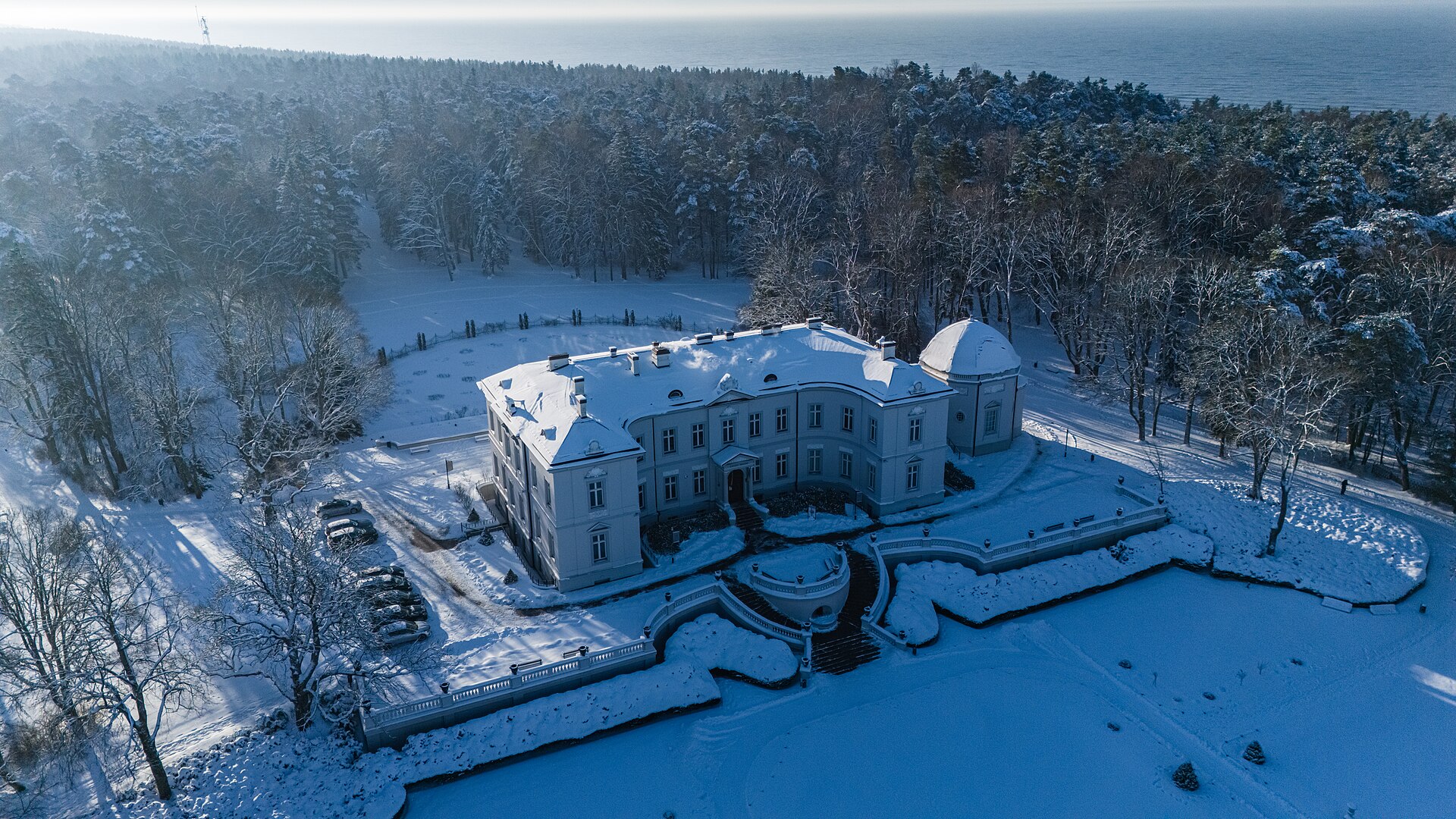
Palanga Beach is where Lithuania meets the Baltic Sea in a quiet, understated beauty that feels almost timeless. Stretching along the coast of this small resort town, the shoreline is more than just sand and water—it’s a place where the rhythm of life slows down, where the horizon blurs into the sea, and where the past lingers in the air. There are no dramatic cliffs or turquoise waves here, just a gentle expanse of golden-gray sand that shifts with the wind, and a sea that reflects the soft, muted light of the northern sky.
The sand itself is fine and cool underfoot, with a faint grayish tint that’s typical of the Baltic coast. On warm days, it warms just enough to lie on without burning, while the water, though never as warm as the Mediterranean, becomes pleasant in July and August. Even when the weather is cool, the beach doesn’t empty. Locals still come to walk along the shore, breathe in the salty air, and listen to the steady rhythm of the waves. There’s something about the way the sea stretches endlessly before you that makes the world feel a little quieter, a little simpler.
Palanga has been a retreat for well over a century, and the beach has always been at its heart. In the late 1800s, the town began attracting wealthy visitors from St. Petersburg and Moscow, who built grand villas and summer homes along the coast. The most enduring symbol of that era is the Palanga Pier, a long wooden walkway that extends far into the sea. Standing at its end, with the wind in your face and the water on all sides, it’s easy to imagine the generations of visitors who have come here to watch the sunset or simply gaze at the horizon. On clear days, the distant outline of Sweden seems almost within reach, though it lies more than a hundred kilometers away.
The architecture of Palanga is inseparable from its shoreline. Along the beach, you’ll find rows of low-rise buildings in the Art Nouveau and neoclassical styles, many dating back to the early 20th century. Their pale facades, intricate balconies, and large windows give the town a sense of elegance that feels both refined and unpretentious. These were once the summer retreats of artists, writers, and musicians, and today, they house small hotels, cafes, and boutiques. Walking along the promenade in the early morning, when the streets are still quiet, feels like stepping into another era—one where life moved at a slower pace.
Unlike the crowded beaches of Southern Europe, Palanga’s shore never feels overrun. There’s always space to spread out a towel without worrying about being hemmed in by sun loungers or umbrellas. In the summer, small beachside cafes serve coffee and ice cream, but the atmosphere remains unhurried. The sea here is shallow and sandy, with a gentle slope that makes it safe for children, and many local families spend their days here, building sandcastles or wading in the cool water. The beach isn’t about loud music or flashy entertainment—it’s about the simple pleasure of being near the water.
One of the most striking things about Palanga Beach is how natural it feels. There are no concrete seawalls or artificial embankments; the coastline retains its organic shape, with dunes covered in sea grass and low pine trees blending seamlessly into the sand. Behind the dunes lies the Biržai Forest, a sprawling pine woodland that stretches along the coast. Walking through it, you’re surrounded by the scent of resin and the soft crunch of needles underfoot. The forest is a world of its own, especially in the off-season, when the beach is nearly empty and the only sounds are the wind in the trees and the distant murmur of the sea.
The weather here is as changeable as the moods of the Baltic. Some summer days are hot enough to warm the sand and the water, but more often, the sky is veiled in a thin mist, and a cool breeze blows in from the sea. The waves roll in steadily, one after another, their sound a constant, soothing presence. In autumn and spring, the beach takes on a different character—the sea turns dark and restless, the sand damp and firm underfoot. These are the best times for long walks, when the wind carries the scent of salt and the horizon seems to stretch forever.
Palanga isn’t a place for wild nightlife or adrenaline-fueled activities. It’s a town for those who prefer quiet mornings on the pier, lazy afternoons with a book by the water, and evenings spent in a small restaurant with a view of the sea. There are no luxury resorts with infinity pools or entertainment programs—just the steady rhythm of the waves, the whisper of the pines, and the sense that time moves differently here. It’s a place where you can step away from the noise of the world and simply be, where the sea and the sky remind you of how vast and peaceful the world can be.