Palanga
Lithuania · 8 places
Photo: Augustas Didžgalvis, CC BY-SA 4.0
Palanaga is where the Baltic Sea meets a small coastal town. The beach stretches for miles, pine forests edge the water, and life moves slowly. In summer, visitors fill the town, but it stays relaxed. Walk the promenade—pine needles mix with salt air. Sit in a café with local beer and smoked fish.
The real draw is nature. Dunes covered in grass and juniper roll along the shore. A protected forest lets you wander for hours without seeing anyone. Sunsets here are soft pinks and oranges, the sea glowing as the sun sinks. On overcast days, the waves crash harder, the mood shifting with the wind.
The town is small. Basanavičius Street is its heart—pedestrian-only in summer, lined with shops, cafés, and restaurants. The Amber Museum sits here, showing how the golden stone shaped the region. Amber is everywhere: in markets, jewelry, sometimes washed up after storms. Locals talk about finding pieces with ancient insects or rare gold shades.
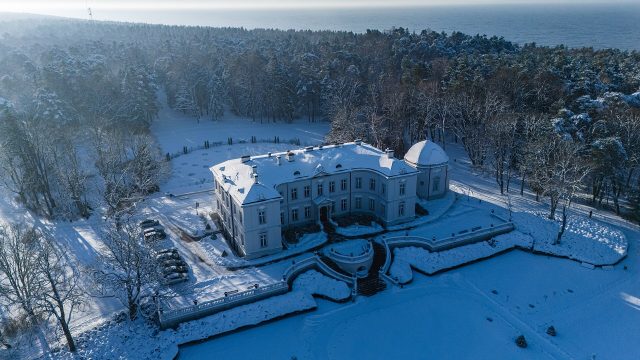
History runs deeper than the beaches. In the late 1800s, Russian aristocrats made it a retreat. Their villas still stand—elegant, with curved balconies and tall windows. The Tyszkiewicz Villa is now a museum. Old streets have wooden houses with carved details and small churches.
Winter quiets Palanga. The sea turns gray, the beaches empty. The wind in the pines is the loudest sound. It’s a time for walks through the forest, needles crunching underfoot. Nearby towns like Klaipėda, with its port, or Šiauliai, with its Hill of Crosses, are short trips away.
You’ll want to come back. Maybe because here, you can step away from noise and just be.
See & Do
8 places


Places on the map
Marker colour follows the categoryClimate and weather
Detailed weather: Palanga- Average temperature
- 9 °C
- Precipitation per year
- 553 mm
Average air temperature
°C
0
0
2
7
12
17
18
18
15
10
5
2
Jan
Feb
Mar
Apr
May
Jun
Jul
Aug
Sep
Oct
Nov
Dec