Yoff Beach feels like a place where the ocean and the land have settled into an old, comfortable rhythm. Tucked along the Cap-Vert peninsula just outside Dakar, it isn’t the kind of beach you find in glossy travel brochures—no rows of sunbeds, no beachfront resorts, no polished promenades. Instead, there’s sand that shifts underfoot, waves that roll in with quiet persistence, and a sense that time here moves differently. The beach isn’t just a stretch of coastline; it’s the heart of a community that has lived by the sea for generations.
This is, first and foremost, a fishing village. Every morning, as the sun rises over the Atlantic, wooden pirogues return from the night’s catch, their hulls heavy with fish. The shore comes alive with the sounds of nets being mended, the shouts of men sorting the day’s haul, and the briny scent of the ocean mixing with the sharp tang of fresh catch. There’s no performance here, no staged authenticity for visitors. It’s simply life as it’s been lived for decades—hard, honest, and deeply connected to the water. The rhythm is unhurried, the work methodical, and the sense of purpose unmistakable.
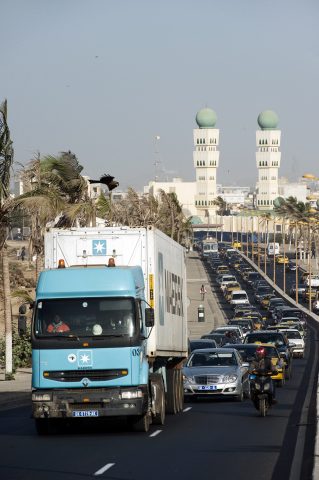
The village itself is built from the materials at hand: coral stone, clay, and corrugated metal roofs that gleam under the sun. Houses cluster along narrow, sandy lanes that lead down to the beach, their walls painted in faded blues, yellows, and whites or left in the natural hues of the earth. In the center stands a mosque with a slender minaret, its clean lines and whitewashed walls a quiet contrast to the organic sprawl of the village. There are no grand monuments or museums here, no architectural marvels to photograph. What makes Yoff special is its unassuming presence, the way it feels lived-in rather than designed.
The beach changes with the tides. At low water, vast sandbanks emerge, stretching far into the distance, where crabs scuttle and seabirds peck at the exposed shore. It’s a good time to walk, to feel the cool, damp sand beneath your feet and watch the horizon where the ocean meets the sky. When the tide comes in, the beach narrows, and the waves crash against the rocks with a force that reminds you of the sea’s power. Locals often gather here in the evenings, when the heat of the day has faded. They sit on the sand, talk, or simply watch the sunset paint the water in shades of gold and pink. Sometimes, small fires are lit, and families share meals of grilled fish, their laughter carrying on the breeze.
Yoff is also a place where the traditions of the Lebou people, the original inhabitants of this coast, are still very much alive. The Lebou have fished and traded here for centuries, and their culture shapes the village in subtle ways. One of the most vivid expressions of this is the annual Gerewol festival, a celebration of the sea that includes pirogue races, traditional dances, and rituals honoring the spirits of the ocean. The festival draws visitors from across Senegal, not just for the spectacle, but for the chance to connect with something older and deeper than modern life. It’s a reminder that Yoff isn’t just a place on a map—it’s part of a living heritage.
For those who want to eat, there are a handful of small cafés and restaurants where the food is simple but full of flavor. The star, of course, is the fish—grilled over open flames, served with spicy yettiss sauce, rice, and flatbread. The meals are unpretentious, the portions generous, and the taste unmistakably local. In the afternoons, the cafés fill with men sipping mint tea or strong coffee, their conversations stretching out as slowly as the shadows. Tourists are welcome to join, though there’s no pressure to do more than sit, listen, and soak in the atmosphere.
Yoff isn’t a place for those seeking luxury or entertainment. There are no beach vendors, no jet skis, no nightclubs. The roads leading here are rough, the infrastructure minimal, and the pace of life deliberately slow. What it offers instead is something rarer: a glimpse of Senegal as it is, not as it’s packaged for visitors. The absence of crowds, the lack of commercialization, the way the village feels untouched by mass tourism—all of this makes Yoff feel like a secret, even though it’s just a short drive from Dakar. It’s the kind of place where you might spend an afternoon doing nothing more than watching the waves, and still feel like you’ve experienced something real.
If you decide to stay, there are a few guesthouses where the rooms are basic but clean, and the hospitality warm. The owners often serve breakfast themselves, and in the mornings, you can wander down to the beach to watch the fishermen at work. During the day, you might explore the village, visit the small market, or simply sit under the shade of a tree and read. In the evenings, the beach becomes a gathering place again, the sound of the ocean filling the silence. There’s no agenda here, no list of must-see sights. The appeal of Yoff lies in its quiet, in the way it allows you to step out of time for a little while.
In recent years, Yoff has started to attract artists, photographers, and filmmakers drawn to its light, its colors, and its unfiltered authenticity. Scenes from movies have been shot here, photographs taken that later end up in galleries far from Senegal. Yet the village itself hasn’t changed. It remains stubbornly itself—modest, unassuming, and a little mysterious. That’s probably why it continues to draw people who aren’t just looking for a new destination, but for something more: a sense of connection, a moment of stillness, a place where the world feels a little slower and a little truer.