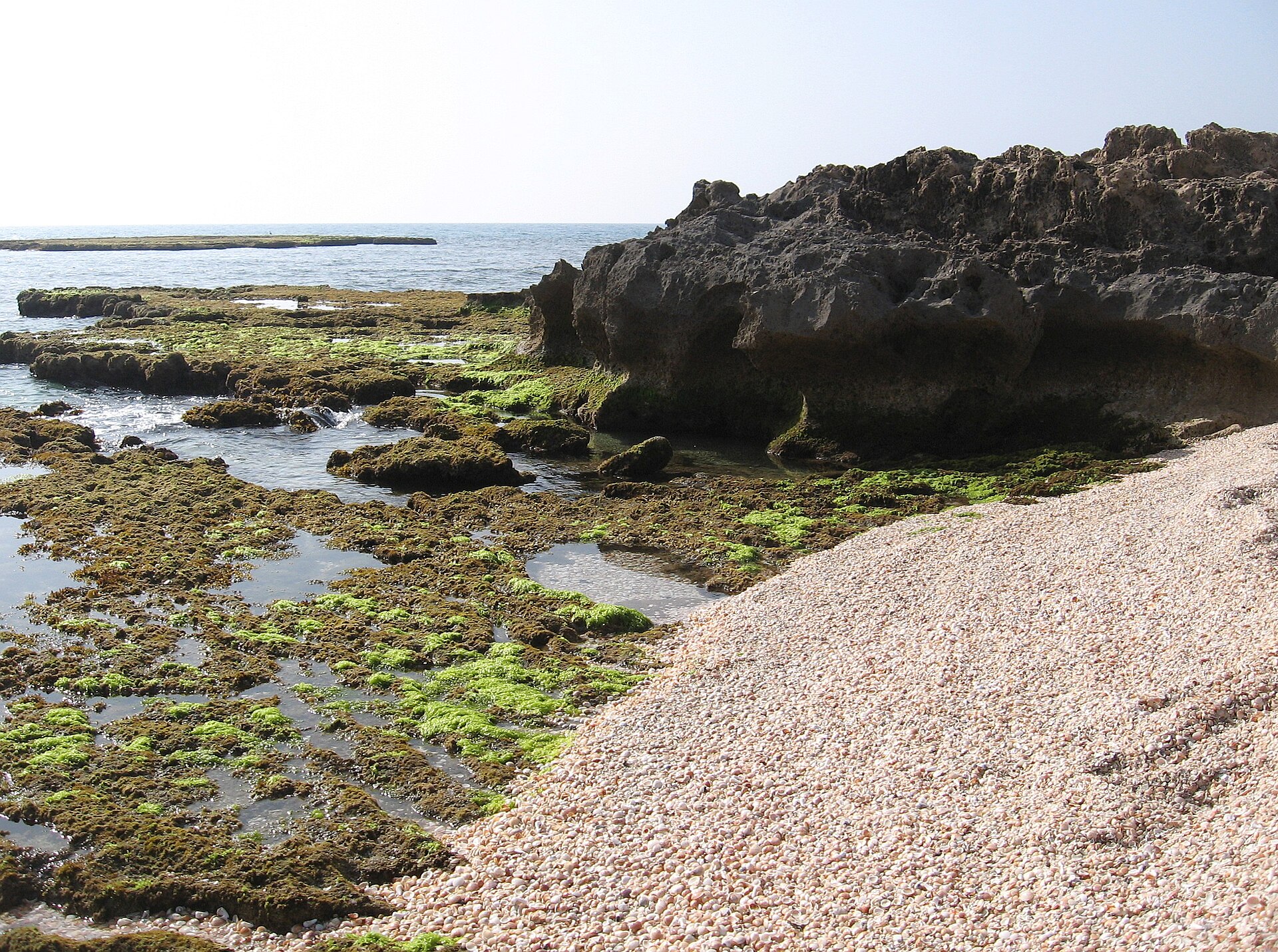
Dor Beach is one of those rare spots along Israel’s coastline where the sea and history blend so seamlessly that time seems to move at its own pace. Tucked between Haifa and Netanya, it feels worlds away from the crowded resorts with their beachfront bars and packed promenades. Instead, Dor offers quiet—just the sound of waves rolling in, the sand warm underfoot, and the faint sense that this stretch of shore has been walked by countless others over the centuries.
The name Dor carries echoes of a distant past. Long before it became a quiet beach, this was a bustling Phoenician port, a vital stop on Mediterranean trade routes. The Phoenicians, master sailors of the ancient world, chose sheltered coves like this one for their settlements, and Dor’s natural harbor made it ideal. Later, Romans and Byzantines left their mark here, their ruins still scattered along the coast. Archaeologists occasionally uncover fragments of that era—coins, pottery, remnants of docks—hinting at the lively port town that once thrived here.
Today, Dor Beach is a long ribbon of golden sand framed by low cliffs and coastal shrubs. The water is clear, shifting from turquoise near the shore to deep blue farther out. Unlike many Israeli beaches, Dor hasn’t been overtaken by development. There are no rows of sunbeds or umbrellas; instead, visitors spread their towels on the sand or settle into the dunes, where prickly bushes sway in the breeze. Behind the beach, gentle hills rise, covered in the kind of wild, sun-bleached greenery that feels untouched, even though civilization is just a short drive away.
What makes Dor unique are the rocky headlands that jut into the sea on either side. They create small, sheltered coves where the water is calm, perfect for swimming or simply floating without the pull of stronger currents. These rocks are also a magnet for snorkelers. Beneath the surface, the underwater world comes alive—fish darting between rocks, sea urchins clinging to the seabed, and the occasional small cave carved into the limestone. On clear days, the visibility is stunning, and even from the shore, you can see the seabed shimmering just below the surface.
Just beyond the beach lies Tel Dor National Park, where history is literally underfoot. The park covers part of the ancient city’s ruins, with the most visible remnants being Roman baths, a Byzantine basilica, and sections of Phoenician walls. Walking through the site, you might stumble upon ancient water cisterns carved into rock or fragments of mosaic floors that once graced wealthy homes. The park is small but atmospheric, with every stone seeming to hold a story. It’s easy to imagine merchants haggling in the streets or fishermen mending their nets along the shore.
Dor has a way of drawing people who aren’t looking for crowds or entertainment. There are no beach parties here, no late-night music—just the quiet rhythm of the waves. As the sun sets, the shore empties, leaving only those who’ve come to camp for a few days. Pitching a tent by the water is a long-standing tradition, especially for Israeli families. At night, the only sounds are the crackle of a fire and the murmur of the sea, a reminder that this place has seen generations come and go under the same stars.
It wasn’t always this quiet. In the mid-20th century, there were plans to turn Dor into a resort, complete with hotels and restaurants. Those plans never took off, and today, the few abandoned structures that remain look like relics of another era. Locals say the developers underestimated how fiercely the land would resist change. Now, those half-finished buildings add a touch of melancholy charm, a reminder that nature often outlasts human ambition.
For those who come to Dor for more than just the beach, the nearby Tel Dor mound offers another layer of history. This artificial hill is a layer cake of civilizations, with evidence of human settlement dating back to the Bronze Age. The mound itself is modest in height, but the view from the top is worth the short climb. On clear days, you can see the Carmel Mountains to the north and the endless stretch of the Mediterranean. It’s a place that makes you feel small in the best way—just one more person in a long line of those who’ve stood here, looking out at the same sea.
Dor isn’t the kind of place you visit for excitement or nightlife. There are no jet skis for rent, no beachside clubs, no tourist traps. What it offers instead is something harder to find: a chance to step away from the noise and simply be. The sea here is the same as it was two thousand years ago, the sand still warm from the sun, the wind carrying the scent of salt and wild herbs. Maybe that’s why it draws those who need a break from the rush of modern life—a place to pause, breathe, and remember what it’s like to just exist.