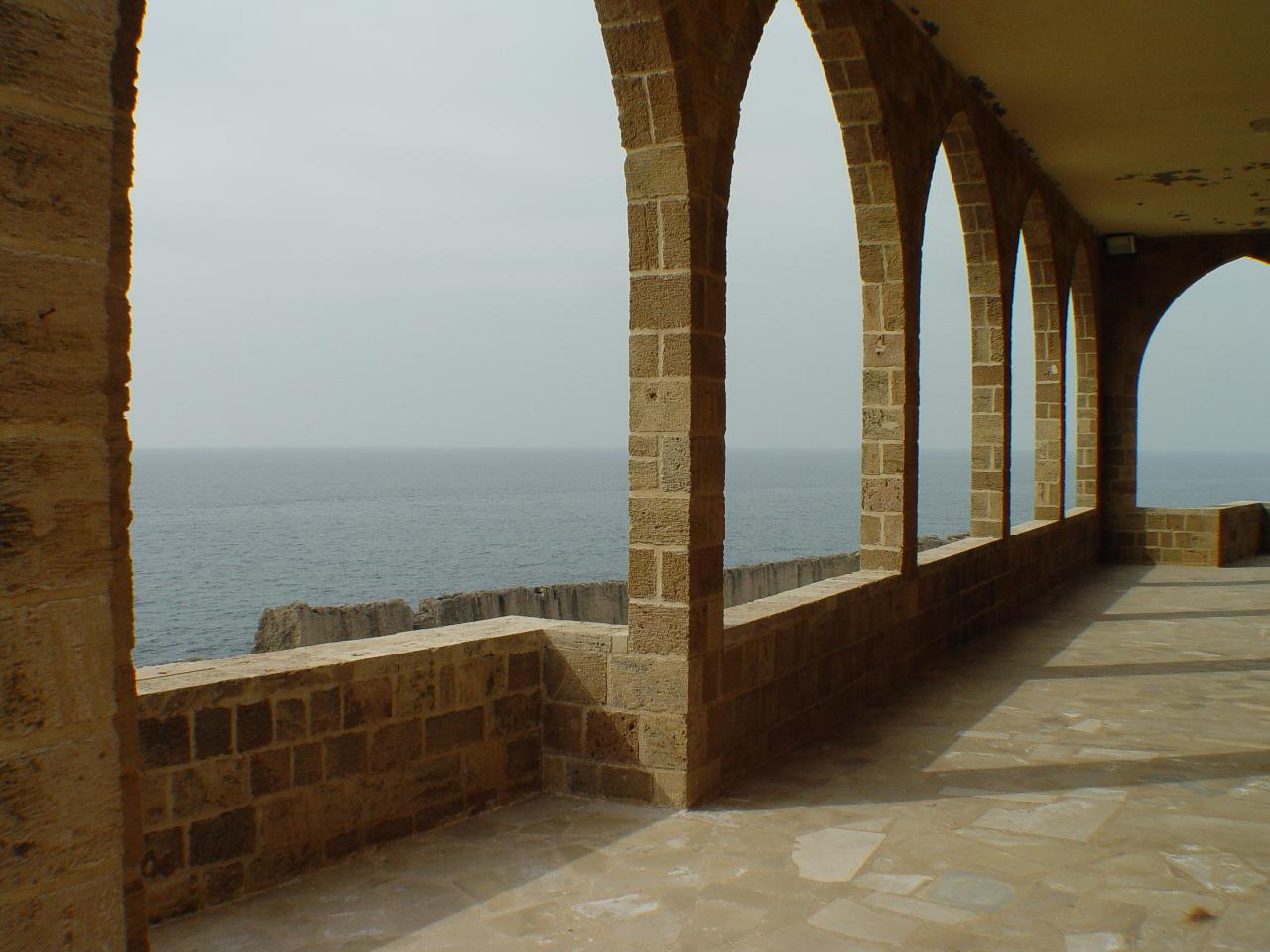
Batroun is one of those coastal towns where the sea isn’t a postcard view but part of daily life. Along Lebanon’s northern shore, it moves at its own pace. The charm lies in narrow streets lined with old stone houses, the scent of grilled fish from seaside cafés, and the way Mediterranean light softens everything. The beach here isn’t about luxury—it’s about salt on your skin and waves breaking against the rocks.
The shoreline is rugged: smooth pebbles, weathered boulders, and patches of sand that shift with the tides. The water is clear and deep close to shore, better for confident swimmers or those who dive from the rocks. On calm days, the sea turns a vivid blue, while the horizon blurs into the hazy outline of the mountains. Behind the beach, low walls of old houses stand, their facades worn by time and salt. Vineyards and olive groves climb the hills beyond.
History runs deep here. The Phoenicians used it as a trading post, the Romans built roads through it, and during the Middle Ages, it thrived as a port connecting the Levant to Europe. You can still find traces of that past—crumbling sections of ancient walls, a church with a bell tower that has stood for centuries, or carved stone blocks half-buried in the sand, once part of a Phoenician dock. The beach itself has slowly reclaimed what was once a harbor.
In summer, Batroun wakes up. Beirutis escape the city’s heat to fill seaside cafés and restaurants. The menu revolves around the day’s catch—grilled sea bass, octopus salad, or sardines so fresh they taste of the sea. Meze is served in generous portions, meant to be shared. Local wines, grown on nearby slopes, flow freely. As evening falls, lights along the promenade flicker to life, their reflections dancing on the water. People come to unwind, and the mood is easy.
Winter changes the town. The sea turns restless, churning against the rocks. Rain soaks the earth, filling the air with the scent of damp soil and woodsmoke. Fishermen mend their nets on the shore. In dimly lit cafés, old men gather around backgammon boards. Artists set up easels along the waterfront, trying to capture the winter light. There’s no rush—just the steady rhythm of a place that has always been.
This isn’t a place for nightlife or shopping. Batroun’s appeal is its unfiltered reality. You might wander the promenade, stopping at tiny shops where jars of olive oil and sacks of spices line the shelves. Or sit on a rock with Turkish coffee, watching the tide roll in. Sometimes, an old-timer shares stories—how tuna shoals once filled the bay or how boatbuilders shaped cedar planks by hand. These moments feel unscripted.
In recent years, Batroun has drawn those seeking an alternative to Lebanon’s crowded coastal spots. There are no high-rise hotels, just guesthouses and family-run inns where hospitality feels personal. Some visitors come for a weekend, others stay for weeks. The sea resets the mind. It’s the kind of place that lingers—not because of any single attraction, but because of how it makes you feel. Here, time settles, layering itself into something rich and enduring.