Alajuela’s Juan Santamaría Park is one of those places where the past lingers just beneath the surface. It sits in the heart of the city, a quiet square framed by low-slung buildings and the occasional rustle of palm leaves overhead. For most visitors, it’s just a pleasant spot to pause between errands or a shady place to wait for a bus, but the park carries a weight that goes beyond its everyday role. It’s named after Juan Santamaría, the young drummer boy whose act of bravery in 1856 helped turn the tide in a pivotal battle against the American filibuster William Walker. That story is woven into the fabric of Costa Rica’s national identity, and the park serves as a subtle reminder of it.
The layout of the park is simple, almost unassuming. A few benches circle a central monument—a bronze statue of Santamaría, rifle in hand, gazing toward the east. The statue was erected in the late 19th century, not long after the country began to embrace its own mythology of heroism. Around it, the park unfolds in neat, symmetrical paths lined with trees that provide shade from the midday sun. There’s no grand architecture here, no towering structures to draw the eye. Instead, the space feels intimate, almost domestic, as if it were designed more for the people who live in Alajuela than for tourists passing through.
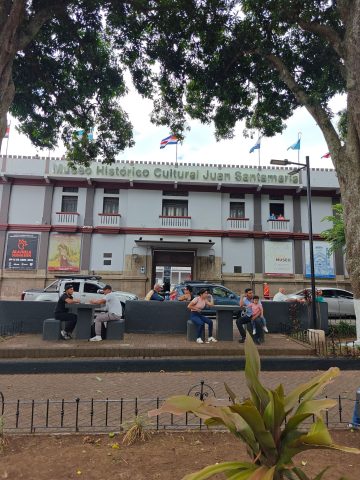
On any given day, the park is alive with small, ordinary moments. Schoolchildren cut across the paths on their way home, their laughter mixing with the calls of vendors selling fresh fruit or cold drinks from carts parked along the edges. Older men gather on the benches to play dominoes or chat about the news, while mothers push strollers under the shade of the trees. The rhythm of life here is unhurried, the kind that doesn’t announce itself but simply exists, steady and unchanging. It’s easy to overlook the park’s historical significance when the present feels so immediate.
Yet the past is never far away. The battle that made Santamaría a national hero took place in the nearby town of Rivas, Nicaragua, but Alajuela was his hometown, and this park is one of the few places where his legacy is visibly preserved. The statue itself is modest, more reflective than triumphant. Santamaría was just nineteen when he volunteered to set fire to Walker’s stronghold, a decision that cost him his life but helped secure Costa Rica’s sovereignty. The story is taught in schools across the country, and while the details may fade over time, the idea of ordinary courage endures. The park doesn’t force the narrative on visitors; it simply offers a place to sit and consider it.
The surrounding buildings add another layer to the park’s character. Many of them date back to the late 19th or early 20th century, their facades a mix of colonial and neoclassical styles that speak to Alajuela’s growth during Costa Rica’s coffee boom. The city was once a key stop on the trade route between the Central Valley and the Pacific coast, and its architecture reflects that era of prosperity. The park, in a way, is a quiet counterpoint to that history—less about wealth and commerce, more about the values the country holds dear. It’s not a place of grand declarations, but of quiet reflection.
In the evenings, the park takes on a different mood. The heat of the day gives way to a cooler breeze, and the streetlights cast long shadows across the paths. Couples stroll along the edges, while groups of teenagers gather near the monument, their voices blending with the hum of the city. The statue of Santamaría is bathed in soft light, its details softened by the dusk. There’s something almost poetic about the way the park transitions from day to night, as if it’s reminding visitors that history isn’t just about the past—it’s about the people who carry it forward.
For those who take the time to look, the park offers more than just a place to rest. It’s a small but meaningful piece of Costa Rica’s story, one that doesn’t demand attention but rewards those who pause to notice. The monument, the trees, the people going about their lives—all of it adds up to something greater than the sum of its parts. It’s a place where the national narrative feels personal, where the weight of history is balanced by the lightness of everyday life. And perhaps that’s the point. The park doesn’t need to be grand to matter; it just needs to be real.