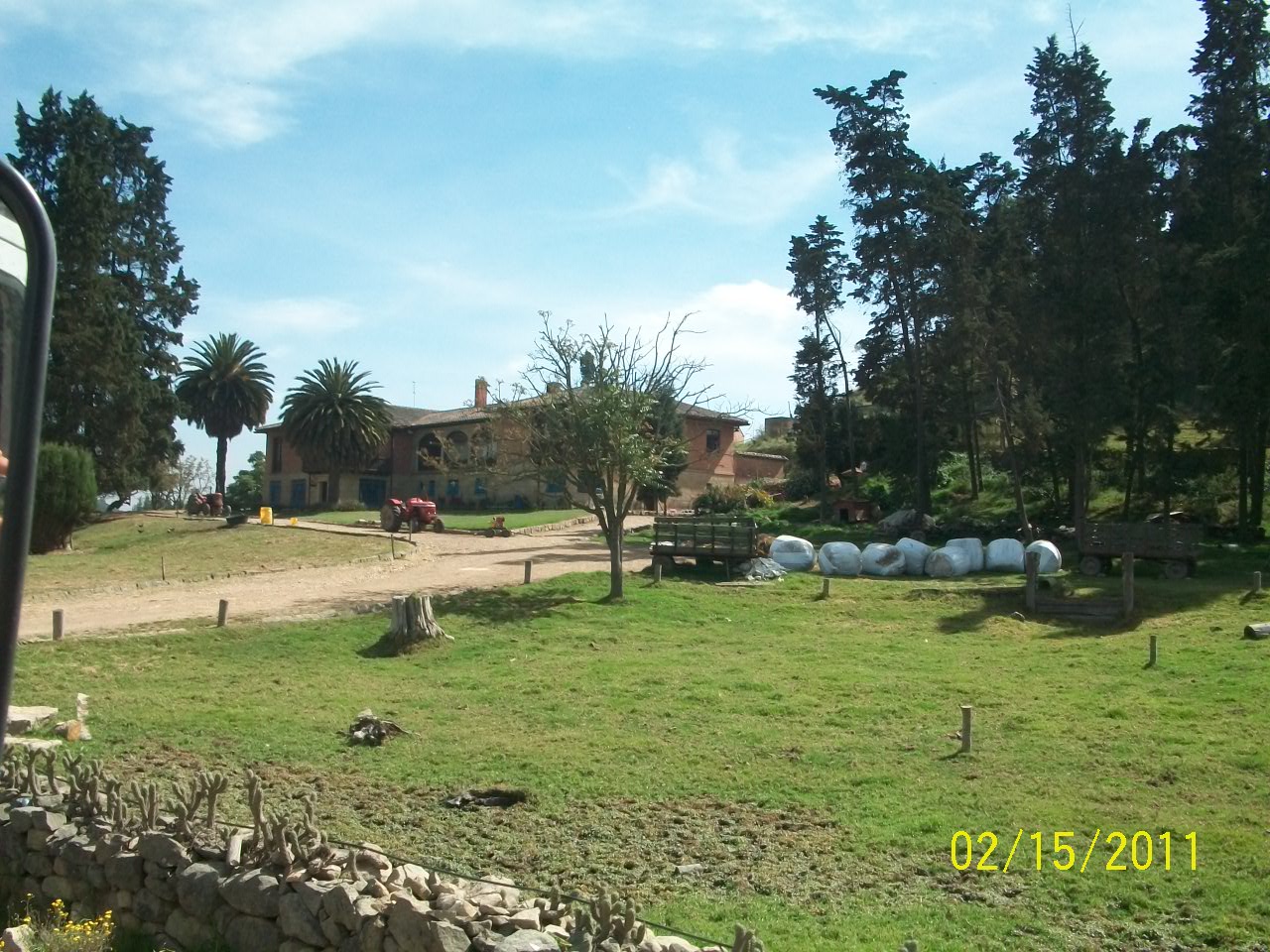
Soacha Park is one of those places that quietly holds the stories of a region, tucked away just beyond the edges of Bogotá’s sprawl. It’s not the kind of park that draws crowds with flashy attractions or grand monuments, but rather one that feels like a pause in the landscape—a green space where the rhythm of the city gives way to something slower, more deliberate. The park sits in Soacha, a municipality that has grown alongside Colombia’s capital, absorbing its energy while maintaining its own identity. Here, the Andes rise in the distance, their slopes softened by the haze of altitude, and the air carries the faint scent of eucalyptus and damp earth, especially after a rain.
The park itself is a mix of open lawns, shaded walkways, and small hills that offer views of the surrounding neighborhoods. It’s a place where locals come to escape the noise of the streets, whether for a morning jog, an afternoon picnic, or just a moment of quiet under the trees. On weekends, families spread out blankets near the central fountain, children chase each other across the grass, and vendors set up stalls selling arepas or fresh fruit. The atmosphere is unhurried, almost old-fashioned in its simplicity, as if the park has always been here, a constant in a place that has seen rapid change.
Soacha’s history is woven into the fabric of the park, though it’s not always visible at first glance. The area was once part of the vast territories of the Muisca people, who lived in the highlands long before the Spanish arrived. Later, during the colonial period, Soacha became a stopover for travelers moving between Bogotá and the warmer valleys to the west. The park, in its current form, is a more recent addition, shaped by the growth of the municipality in the 20th century. It’s not a historic site in the traditional sense, but it carries the weight of the community’s daily life, a place where generations have come to mark time in their own way.
The architecture of the park is understated, almost incidental. There are no grand arches or ornate statues, just practical structures like benches, pathways, and the occasional pergola draped in climbing plants. The central fountain is the closest thing to a focal point, its water trickling in a steady, unobtrusive rhythm. Around it, the park unfolds in gentle curves, with clusters of trees providing pockets of shade. The design feels organic, as if the space grew naturally rather than being imposed on the landscape. It’s the kind of place where you might not notice the details at first, but after a while, you start to appreciate the way the paths meander or how the light filters through the leaves in the late afternoon.
One of the park’s quieter charms is its role as a meeting point between nature and the urban environment. Soacha is a place of contrasts—modern apartment blocks rise on one side, while on the other, the land dips into valleys where small farms still cling to the hillsides. The park sits somewhere in between, a buffer where the wild and the built coexist. Birds flit between the branches, and if you’re lucky, you might spot a hummingbird darting among the flowers. The air is cooler here than in the heart of Bogotá, a reminder of the altitude that shapes life in this part of Colombia.
For those who live in Soacha, the park is more than just a green space; it’s a part of daily life. It’s where teenagers gather after school, where elderly couples take their evening walks, and where street musicians sometimes set up near the entrance, filling the air with the sound of accordions or guitars. There’s a sense of ownership here, a feeling that the park belongs to the people who use it, rather than to tourists or officials. That’s not to say it’s always pristine—like many public spaces, it shows signs of wear, with patches of bare earth where the grass has been trampled or graffiti scrawled on a bench. But that only adds to its authenticity, a reminder that this is a living place, not a curated exhibit.
The park also reflects the broader changes in Soacha, a municipality that has grown rapidly in recent decades. Once a sleepy satellite of Bogotá, it has become a city in its own right, absorbing waves of migration from rural areas and other parts of Colombia. The park has seen these shifts firsthand, its paths worn smooth by the footsteps of newcomers and long-time residents alike. It’s a place where the past and present overlap, where the stories of those who came before are still visible in the way the space is used today.
Visiting Soacha Park isn’t about ticking off a list of sights or snapping the perfect photo. It’s about slowing down, observing the small details—the way the light catches the water in the fountain, the laughter of children playing tag, the quiet conversations of friends sharing a meal. It’s a place that invites you to sit for a while, to watch the world go by at its own pace. And in a region where so much is changing, that kind of stillness can feel like a rare gift. Whether you’re a local or a traveler passing through, the park offers a glimpse into the everyday rhythms of life in Soacha, a reminder that sometimes the most meaningful places are the ones that don’t try too hard to impress.