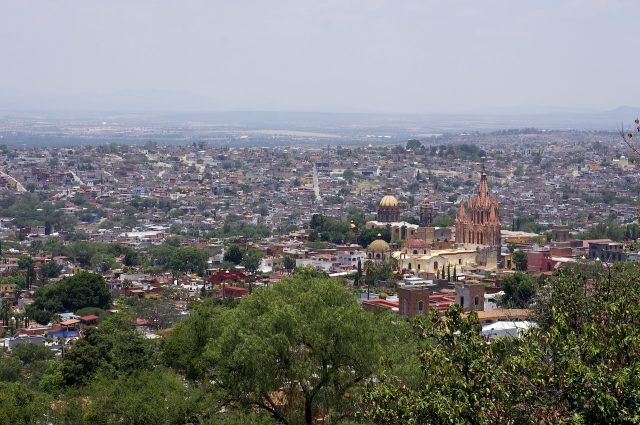
Bogotá
Colombia · 9 places
Photo: Peter Angritt, CC BY-SA 3.0
Bogotá doesn’t reveal itself at first glance. It’s not a city of postcard-perfect beaches or tropical clichés, but something far more intriguing—a place where history and modernity collide in unexpected ways. Perched on a high-altitude plateau over 2,600 meters above sea level, the air here is thin, the sun deceptively strong even on cloudy days. The city doesn’t try to be conventionally beautiful; it’s raw, unpolished, and all the more compelling for it.
The heart of Bogotá is La Candelaria, a maze of cobblestone streets where colonial-era buildings stand shoulder to shoulder, their colorful facades peeling just enough to hint at the stories they’ve witnessed. This is where the city feels most alive in the quiet hours of the morning, when mist still lingers between the alleys and sunlight catches the stained glass of centuries-old churches. You can spend hours wandering here, ducking into tiny cafés where the scent of freshly ground coffee fills the air, or pausing to listen to street musicians playing everything from traditional *bambucos* to improvised jazz. The pace is unhurried, even as the rest of the city hums with energy just beyond the district’s edges. It’s easy to imagine Bogotá as it once was—a small Spanish settlement clinging to the mountainside, far removed from the metropolis it would become.
Yet Bogotá is far from stuck in the past. In neighborhoods like Chapinero and Parque 93, the city pulses with a different kind of life, driven by artists, musicians, and entrepreneurs who’ve turned these areas into hubs of creativity. Here, you’ll find avant-garde galleries, boutique shops selling locally designed goods, and restaurants where chefs reimagine Colombian cuisine with bold, experimental twists. By night, the streets come alive with music—salsa spilling from dimly lit bars, reggaeton thumping from rooftop clubs, electronic beats echoing through underground venues. And then there’s the Gold Museum, home to one of the world’s most extraordinary collections of pre-Columbian gold artifacts. The sheer scale of the exhibit is staggering, but it’s the stories behind the pieces that linger—the craftsmanship, the rituals, the civilizations that thrived here long before the Spanish arrived. Standing in those quiet halls, it’s impossible not to feel the weight of what was lost, and how little we truly know about the people who shaped this land.
Bogotá isn’t a perfect city. Traffic snarls the streets, the noise can be overwhelming, and the contrast between wealthy enclaves and struggling neighborhoods is stark. But these imperfections are part of what makes it feel real. The locals, *bogotanos*, are famously warm once you get past their initial reserve. They’ll tell you where to find the best *ajiaco*—a hearty soup made with chicken, three kinds of potatoes, and a touch of corn—where to catch live music in a dive bar with decades of history, or how to make the trek up Monserrate, the mountain that looms over the city. You can take the funicular or cable car, but if you’re feeling ambitious, the hike is worth it. The altitude makes every step a challenge, but the view from the top—a sprawling sea of rooftops and distant mountains—is unforgettable.
This isn’t a city for those seeking easy, polished experiences. Bogotá demands patience, curiosity, and a willingness to embrace its contradictions. But if you let it, it will reward you in ways you didn’t expect: the aroma of freshly roasted coffee beans at Paloquemado market, the laughter of children playing in Plaza de Bolívar, the quiet of Simón Bolívar Park at dusk when the city finally exhales. There’s no single way to experience Bogotá—it’s a place where everyone finds their own rhythm, their own corner of magic. And that’s why, long after you’ve left, it stays with you.
See & Do
All of them


Places on the map
Marker colour follows the categoryClimate and weather
Detailed weather: Bogotá- Average temperature
- 14 °C
- Precipitation per year
- 1081 mm
Average air temperature
°C
14
14
14
15
15
14
14
14
14
14
14
14
Jan
Feb
Mar
Apr
May
Jun
Jul
Aug
Sep
Oct
Nov
Dec