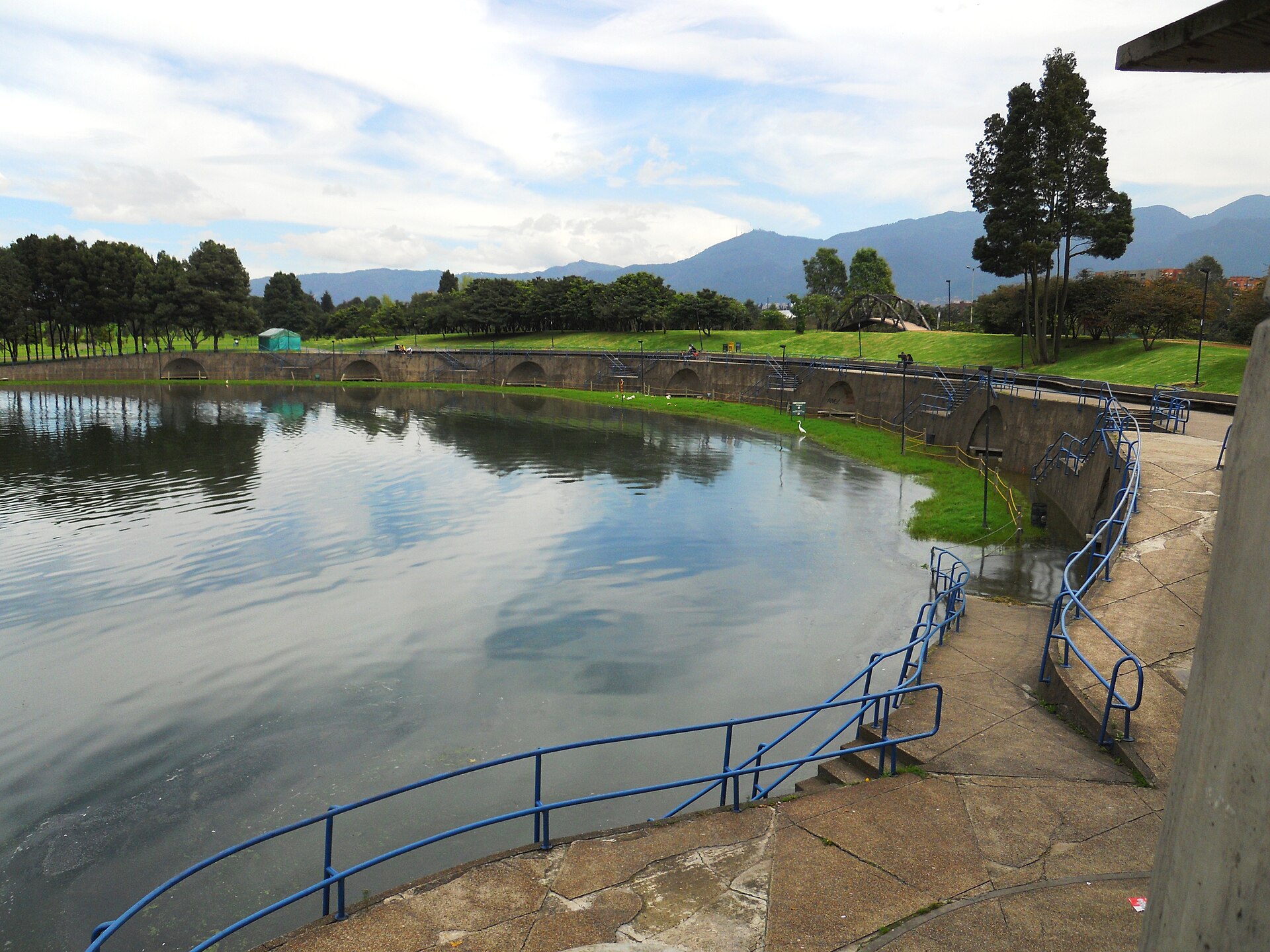
Simón Bolívar Park isn’t just another green space in the heart of Bogotá—it’s where the city’s history, nature, and daily life intertwine in the most unassuming way. Covering over thirty hectares, it’s one of the largest parks in the capital, though it began as a modest public garden in the late 19th century. Back then, Bogotá was just starting to expand beyond its colonial core, and green spaces were rare. Today, the park serves as the city’s lungs, a place to escape the noise and chaos, yet it also reflects Bogotá’s character: a little chaotic, but somehow harmonious, alive and unpretentious.
Named after Simón Bolívar, the liberator who freed much of South America from Spanish rule, the park is deeply tied to Colombia’s history. Bolívar himself spent time in Bogotá, though the park was established after his death. His name here isn’t just a tribute to a historical figure—it’s a symbol of freedom in the broadest sense. There are no grand monuments to him in the park, just quiet paths, ponds, and trees, as if to say that true remembrance doesn’t always need bronze or marble. There are other sculptures, dedicated to later figures, but they don’t dominate the space; they simply belong to it.
The park’s design is simple and functional, much like many public spaces in Latin America from that era. The main avenue, paved with stone and lined with old trees, leads inward from Carrera Séptima, their canopies forming a natural shelter. Along it, benches are filled at all hours—students with books, retirees feeding pigeons, families picnicking. On weekends, the park buzzes with activity: children playing, couples strolling, impromptu concerts or dances springing up. In the summer, festivals and fairs take over, but even without them, the atmosphere feels festive—not in an official way, but because people here are simply at ease.
The ponds are another defining feature. Small and dotted with ducks and swans, framed by weeping willows, they offer a sense of calm, especially on the rare days when Bogotá isn’t shrouded in mist. The water isn’t crystal clear, but that doesn’t detract from the experience—it adds to the authenticity, a reminder that the city is real, imperfect, and alive. Near one of the ponds stands an old pavilion from the early 20th century, occasionally used for exhibitions or small concerts. It’s not grand, but its modest charm fits perfectly with the park’s unassuming vibe.
Simón Bolívar Park is also a place where you can see Bogotá’s diversity on full display. Here, people from all walks of life cross paths: the homeless seeking shade, well-dressed office workers on lunch breaks, children kicking soccer balls on the lawns, teenagers posing for photos among the flowers, elderly couples chatting on benches. Colombia is a country of contrasts, and this park captures that better than most places in the city. No one feels out of place—it’s a space where different lives briefly intersect, a kind of social glue holding together people who might otherwise never meet.
Despite its popularity, the park doesn’t feel overly manicured or artificial. There are no perfectly trimmed lawns or rigid flowerbeds—just natural growth, left to do as it pleases. That’s part of its charm: it doesn’t try to be perfect, it just exists, evolving alongside the city. In recent years, Bogotá’s government has paid more attention to green spaces, and Simón Bolívar Park has been a priority. New trees have been planted, paths refreshed, but the effort has been to preserve the park’s spirit of freedom and informality, the very qualities that make it special.
For visitors, the park offers a chance to see Bogotá beyond its museums and historic buildings—as a living, breathing organism. There are no crowds of tourists here, just the rhythm of daily life. You can sit on a bench with a coffee bought from a street vendor, or wander the paths, watching how locals spend their time. Musicians often perform here, from guitarists playing traditional tunes to young bands experimenting with modern Latin sounds. Their performances aren’t always polished, but that’s part of the authenticity.
Simón Bolívar Park isn’t the kind of place that dazzles at first glance. There are no grand architectural ensembles or rare plants, but that’s where its appeal lies. It’s a space where time slows down, where you can step away from the rush and just be—alone or with others. In a city that’s constantly changing, the park remains a steady presence, a reminder that even in a metropolis, there’s room for quiet and calm. For Bogotá’s residents, it’s long been a part of life; for outsiders, it’s a way to touch the city’s soul, which isn’t always visible on the surface.