Serranópolis do Iguaçu is one of those places where Brazil reveals itself in its raw, untamed beauty. Tucked away in the western reaches of Paraná state, far from the well-trodden paths of Rio or the Amazon, this small town and its surrounding park offer something rare—a chance to experience the country’s wilderness without the crowds. The landscape here is a mix of rolling hills, dense forests, and rivers that carve their way through the terrain, creating a sense of isolation that feels almost forgotten by time. There are no grand hotels or tourist traps, just the quiet rhythm of nature, punctuated by the distant roar of waterfalls and the rustle of leaves in the wind.
The history of this region is one of slow discovery. For much of the 20th century, these lands remained largely untouched, their thick forests and winding rivers acting as natural barriers to development. The first settlers arrived drawn by the fertile soil and the promise of farming, establishing small homesteads and villages that still retain a sense of simplicity. The park itself came later, born out of a growing recognition that this unique ecosystem needed protection. Today, it serves as both a refuge for wildlife and a place where visitors can step away from the noise of modern life. The Atlantic Forest that covers much of the area is one of the most biodiverse regions on the planet, home to species found nowhere else.
What makes Serranópolis Park special is its architecture—not the kind built by human hands, but the kind shaped by wind, water, and time. The rocks here are draped in moss and vines, forming strange, almost sculptural shapes, while towering trees create a canopy that filters the sunlight into dappled patterns on the forest floor. The trails winding through the park vary in difficulty, each offering a different perspective on the landscape. Some lead to viewpoints overlooking valleys and rivers, where the horizon stretches out in shades of green and blue. Others descend to hidden waterfalls, where the water is cool and clear, inviting a swim. Local guides often point out ancient trees, some so old they’ve witnessed centuries of change, their gnarled roots holding stories of a time when this land was entirely wild.
The park sits at the meeting point of two distinct ecosystems—the Atlantic Forest and the cerrado savanna—creating a blend of flora and fauna that’s hard to find anywhere else in Brazil. This diversity is evident in the wildlife that calls the area home. Capuchin monkeys swing through the trees, their chatter mixing with the calls of toucans, their bright beaks flashing against the green. Jaguars, though elusive, still roam these forests, a reminder of the wildness that persists here. Birds fill the air with song from dawn until dusk, while at night, the sounds shift to the croak of frogs and the occasional hoot of an owl. For anyone who enjoys observing nature, the park is a living classroom, where every turn in the trail might reveal something new.
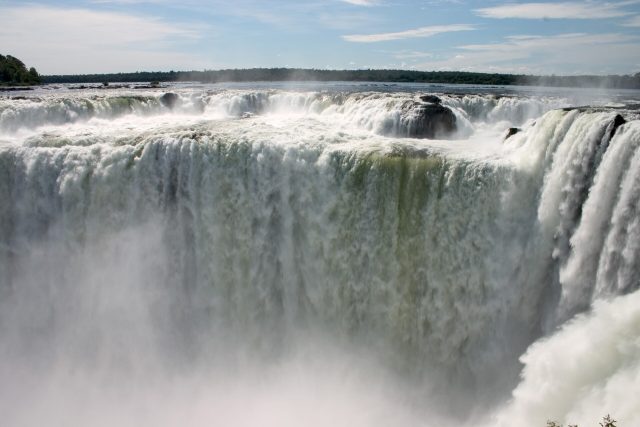
Waterfalls are the park’s most striking feature, each with its own personality. Some crash down sheer cliffs in a thunderous display, sending up clouds of mist that hang in the air like a veil. Others cascade gently over rocky ledges, forming natural pools where the water is so clear you can see the stones beneath the surface. The most famous of these, Cachoeira do Iguaçu, is a force of nature in its own right. During the rainy season, the water surges with even greater intensity, turning the falls into a spectacle of raw power. Standing near it, you can feel the energy in the air, the vibration of the water resonating through the ground beneath your feet.
This isn’t a place for those seeking luxury or entertainment. There are no amusement parks or crowded beaches here, just the quiet hum of the forest and the occasional murmur of a nearby stream. Many visitors come for a few days, staying in simple campsites or small guesthouses nearby. Mornings might be spent hiking the trails, afternoons cooling off in a waterfall’s pool, and evenings gathered around a fire under a sky dense with stars. It’s the kind of place where time slows down, where you can sit on a rock by the river and listen to the water rushing over the stones, or lie in the grass and watch clouds drift overhead. For those who crave stillness, it’s a rare find.
Though it remains off the radar for most travelers, Serranópolis Park is slowly gaining a reputation among those who want to see Brazil beyond the postcards. There are no five-star resorts or gourmet restaurants here, just the kind of authenticity that’s increasingly hard to come by. The locals—farmers, artisans, and small business owners—welcome visitors with warmth, sharing stories of life in this remote corner of the country. In the tiny shops near the park, you can find honey harvested from local bees, handmade wooden crafts, or bags of nuts gathered from the forest. The food is simple but flavorful, often made with ingredients grown or foraged nearby.
What lingers after a visit to Serranópolis isn’t just the memory of a beautiful place, but the feeling of having touched something real. The waterfalls aren’t just scenery; they’re alive, their power palpable. The forest isn’t just a backdrop; it’s a living, breathing entity, its sounds and scents weaving into your senses. This isn’t the Brazil of travel brochures, where everything is polished and curated. It’s the Brazil that exists beyond the filters, where the land speaks for itself. There’s no need to rush, no itinerary to follow—just the open trail and the freedom to explore at your own pace. That’s why so many who come here once find themselves returning, drawn back by the quiet pull of a place that feels like it’s still holding onto something wild.