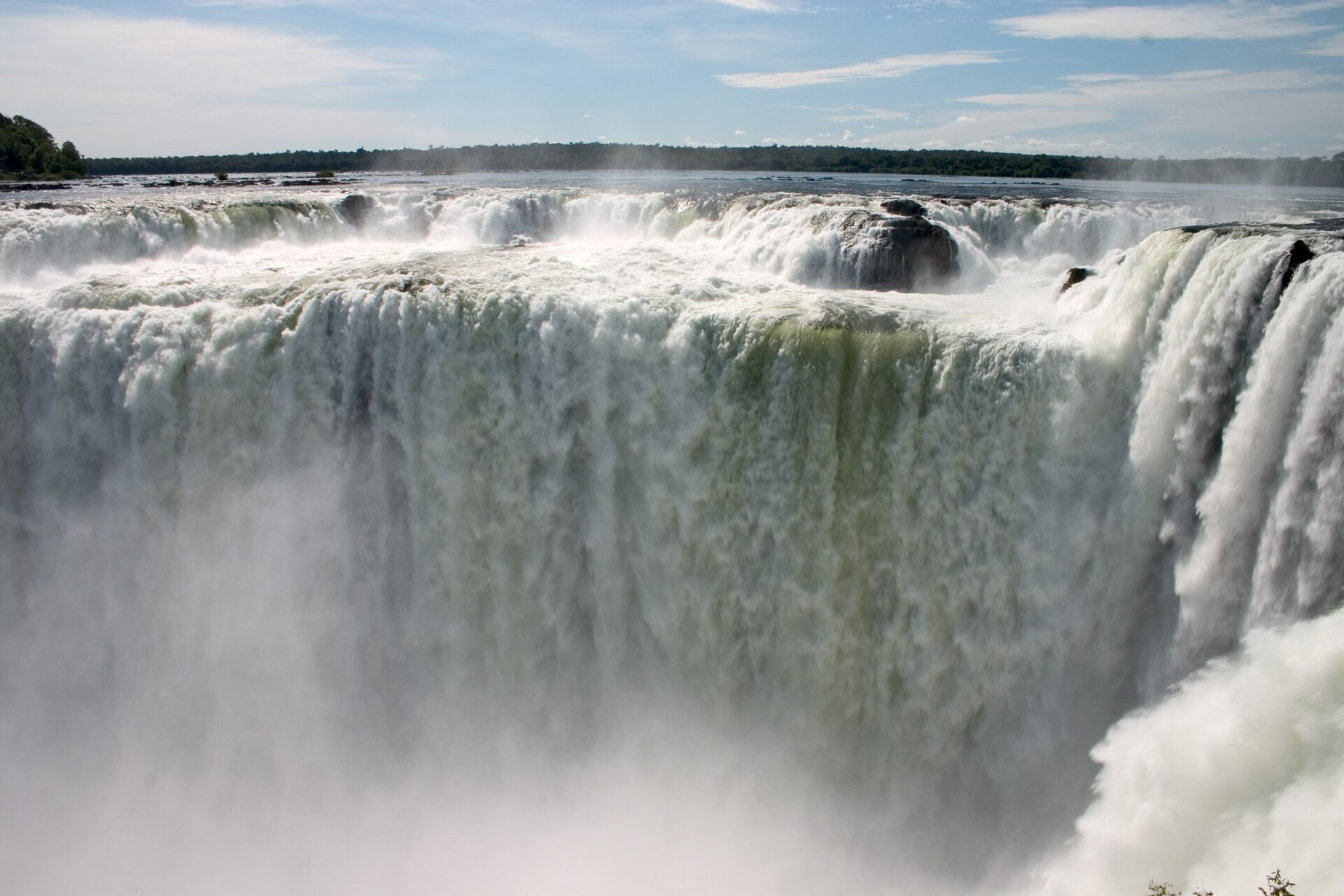
Iguaçu Falls is one of those rare places where nature’s raw power feels almost tangible. Straddling the border between Brazil and Argentina, the falls don’t just impress with their size—they overwhelm with a primal force that drowns out everything else. The thunder of crashing water, the mist rising like a veil over the canyon, the way the ground vibrates underfoot—it’s impossible not to fall silent, even in a crowd. The noise swallows all other sounds, leaving only the sensation of standing at the edge of something vast and untamed.
The name Iguaçu comes from the Guarani language, meaning "great water," and it’s hard to imagine a more fitting description. The system stretches nearly three kilometers, made up of nearly 300 individual cascades. The most dramatic of them all is Devil’s Throat, a horseshoe-shaped chasm where water plunges 80 meters with such force that the air itself seems to tremble. The mist rises so high it forms rainbows that hang in the air like solid things, shifting with the light. On the Brazilian side, the view is panoramic, offering a sweeping perspective of the falls in their entirety, while the Argentine side lets you stand almost within the cascades, close enough to feel the spray on your skin.
The origins of Iguaçu are steeped in legend. One story tells of a river god who, enraged when his intended bride fled with her mortal lover, split the earth to create the falls, dooming the couple to eternal separation. Geologists offer a less poetic but equally dramatic explanation: the falls formed around 200,000 years ago when volcanic activity fractured the earth’s crust, forcing the Iguaçu River to carve its way through the resulting fissure. Over time, the relentless flow of water sculpted the cascades into what they are today—a natural wonder that shifts and changes with the seasons.
What makes Iguaçu particularly striking is its location at the intersection of three countries: Brazil, Argentina, and Paraguay. The majority of the falls lie on the Argentine side, but the Brazilian perspective provides the most breathtaking views. Walkways and observation platforms wind through the surrounding forest, offering glimpses of the entire system at once. Crossing the border between the two countries is common for visitors, as each side reveals a different facet of the falls. The river itself acts as a natural divider, its currents carrying the same water that has shaped this landscape for millennia.
The national parks on both sides of the border are designed to blend seamlessly with the environment. Wooden trails and elevated walkways guide visitors through dense Atlantic rainforest, where toucans dart between branches and monkeys chatter in the canopy. The air is thick with moisture and the scent of damp earth, alive with the hum of insects and the calls of birds. Over 2,000 plant species thrive here, many of them found nowhere else. The forest feels ancient, as if it has always existed in this exact form, untouched by time.
Visiting Iguaçu is never the same experience twice. During the rainy season, the falls swell with such fury that the mist rises like a storm cloud, obscuring parts of the view. In drier months, the water recedes, revealing hidden rocks and islands that add new textures to the landscape. Local guides often say that no two visits are alike—the falls are constantly evolving, shaped by the river’s mood. Even those who return year after year find something new in the way the light catches the water or how the mist curls over the edges of the cliffs.
Despite its popularity, Iguaçu retains a sense of wildness. There are no towering hotels or flashy attractions here, just small lodges and campsites that don’t disrupt the natural rhythm of the place. When the last of the day’s visitors leave, the park grows quiet, save for the distant roar of the falls and the occasional cry of a night bird. Those who stay overnight might see the moonlight reflecting off the water, turning the mist into a shimmering silver haze. It’s a rare moment of stillness in a place defined by motion.
Standing at the edge of Iguaçu, it’s impossible not to feel small. The falls have been here for thousands of years, long before humans set foot in this part of the world, and they’ll remain long after we’re gone. The sheer scale of the place puts everything else into perspective—our lives, our struggles, our fleeting moments of triumph. Iguaçu doesn’t just awe; it humbles. And that’s what lingers long after you’ve left—the quiet understanding that some forces are far greater than we are, and that’s exactly as it should be.