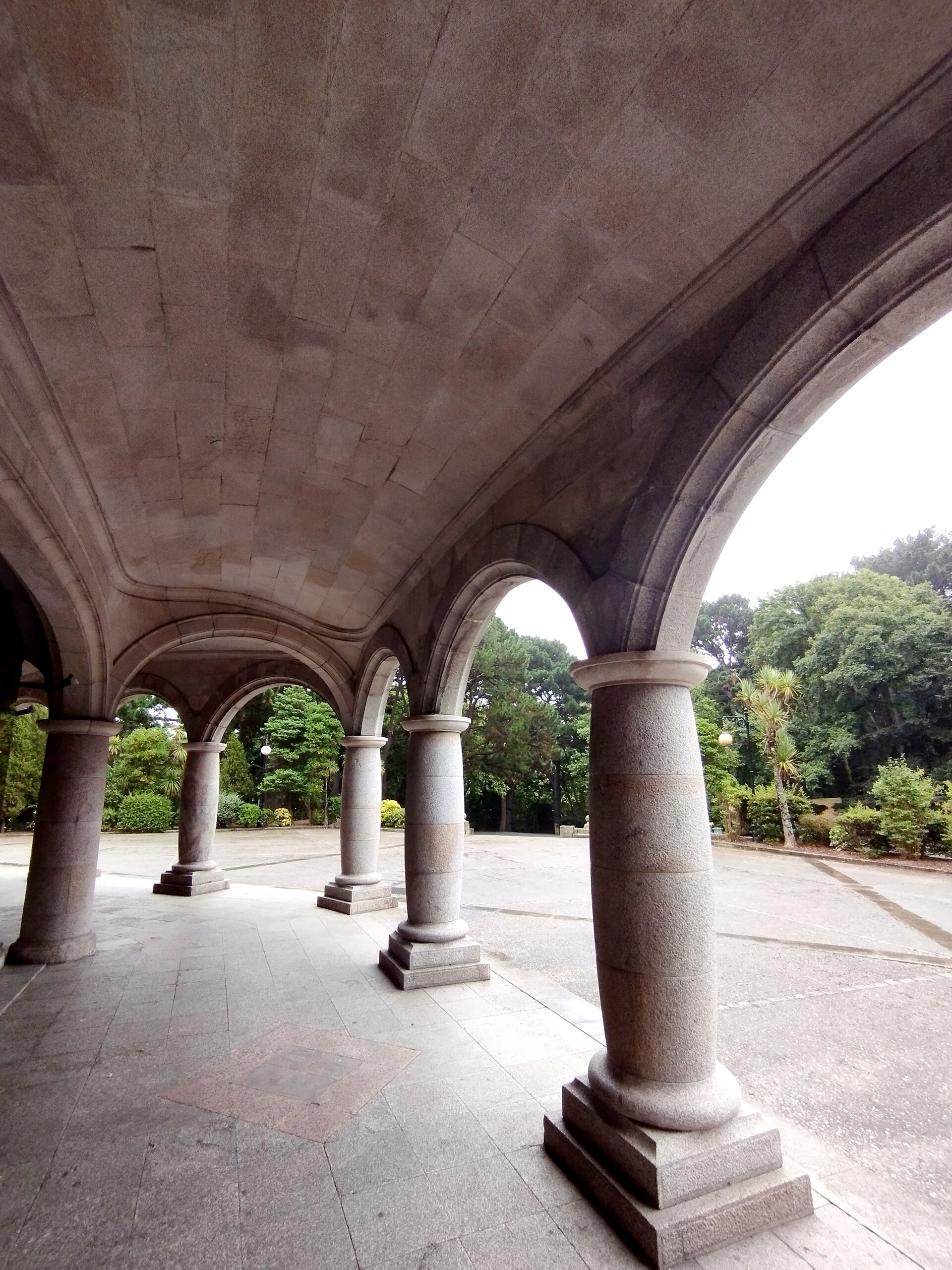
Santa Margarita Park is one of those places in A Coruña where the city reveals itself not through grand monuments or tourist attractions, but through quiet, everyday moments. Perched on a hillside in the heart of the city, it connects the upper neighborhoods with the waterfront, offering a gentle descent toward the sea. There are no museum exhibits or towering landmarks here—just the rustle of leaves, the distant murmur of conversations, and the occasional laughter of children playing with their dogs. The park didn’t always belong to the public; it began as private gardens that slowly opened to the city, retaining a sense of seclusion even as it became woven into daily life.
The landscape shifts as you move through it. Near the top, dense clusters of trees create a sheltered canopy, while closer to the water, the space opens into sunlit meadows. Some of the oldest trees have stood here since A Coruña was little more than a port town, their gnarled roots holding stories of a different era. The eucalyptus trees, planted in the early 20th century when the city was expanding, now dominate the skyline, their tall trunks casting long shadows. On hot afternoons, their shade offers relief, and in the evenings, their leaves whisper against the breeze, a sound that blends seamlessly with the city’s rhythm.
Unlike formal parks with manicured lawns and symmetrical paths, Santa Margarita feels organic, as if nature had arranged its own design. The terraces that slope toward the waterfront are uneven, following the land’s natural contours rather than forcing order upon it. A small fountain sits on one of these terraces, its water trickling softly—a sound that lingers in the air, steady and unobtrusive, like the city’s own heartbeat. Children often gather around it, tossing coins or simply watching the water spill over the edge.
There are plenty of places to sit, whether on a bench or a patch of grass. On weekends, locals bring books, thermoses of coffee, or picnics, turning the park into an extension of their living rooms. Weekdays are quieter, offering a chance to notice the small details that usually go unnoticed: moss creeping over old stone steps, wrought-iron railings worn smooth by time, or the occasional group of older men playing cards under the trees. These moments feel timeless, a reminder of how life in Galicia has always moved at its own pace.
Near the bottom of the park, a small pond marks the transition between green space and the city beyond. Ducks glide across the water, drawing children with handfuls of bread, while parents snap photos or simply watch the reflections of clouds drift by. The pond is shallow, home to a few fish that locals joke are only there for decoration. In summer, dragonflies dart above the surface, and in autumn, fallen leaves create fleeting patterns before dissolving into the water.
Santa Margarita isn’t the kind of place that makes it onto postcards or travel checklists. It doesn’t demand attention; it simply exists, a quiet constant in the lives of those who live here. There are no crowds, no souvenir stands, just the unhurried pace of a place that has always been more about being than seeing. Even on rainy days, when the sky hangs low and heavy, the park doesn’t feel gloomy. The damp earth, the scent of wet leaves, and the sound of raindrops tapping against branches create an atmosphere that feels almost intimate, as if the city has paused to take a breath.
In recent years, the city has made an effort to preserve the park’s character rather than modernize it. There are no new cafes or flashy attractions, just careful maintenance—replanting young trees, repairing paths, keeping the space clean. This restraint is why Santa Margarita remains the way longtime residents remember it: a place where time slows down, where there’s no need to rush or perform for visitors. For those who stay in A Coruña for more than a day or two, the park becomes a kind of anchor, a spot that draws them back not for what it offers, but for how it makes them feel. It’s the kind of place that doesn’t just exist in the city—it is the city, in its most unassuming form.