Nestled on the slopes of the Zailiysky Alatau mountains, the Park of the First President is where Almaty’s urban rhythm softens into something quieter, where the city’s history and its everyday life merge without fanfare. It wasn’t designed to impress with grandeur, but rather to settle naturally into the landscape, becoming a familiar part of the city’s fabric. Over the years, it has grown into more than just a green space—it’s a place where locals come to unwind, where children play, and where the past feels present without demanding attention.
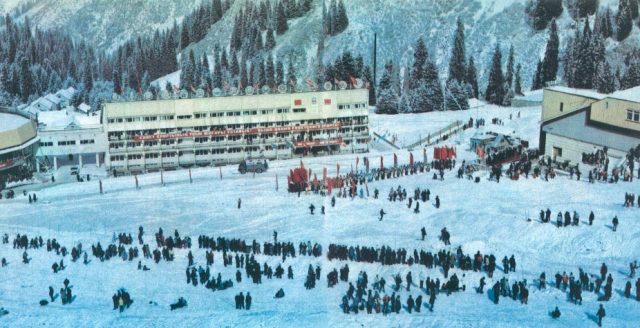
The park took shape in the early 2000s, conceived as a retreat for families, athletes, and anyone seeking a break from the city’s pace. Spanning hundreds of hectares, it blends wide promenades with hidden corners, man-made lakes with wildflower meadows, and sports facilities with a small zoo. Spring brings a burst of color as apple and apricot trees bloom, their scent mixing with the crisp mountain air. Summer turns the park into a cool refuge from the heat, while autumn paints the slopes in fiery hues. Even in winter, when snow blankets the paths, it remains a place of movement—skiers gliding down gentle hills, children sledding, and the occasional crackle of a fire from a winter picnic.
The park’s design is understated, but its details linger in memory. The main avenue, paved with granite and lined with classic lampposts, leads to a central square where people gather without ceremony. Benches along the way are often occupied by elderly couples watching grandchildren play or young lovers stealing quiet moments. On a slight rise stands a monument to Nursultan Nazarbayev, not a towering statue but a dynamic figure mid-stride, as if caught in motion. Nearby, a granite stele bears engraved dates and events that shaped modern Kazakhstan—a subtle reminder of the country’s recent history.
This park is deeply tied to Almaty’s evolution. In the 1990s, as Kazakhstan was forging its independence, the area hosted rallies, public gatherings, and moments that would later be recounted as part of the city’s story. As Almaty expanded, the park became a buffer between the bustling city and the foothills, a place where the urban and the natural coexist. Today, it’s where locals celebrate holidays, hold impromptu picnics, or simply walk their dogs. On New Year’s Eve, a towering fir tree is lit, and in summer, open-air concerts draw crowds. Yet despite its popularity, the park never feels crowded—there’s always space to find solitude under a tree or by the water.
What makes the Park of the First President stand out is its openness. Unlike many urban green spaces, it’s free to enter at any hour, with no high fences or strict rules. Low barriers separate pedestrian paths from roads, but the park feels like an extension of the city rather than a separate attraction. This accessibility has made it a part of daily life: joggers pass through at dawn, families stroll in the evenings, and students read on benches with the rustle of leaves as their soundtrack.
Though relatively young, the park has already gathered its share of stories. Some say it was here that decisions shaping Kazakhstan’s future were made, though no official records confirm it. Locals recall its early days, when paths were overgrown and visitors few, a far cry from the lively scene today. Weekends can get busy, but the park retains its calm—even in a crowd, you can always find a quiet spot. It’s this balance between liveliness and tranquility that makes it feel like a true public space, not just a tourist attraction.
Winter transforms the park into a different kind of retreat. Snow softens the edges of the paths, and the lakes sometimes freeze over, drawing skaters. The scent of pine mixes with woodsmoke from grills, and the sound of laughter carries across the slopes. It’s a season when the park feels especially intimate, a place to slow down and appreciate the quiet. For many Almaty residents, these winter days are when the park feels most like home.
More than just a place to escape the city, the Park of the First President is a reflection of Almaty itself—welcoming but unassuming, with a quiet confidence that doesn’t need to shout. There’s no extravagance here, just open space, clean air, and a sense of possibility. It doesn’t try to be anything other than what it is, and perhaps that’s why it resonates so deeply with those who visit. Whether you come for a morning run, an evening walk, or just to sit and watch the world go by, the park offers a moment of connection—to the city, to nature, and to the stories that unfold within its borders.