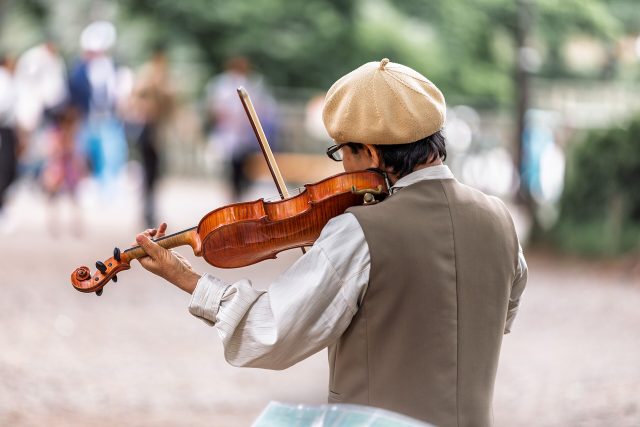
Nobuta Park in Mitaka is the kind of place that doesn’t announce itself with fanfare. Tucked away on the edges of Tokyo, where the city’s relentless energy begins to soften into something quieter, it feels like a small refuge from the urban sprawl. There are no flashy attractions or crowded promenades here—just open lawns, shaded paths, and a pond that shifts with the seasons. In summer, it’s covered in a delicate layer of duckweed; in autumn, it mirrors the fiery hues of maple leaves; and in winter, a thin sheet of ice forms over its surface, brittle and fleeting.
The park’s history is woven into the fabric of Mitaka’s growth as a residential area. When Tokyo expanded rapidly in the mid-20th century, neighborhoods like this one sprouted up, and with them came public spaces meant not for tourists, but for the people who lived nearby. Nobuta was never designed to be a landmark—it was simply a place where locals could step away from the city’s pace. Over time, it became a backdrop for small traditions: cherry blossom viewings in spring, lantern-lit summer festivals, and occasional craft fairs where neighbors sell handmade goods.
The park’s design is unassuming but thoughtful. A stone-paved path leads to the central pond, where benches and wooden shelters offer places to sit. Traditional-style lanterns line the walkways, and small stone bridges arch over narrow streams that feed into the water. The best time to see it is early morning, when sunlight filters through the trees and dances on the pond’s surface. By evening, the lanterns cast a warm glow, and the park takes on a slower, more deliberate rhythm.
The pond is the heart of Nobuta. It’s not large, but it’s deep enough to support fish, ducks, and the occasional heron. In summer, you might spot locals trying their luck with fishing rods, though technically it’s not allowed. Autumn is when the pond truly comes alive—the maples along its edges turn shades of red and gold, and fallen leaves drift lazily on the water. When snow falls in winter, the pond becomes a quiet white expanse, its stillness broken only by the occasional visitor.
This is a park that belongs to the neighborhood. On any given day, you’ll see elderly residents practicing tai chi or walking with canes, young mothers pushing strollers, and schoolchildren cutting through on their way home. On weekends, families gather here—there’s a small playground where kids swing or dig in the sand, and in summer, picnics spread across the grass. Even in winter, children build snowmen on the rare occasions when snow sticks to the ground.
Nobuta isn’t the kind of place that draws crowds or makes it onto postcards. That’s part of its charm. There are no tour groups here, no guides shouting over megaphones, no pressure to perform the role of a tourist. It’s a place for those who appreciate quiet beauty, where you can sit on the grass, feed the ducks, or watch clouds drift overhead without anyone telling you what to do.
What makes Nobuta special is how it changes with the seasons. In spring, cherry blossoms fill the air with their scent, and the park hums with the chatter of visitors. Summer turns it into a green retreat, a place to escape the heat under the shade of trees. Autumn sets the leaves ablaze, and winter wraps everything in a hush, as if inviting you to pause and reflect. Each season brings something new, which is why locals keep coming back.
If you find yourself in Mitaka, don’t rush straight to the city center. Take a walk through Nobuta Park, sit by the pond, and listen to the rustle of leaves and the soft ripple of water. This might be where you finally experience that elusive sense of Japan you’ve read about—the one that’s hard to find in the busyness of big cities. It’s not a place for hurry. It’s a place to slow down, to let the ordinary moments of life unfold, where nature and the city exist side by side without getting in each other’s way.