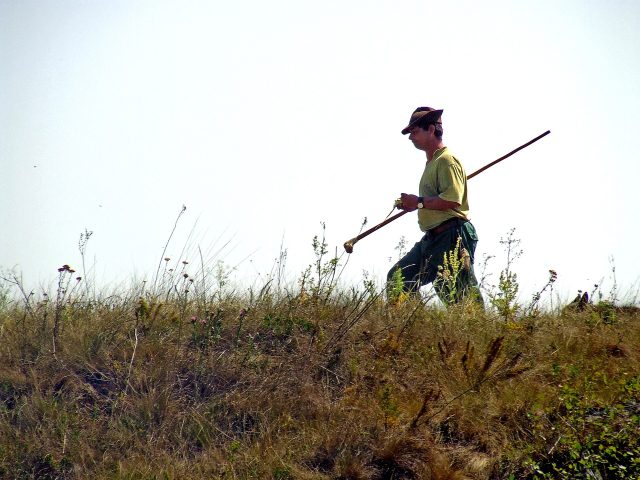
Peace Park doesn’t rush to impress. It sits on the edge of a small Hungarian town, where the rhythm of life matches the slow drift of clouds overhead. Here, nature and history don’t compete—they’ve settled into each other over decades.
The park began in the 1950s as a memorial to those lost in World War II. Hungary’s wounds from the war ran deep, and this place was meant to hold more than grief. Small markers stand among the trees, their inscriptions worn by time. But the park’s real presence isn’t in stone—it’s in the stillness that lingers, as if the air itself remembers.
The layout feels deliberate, though not grand. Paths curve toward clearings where benches face patches of sunlight. In summer, the greenery presses close—oak branches overhead, ivy climbing low walls. Autumn turns the leaves to copper and rust, and winter strips the trees bare, leaving only the quiet and the cold.
There’s no showy architecture here. A stone bridge arches over a dry creek bed. A fountain trickles into a shallow basin. Sculptures are few, their shapes abstract enough to blend into the landscape. The pond at the center is the exception—its water so calm it doubles the sky, making the boundary between real and reflected blur.
People come here to slow down. A mother watches her child chase pigeons. An old man tosses bread to ducks. A couple walks the same path they’ve walked for years, not talking. On weekends, the park fills slightly, but the quiet never breaks.
Putnok’s history seeps into the park. The town was once a medieval trading post, a crossroads of merchants and travelers. Now, it’s a place where time moves differently, and the park has become part of its pulse. For locals, it holds memories—first kisses, lazy afternoons, the weight of ordinary moments.
You won’t find crowds or souvenirs here. What you will find is a place that doesn’t demand attention but rewards the patient. The silence isn’t empty—it’s full of the things we’ve learned to ignore: the rustle of leaves, the distant call of a bird, the way light changes when clouds pass.
If you come to Hungary looking for something real, skip the guidebooks. Take the train to Putnok. Walk the park’s paths until your thoughts settle. Peace Park doesn’t explain itself—it lets you feel what it’s for.