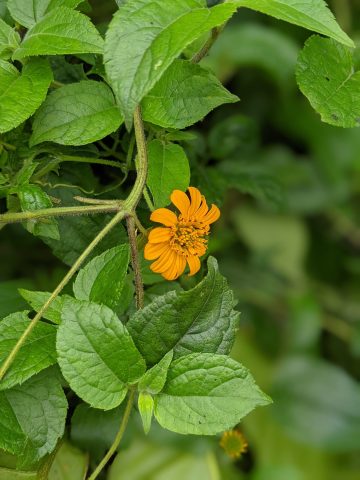
Nestled near Kpalimé, a town in the foothills of the Atakora Mountains, Maoudji Park feels distant from tourist trails. The park has no amusement rides or crowds—just leaves rustling, birds calling, and green hills rolling into the distance.
Kpalimé is shaped by its mountains and rich soils, known for coffee and cocoa. The air smells of earth and growth, but Maoudji Park gives the town its quiet heart. This land moves to the same rhythm as the people who have lived here for generations.
The park covers slopes thick with vegetation. Narrow paths wind upward to viewpoints that reveal the landscape in stages. From higher ground, the valley softens into savanna, while distant mountains fade into blue haze. Trails have no grand signs—just wooden benches, simple stone bridges over streams, all built to blend in.
Maoudji Park’s history is tied to Kpalimé’s. Long before it became a place for walks, people gathered medicinal plants and farmed here. Later, colonial plantations for coffee and rubber left traces. Nature reclaimed much of the space, leaving a landscape that feels wild yet tended. The paths may follow old trade routes, and the hills could have been lookout points centuries ago.
The park has no grand architecture. A few shelters made of wood and stone offer shade. The real draw is the natural world: towering trees draped in vines, flowering shrubs, and water trickling down slopes during the rainy season. It doesn’t announce itself; it waits to be discovered.
This isn’t a place for entertainment. There are no guided tours or set itineraries. Instead, it’s for quiet exploration. Some trails lead to small waterfalls hidden among foliage. Others open onto clearings where locals picnic under ancient trees. A few paths climb to hilltops where the horizon dissolves into the sky. You can wander for hours without seeing anyone, or you might find children playing by a stream.
For those who notice, the park teaches about West African flora and fauna. Mountain forests here hold rare plant species, and birdlife is diverse. In the early morning, you might hear monkeys in the canopy, though they stay hidden. Animals here keep their distance, so patience is key.
Kpalimé is a region where Ewe traditions remain strong. Maoudji Park feels like part of that heritage. The land carries memories of farmers, traders, and healers. Nearby villages still craft textiles and pottery, sometimes sold at small markets near the park’s entrance. The past isn’t just in museums—it’s in how people interact with the land.
Visiting Maoudji Park isn’t about checking off a list. There are no luxury resorts or flashy signs. What you’ll find is a place untouched by tourism, where simplicity feels refreshing. If you’re coming from Lomé, a day trip is possible, but staying in Kpalimé for a few days lets you soak in the atmosphere. From here, you can explore the countryside, hike Mount Agou, or visit coffee plantations on the hillsides.
The park has no opening or closing time. Arrive at dawn when mist clings to valleys, or stay until dusk when the sky turns orange and violet. It’s in these quiet moments that the park feels like more than a destination—it’s a place to simply be.
Maoudji Park won’t be in glossy travel magazines or tour itineraries. That’s why it feels special. There are no crowds or selfie sticks, no rush from one attraction to the next. Instead, there’s space to breathe, think, and wander. For some, it might seem too understated. But for those who value authenticity, it lingers in memory long after leaving—a reminder that the most meaningful travel isn’t about the biggest or most famous, but about finding quiet corners where the world still feels untouched.