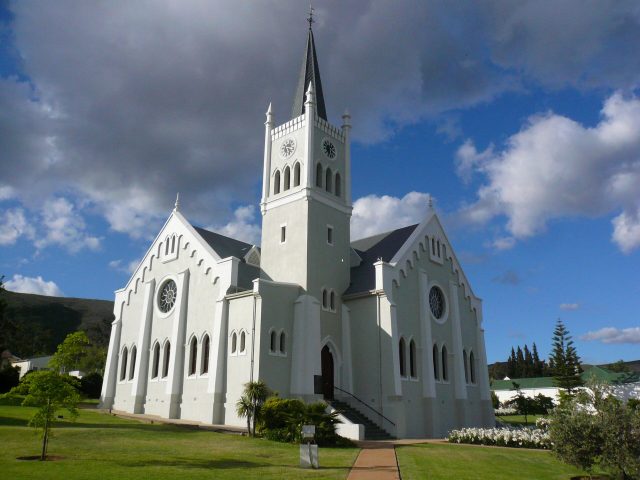
Barrydale sits quietly in the folds of South Africa’s southern landscape, where the mountains give way to the vast, sunbaked expanse of the Klein Karoo. It’s the kind of place that doesn’t announce itself—no crowds, no neon signs, just the slow, steady rhythm of a town that has learned to exist without hurry. The air is dry, the rains infrequent, and the nights so clear that the stars seem close enough to touch. This is a corner of the world where time feels different, stretched thin across the horizon, and where the land itself seems to invite you to step away from the noise of modern life. Klein Karoo Park isn’t so much a destination as it is a pause, a reason to pull off the highway and spend a day—or longer—simply being present in a landscape that has remained largely unchanged for centuries.
The park isn’t a manicured reserve with neatly marked trails and visitor centers. Instead, it’s a preserved slice of the semi-arid wilderness that defines this region, a place where the land dictates the rules. The Klein Karoo, or "Little Karoo," is a smaller, more intimate version of the vast Great Karoo to the north, but no less striking in its stark beauty. The terrain shifts from rocky outcrops to flat, open plains, all covered in a sparse but resilient vegetation. Succulents cling to the earth, low shrubs dot the landscape, and the iconic aloes stand tall, their thick leaves storing water against the dry months. When the rare rains come, the parched ground transforms almost overnight, bursting into color as wildflowers bloom in sudden, fleeting abundance.
This land has seen its share of history, much of it tied to the slow, determined movement of people across southern Africa. In the 19th century, the Karoo was a crucial route for the Voortrekkers, the Dutch-speaking settlers who traveled in ox-drawn wagons in search of new land. Barrydale began as little more than a stopping point along the way—a place to rest, refill water barrels, and prepare for the long journey ahead. The town never grew much beyond that, and today it retains the quiet, unassuming character of a place where life moves at the pace of the seasons. The farms here have been passed down through generations, their owners still raising sheep and goats much as their ancestors did. Klein Karoo Park emerged later, but it feels like a natural extension of this way of life, a conscious effort to protect the land that has always been the region’s greatest asset.
Walking through the park is less about ticking off sights and more about noticing the small, often overlooked details of a landscape shaped by extremes. The animals here have adapted in remarkable ways. There are the rock hyraxes—small, furry creatures that look like oversized guinea pigs but are actually distant relatives of elephants. Meerkats dart between the bushes, their sharp eyes scanning for predators, while more elusive species, like the Cape fox or the springbok, might make a rare appearance if you’re patient. Birds are everywhere, from the tiny, iridescent sunbirds that flit between flowers to the majestic raptors circling high above. The park has a few marked trails, but even a short walk reveals how delicately balanced this ecosystem is. The silence is profound, broken only by the wind and the occasional call of a bird, and it’s impossible not to feel a sense of responsibility toward a place that has survived so much.
What makes Klein Karoo Park special is its refusal to be anything other than what it is. There are no amusement rides, no guided tours with scripted commentary, no attempts to manufacture excitement. Instead, there’s space—space to sit, to listen, to breathe. For many visitors, this is a rare experience in a world that often feels overcrowded and overstimulated. Here, you can turn off your phone, ignore the clock, and simply watch as the sun sinks behind the mountains, painting the sky in shades of amber and violet. The lack of distractions isn’t a flaw; it’s the point. This is a place where you’re encouraged to slow down, to notice the way the light changes as the day wears on, to feel the texture of the earth beneath your feet.
Beyond the park, the surrounding area offers a taste of the region’s quiet charm. A handful of farms welcome visitors, serving up dishes made from local ingredients—lamb raised on the Karoo’s nutrient-rich grasses, tangy goat’s cheese, and wines produced in small, family-run vineyards. Some farms also offer simple accommodations, usually modest cottages with basic amenities but unbeatable views of the mountains and valleys. Staying overnight is a chance to experience the Karoo’s night sky in all its glory. Without the glow of city lights, the stars seem impossibly bright, the Milky Way a shimmering river across the heavens. It’s the kind of sight that makes you realize how much of the world’s beauty we’ve lost to progress.
Barrydale and Klein Karoo Park aren’t for those seeking excitement or entertainment. There are no tourist traps, no must-see attractions, no pressure to follow a set itinerary. You can come for a day or stay for a week, exploring the backroads by car or on foot. The roads here are mostly unpaved, adding a sense of adventure to the journey. You never know what you’ll encounter around the next bend—a flock of sheep ambling across the road, a sudden, breathtaking vista of a valley stretching into the distance, or the quiet presence of a farmer tending to his land. The unpredictability is part of the appeal.
The Karoo isn’t just a landscape; it’s a state of mind. It’s a place where the demands of modern life feel distant, where the only schedule is the one set by the sun and the seasons. Mornings begin with the first light, days unfold at their own pace, and evenings are spent gathered around a fire, listening to the stories of the people who call this place home. There’s nothing flashy about it—just the simple, enduring rhythm of life as it has been lived here for generations. In a world that often feels like it’s moving too fast, the Karoo offers a reminder of what it means to slow down, to pay attention, to exist in the moment. It’s not a place you visit to escape life, but one where you might just remember what it feels like to truly live it.