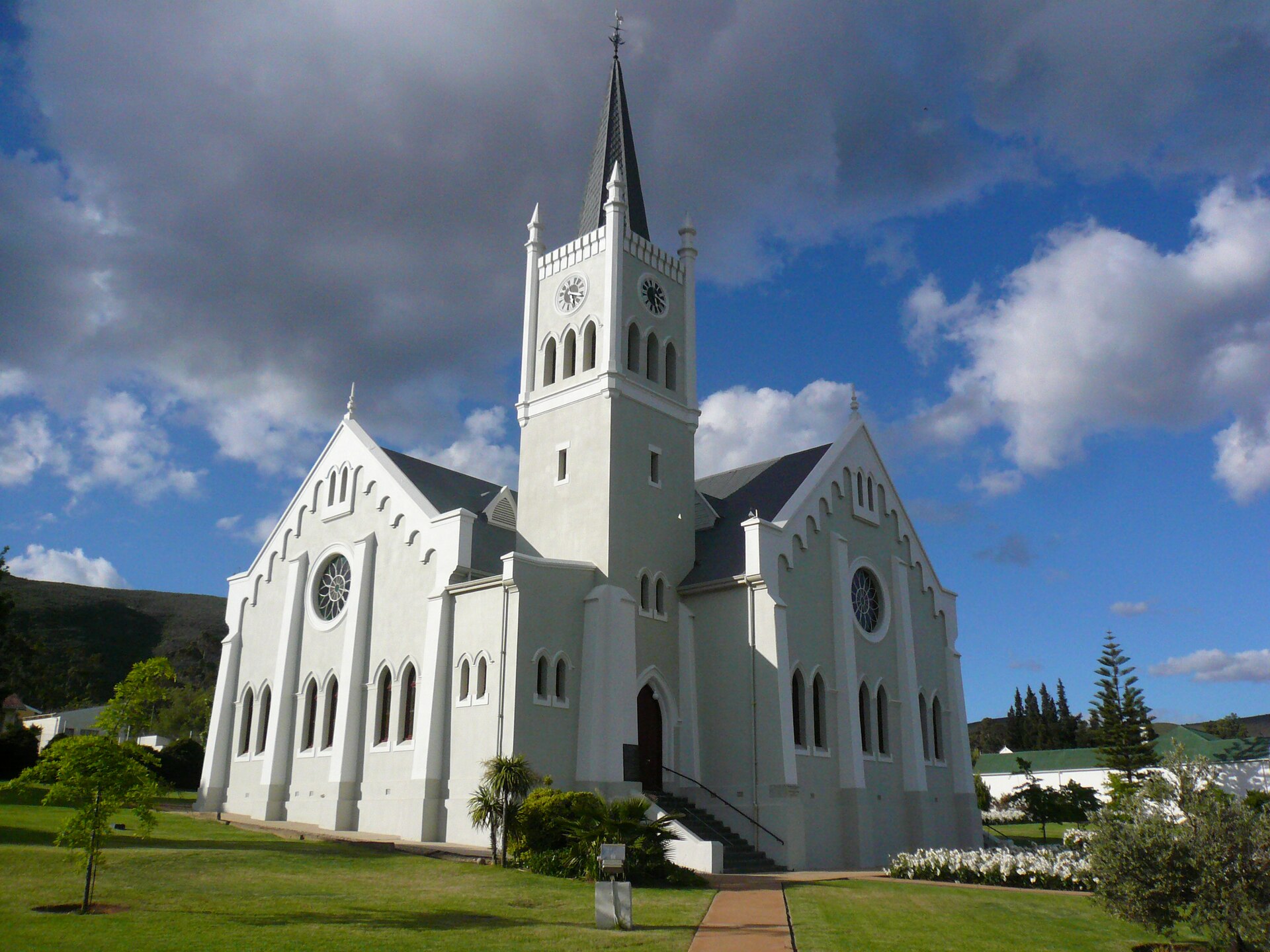
Barrydale sits quietly in the heart of the Little Karoo, a place where time moves at its own unhurried pace and the horizon stretches endlessly into the semi-arid plains. The landscape here is one of low hills and dry riverbeds, where the earth seems to breathe in the heat of the day and exhale it back into the cool of the evening. It’s in this setting that the Dutch Reformed Church stands—a building that doesn’t demand attention with grand facades or ornate details, but instead quietly holds the stories of the people who have passed through its doors over the decades.
Built in the early 1900s, the church emerged during a time when Barrydale was still finding its identity. The town had begun to take shape as a stopover for travelers moving between the interior of South Africa and the coast, and the growing community needed a place to gather. The design of the church reflects the era, blending Dutch colonial influences with the practicalities of local construction. Its whitewashed walls, tall arched windows, and simple steeple give it a sense of permanence, as if it has always been part of the landscape, rooted in the soil and the history of the place.
Inside, the church is just as unassuming, yet its simplicity carries a quiet power. The wooden pews curve gently around the pulpit, the walls are bare except for the soft light filtering through the windows, and there is little in the way of decoration. This was intentional. The Dutch Reformed tradition has long favored restraint in its places of worship, believing that excess only distracts from the essence of faith. There are no stained-glass scenes or gilded icons here, no elaborate altars—just an atmosphere of stillness, where the weight of words and the presence of the community take center stage.
For the people of Barrydale, the church has always been more than just a place of worship. In the early days, when the town was even smaller than it is now, it served as a hub for social life. Sundays brought services, of course, but the building also hosted meetings, celebrations, and even school events. It was where news was shared, where joys and sorrows were acknowledged, and where people could feel connected to something larger than themselves. Even today, as the town has grown and changed, many families still gather here on Sundays, carrying on traditions that have been passed down through generations.
The architecture of the church tells its own story of adaptation. While it was originally built in the strict traditions of Dutch Reformed design, subtle changes over the years reflect the shifting influences in South Africa. Some decorative elements were simplified, and the layout of the interior was adjusted to accommodate the needs of a growing congregation. These small modifications make the church more than just a relic of the past; it’s a living record of how the community has evolved alongside the country itself.
Barrydale isn’t the kind of place that draws crowds of tourists. Most visitors to South Africa flock to its more famous landmarks, leaving towns like this one to exist in their own quiet rhythm. But that’s part of what makes the Little Karoo special—the dry air, the scent of wild herbs carried on the wind, the distant mountains fading into the horizon, and the silence broken only by the call of a bird or the occasional passing car. The church on the edge of town feels like an extension of this landscape, unassuming yet deeply rooted, a place that doesn’t need to shout to be heard.
If you ever find yourself in this part of the world, stepping inside the Dutch Reformed Church offers more than just a glimpse of its architecture. It’s a chance to pause, to look around, and to imagine the lives of the people who have gathered here over the past century. You might begin to understand why this place still matters so much to those who call Barrydale home. After all, history isn’t always made in grand cities or recorded in textbooks. Sometimes, it’s found in the quiet corners of the world, in buildings like this one, where each generation leaves its mark in ways that aren’t always visible at first glance.