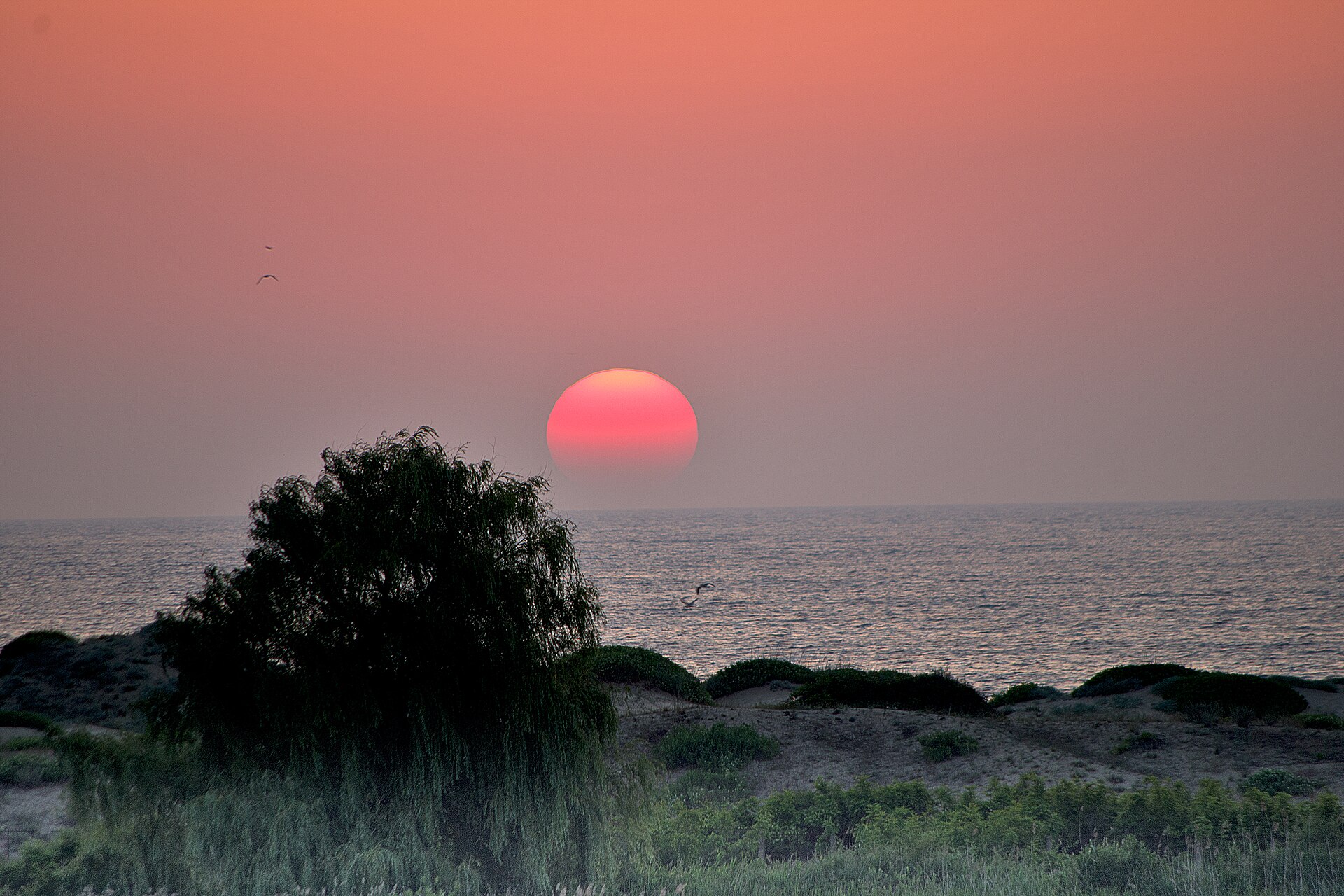
Primorsko’s Dune Park is one of those rare places where nature and human presence exist in quiet harmony. There’s no manicured perfection here, no flashy attractions—just open space, silence, and the feeling that you’ve stumbled upon a stretch of wild coastline that time somehow forgot. The sandy dunes, dotted with hardy vegetation, stretch along the shore, their gentle slopes giving way to a dense pine forest that fills the air with the scent of resin and salt. This isn’t a park in the usual sense; it’s more like a protected corner of the earth where you can wander along narrow paths through juniper and wormwood, or simply sit on the sand and watch the waves roll in.
The story of this place is tied to Primorsko’s transformation from a quiet fishing village into a seaside resort. Half a century ago, these were empty beaches, home only to a handful of fishermen’s huts. As the town grew in popularity, local authorities faced a choice: develop the land or preserve what made it special. They chose the latter, creating a park not for entertainment, but to protect the dunes from construction and give visitors a glimpse of the coast as it once was. Today, it remains one of the few spots along Bulgaria’s Black Sea shoreline where nature still feels untouched.
There’s no grand architecture here—just wooden walkways winding through the dunes and a few informational signs about the local flora and fauna. That simplicity is what makes the park so striking. There are no crowds, no ice cream vendors, no bright signs pointing the way. Instead, the paths rise and fall with the dunes, sometimes sinking into soft sand that shifts beneath your feet, carried by the wind. It’s a reminder that here, nature sets the rules.
Beyond being a place for a quiet walk, the park serves as an open-air museum of sorts, showing how Bulgaria’s coastal landscapes were shaped over time. The dunes aren’t static; they shift slowly with the wind, creating new ridges and eroding old ones. The plants that grow here have adapted to life on sand, and some species are found nowhere else along the coast. Even the wildlife is unique—rare insects and birds make their home in the dunes, clinging to this fragile ecosystem as development encroaches elsewhere.
The park’s atmosphere changes with the time of day. Mornings are hushed, the only sound the distant murmur of the sea as the sun climbs over the horizon, turning the sand golden. By midday, the park comes to life—families with children, photographers, nature lovers all find their way here. But even in peak season, it never feels crowded; the dunes and forest are vast enough to absorb everyone. As evening falls, the visitors drift away, and the park settles back into stillness. This is when it’s best to sit by the water, listening to the waves and the rustle of pine needles in the breeze.
For many who visit Primorsko, the Dune Park is an unexpected discovery. The town is full of lively beaches, restaurants, and hotels, but this is where you can experience the real essence of Bulgaria’s natural coastline. It’s not a place for those seeking entertainment, but for those who want to step away from the noise and simply be—with the sea, the sand, and the sky. There’s no schedule, no tickets, no rules, just the quiet rhythm of the land.
Exploring the park doesn’t require much preparation. Comfortable shoes, a bottle of water, and maybe a camera are all you need. The paths aren’t difficult, though some sandy slopes can be a challenge for those with limited mobility. But those who make the effort are rewarded with stunning views—from the tops of the dunes, the sea and forest stretch out in every direction, and on clear days, you can even see distant mountains on the horizon.
This isn’t a place you can rush through in an hour. To truly appreciate it, you need to linger, to let the landscape reveal itself slowly. Come in the morning to watch the sunrise, return in the afternoon to spot birds among the dunes, or stay until evening to see the sky turn shades of pink and gold. Each visit feels different because the park itself is always changing. It’s one of those rare places that never grows tiresome because it’s alive, breathing, and entirely its own.