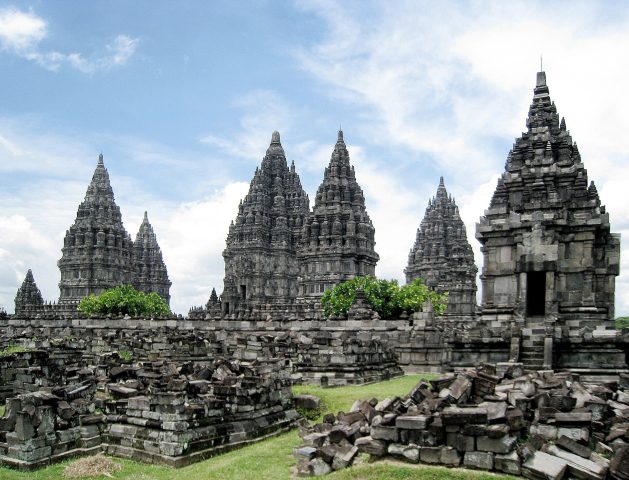
Budi Utomo Park is one of those quiet places in Indonesia where history doesn’t announce itself with grand monuments or tourist crowds. Tucked away in the village of Wukirsari, just outside Yogyakarta, it remains overshadowed by the region’s more famous landmarks—Borobudur’s ancient spires, the Sultan’s palace with its golden halls. Yet that very obscurity is what makes it special. There are no guided tours here, no vendors hawking trinkets, just the rustle of leaves and the sense that time moves a little slower.
The park takes its name from Budi Utomo, Indonesia’s first modern nationalist organization, founded in the early 20th century. This was the movement that planted the seeds of independence, long before the revolution of the 1940s. The choice of location wasn’t accidental—this was where some of the group’s earliest meetings took place in 1908. Today, a modest monument stands near the entrance, its stone surface etched with the names of those who first dared to imagine a nation beyond colonial rule. The park isn’t just a memorial; it’s a reminder that history is often shaped by ordinary people who decide, one day, to stand up.
The architecture here is unassuming, almost austere. The small museum at the heart of the park holds a collection of yellowed documents, black-and-white photographs, and personal belongings of the movement’s members. There’s no grand narrative, no dramatic reenactments—just the quiet weight of objects that once belonged to people who believed in something bigger than themselves. Outside, an open-air stage hosts occasional lectures, traditional music performances, or local theater. But most days, it’s just a place where families spread out picnic blankets, students chat under the trees, and old men play chess on weathered benches.
The park is wrapped in greenery, a tangle of paths leading to hidden corners—a small pond where turtles sun themselves, a flight of moss-covered steps, a clearing where the midday heat feels distant. The air is thick with the scent of frangipani and damp earth, and in the evenings, bats swoop low over the treetops, their silhouettes flickering against the twilight. It’s easy to lose track of time here, wandering without purpose, the way one might in a well-loved neighborhood park.
For locals, Budi Utomo isn’t a tourist attraction; it’s a living part of their identity. Schoolchildren visit on field trips, listening to stories of the independence struggle. Elders gather on benches, reminiscing about their own youth. On national holidays, especially Independence Day, the park comes alive with red-and-white flags, patriotic songs, and performances by local artists. But even on ordinary days, it’s a place where history isn’t just remembered—it’s still being lived.
There’s nothing museum-like about the atmosphere. No ropes cordon off the grass, no signs scold visitors for touching the exhibits. Instead, the park invites you to linger—to sit by the pond and watch the fish dart beneath the surface, to trace the cracks in the old stone steps, to imagine what this place looked like a century ago when the first whispers of revolution were still new. It’s the kind of place where you might find yourself lost in thought, not because of some grand spectacle, but because of the quiet weight of what happened here.
In recent years, a few foreign travelers have begun to seek out Budi Utomo, drawn by an interest in Indonesia’s lesser-known history. But there’s none of the usual tourist infrastructure—no souvenir stalls, no overpriced cafes. What you’ll find instead is a place that feels untouched by time, where the past isn’t preserved behind glass but woven into the fabric of everyday life.
If you’re in Yogyakarta and want to step away from the usual sights, Budi Utomo offers something different. It won’t dazzle you with grandeur or overwhelm you with information. Instead, it gives you space to breathe, to reflect, to feel the pulse of history in a place where the present still carries the echoes of the past. Sometimes, the most meaningful stories aren’t the ones written in textbooks—they’re the ones that unfold in quiet corners, where the air smells of rain and old leaves, and the only sound is the wind through the trees.