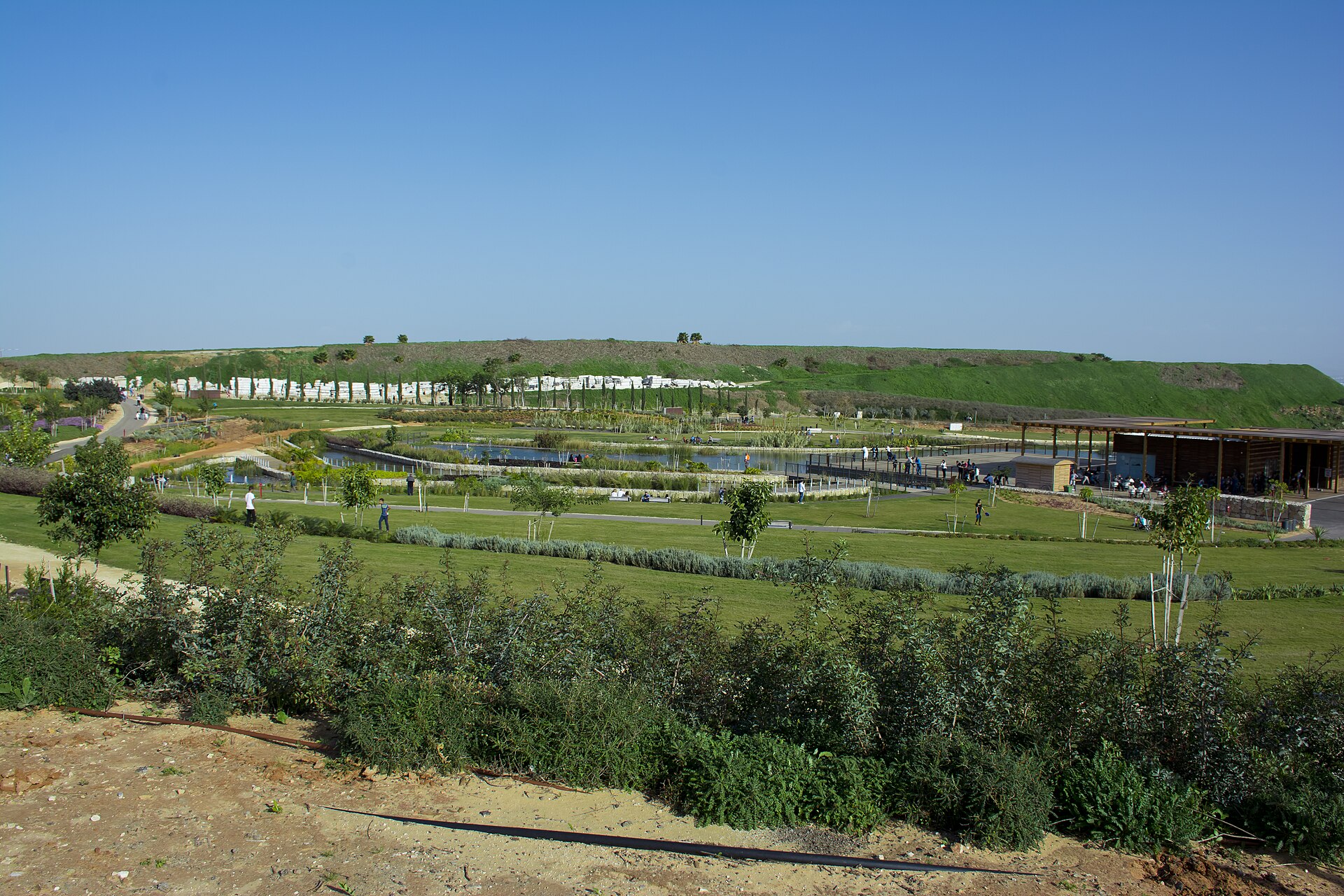
Ariel Sharon Park is one of those places that surprises you at first, then lingers in your thoughts long after you’ve left. What was once Israel’s most notorious landfill has been transformed into a sprawling green space just outside Even Yehuda, a quiet contrast to the urban energy of nearby Tel Aviv. The park’s gentle hills, winding paths, and small ponds don’t immediately reveal their past, but that’s part of what makes this place so compelling. It’s not just a park—it’s a story of reinvention, where nature and human effort have turned an environmental burden into something unexpectedly beautiful.
The history of this land begins in the mid-20th century, when Hiriya became the primary dumping ground for Tel Aviv and its surrounding areas. For decades, trucks delivered endless loads of waste, piling it into a mountain that grew so large it could be seen from miles away. By the 1990s, the problems were impossible to ignore: the stench carried on the wind, groundwater contamination threatened the region, and the sheer scale of the waste made it clear that something had to change. The landfill was finally closed in 2004, and after years of planning, a massive rehabilitation project began. What emerged wasn’t just a cleaned-up site, but a carefully designed landscape that respects both its past and its future.
Today, the park feels like a natural part of the region, with rolling grassy slopes and well-maintained trails that invite exploration. The most striking feature is the view from the top of the former garbage mountain. On clear days, you can see Tel Aviv’s skyline in the distance, the patchwork of green fields below, and even a glimpse of the Mediterranean Sea. It’s a perspective that shifts with the seasons—lush and vibrant after winter rains, golden and sunbaked in the summer. Cyclists weave along the paths, families spread out picnic blankets, and joggers take advantage of the open space. There’s a sense of quiet pride here, as if the land itself is breathing easier after decades of neglect.
What makes Ariel Sharon Park unique is how it embraces its history rather than erasing it. This isn’t just a green space; it’s an open-air exhibit of environmental recovery. Scattered throughout the park are art installations made from recycled materials—sculptures crafted from scrap metal, benches fashioned from old tires, and informational displays that explain the landfill’s transformation. Some of the installations are subtle, blending into the landscape, while others are more direct, like the abstract figures that seem to rise from the earth as if reclaiming it. The park doesn’t shy away from its past; instead, it uses it as a foundation for something new.
Beyond the trails and viewpoints, the park offers plenty of ways to spend time. There are shaded picnic areas, playgrounds for children, and a small amphitheater that occasionally hosts outdoor performances. In the summer, the park buzzes with activity—families grilling, kids flying kites, and groups of friends gathering under the trees. Even in the cooler months, when the crowds thin out, the park has a different kind of appeal. The air is crisp, the light softer, and the quiet makes it easy to imagine how this place must have looked when it was still a wasteland. It’s a reminder that nature doesn’t just heal; it reclaims.
What visitors don’t always see is the ongoing work beneath the surface. The park isn’t just a pretty landscape—it’s an active environmental project. Methane gas, produced by the decomposing waste buried deep below, is captured and converted into electricity, powering thousands of homes in the region. This system not only reduces pollution but also turns a former liability into a resource. It’s a practical example of how technology and ecology can work together, and it’s one of the reasons the park feels like more than just a recreational space. It’s a living experiment in sustainability.
For those who take the time to explore, Ariel Sharon Park offers more than just a place to walk or relax. It’s a lesson in resilience, a testament to what can happen when a community decides to confront its mistakes. There are no ancient ruins or grand monuments here, but the story it tells is just as powerful. It’s proof that even the most damaged places can be given a second chance, and that sometimes, the most meaningful transformations are the ones that happen slowly, over time. The park is still young—barely two decades old—but it already feels like a natural part of the landscape, as if it’s always been here.
This isn’t a place for loud attractions or tourist crowds. There are no guided tours or flashy exhibits, just open space and the quiet hum of life returning to land that was once written off. It’s the kind of place where you might come for a quick walk and end up staying for hours, watching the light change over the hills or listening to the wind rustle through the grass. Ariel Sharon Park doesn’t demand attention; it earns it, not through spectacle, but through the quiet power of renewal. And in a world where so much feels disposable, that’s something worth noticing.