The International Jewish Sports Hall of Fame is a quiet place where the past and present of athletics intersect with stories of resilience, talent, and quiet defiance. Tucked away in Even Yehuda, a small town in central Israel, it isn’t a grand stadium or a flashy museum. Instead, it’s a space where the echoes of triumph and struggle linger in the air, where the names of athletes who broke barriers and redefined limits are preserved not for spectacle, but for reflection.
The idea for the hall emerged in the decades following World War II, a time when the world was still grappling with the aftermath of destruction and displacement. For many Jewish athletes, sport became more than competition—it was a way to reclaim dignity, to prove that talent could transcend borders and prejudice. Some had survived the Holocaust; others had fled countries where they were no longer welcome. Their achievements, from Olympic medals to world records, became symbols of perseverance, and the hall was created to ensure those stories wouldn’t fade with time.
The building itself is unassuming, its architecture blending into the quiet streets of Even Yehuda. There are no towering facades or dramatic displays—just clean lines and a sense of purpose. Inside, the space is designed to draw visitors into different eras, each exhibit a fragment of a larger narrative. Photographs, personal belongings, medals, and documents line the walls, not as mere artifacts, but as pieces of lives lived with passion. A pair of worn running shoes, a handwritten letter from a coach, a yellowed newspaper clipping—each item carries the weight of someone’s journey, their struggles and victories laid bare.
Some of the names here are familiar. Mark Spitz, the swimmer who dominated the 1972 Munich Olympics with seven gold medals, is among them. So is Lillian Copeland, the discus thrower who won gold for the U.S. in 1932. But the hall also honors those whose stories aren’t as widely known—athletes from the Soviet Union, Argentina, Australia, and beyond, whose contributions were no less significant. A fencer from Hungary who competed under a false name to avoid persecution. A boxer from South Africa who fought for recognition in a segregated sport. Their achievements weren’t just about winning; they were about proving that determination could overcome even the most daunting obstacles.
One of the most poignant sections of the hall is dedicated to the Israeli athletes who were killed in the 1972 Munich Olympics terrorist attack. Their stories aren’t just remembered—they’re woven into the broader narrative of how sport can unite people even in the darkest moments. The hall doesn’t separate athletes by country or discipline; here, they’re all part of the same story, bound by a shared love for what they did. The absence of hierarchy makes the space feel intimate, as if each visitor is being let in on a personal conversation with history.
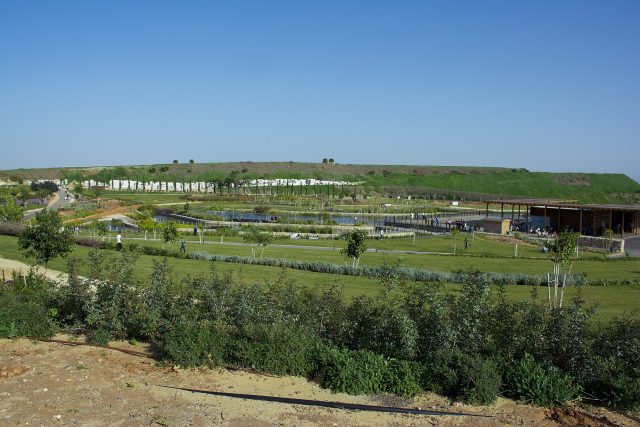
Even Yehuda itself is a place where time moves differently. Far from the bustle of Tel Aviv or the historic weight of Jerusalem, it’s a town where the pace slows, where the quiet allows for contemplation. The hall fits naturally into this setting, offering a respite from the noise of the world. There’s no rush here, no need to hurry from one exhibit to the next. Visitors often linger, absorbing the stories at their own pace, letting the weight of what they’re seeing sink in.
What makes the hall unique is its refusal to reduce sport to mere competition. Here, athletics are a lens through which to view history—how people have used movement, strength, and skill to assert their place in the world. The exhibits don’t just celebrate victories; they acknowledge the struggles behind them. A gymnast who trained in secret during wartime. A runner who competed in the Olympics while her family was still in hiding. These aren’t just stories about medals; they’re stories about survival, identity, and the quiet power of human endurance.
The International Jewish Sports Hall of Fame isn’t just a tribute to the past. It’s a reminder that sport has always been more than a game—it’s a way to connect, to inspire, and to remember. There are no grand declarations here, no division between the famous and the forgotten. Every athlete honored in these halls, whether a household name or an unknown competitor, contributed something meaningful. And in that, the hall becomes more than a museum. It’s a place where the personal and the historical intersect, where visitors leave not just with facts, but with a deeper understanding of what it means to push forward, no matter the odds.