Al-Rustaq Park is one of those quiet places that feels like a secret, tucked away in a town most travelers overlook. Ar-Rustaq sits in northern Oman, where the mountains soften into rolling foothills and the air carries the scent of earth and greenery. Unlike the coastal cities with their polished promenades and bustling souks, this is a place where life moves at its own unhurried pace. The park itself is small but carefully tended, a green refuge where locals come to escape the heat under the shade of palm trees. There are no flashy attractions here—just winding paths, wooden benches, and the steady murmur of water flowing through ancient irrigation channels.
The park changes with the seasons, each one bringing its own quiet charm. In spring, when snowmelt swells the mountain streams, the falaj system fills with rushing water, and the valley bursts into color. Summer afternoons are hot, but the park stays cooler than the open desert, its trees offering patches of shade where families gather for picnics. Evenings bring a soft breeze, carrying the fragrance of blooming jasmine and the distant sound of laughter. By autumn, the air grows crisp, and the trees shed their leaves, revealing the jagged outline of the Hajar Mountains in the distance. Winter mornings often arrive wrapped in mist, the park emerging slowly as the sun burns away the haze.
For the people of Ar-Rustaq, this park is more than just a place to walk—it’s part of daily life. Children chase each other along the paths, their voices mixing with the clatter of dominoes played by old men on benches. On weekends, families spread out blankets on the grass, sharing meals of rice and grilled meat while the radio plays traditional music. Sometimes, the sound of an oud or rababa drifts through the air, the notes of a folk song passed down through generations. There’s no schedule here, no rush—just the easy rhythm of a town that has always taken its time.
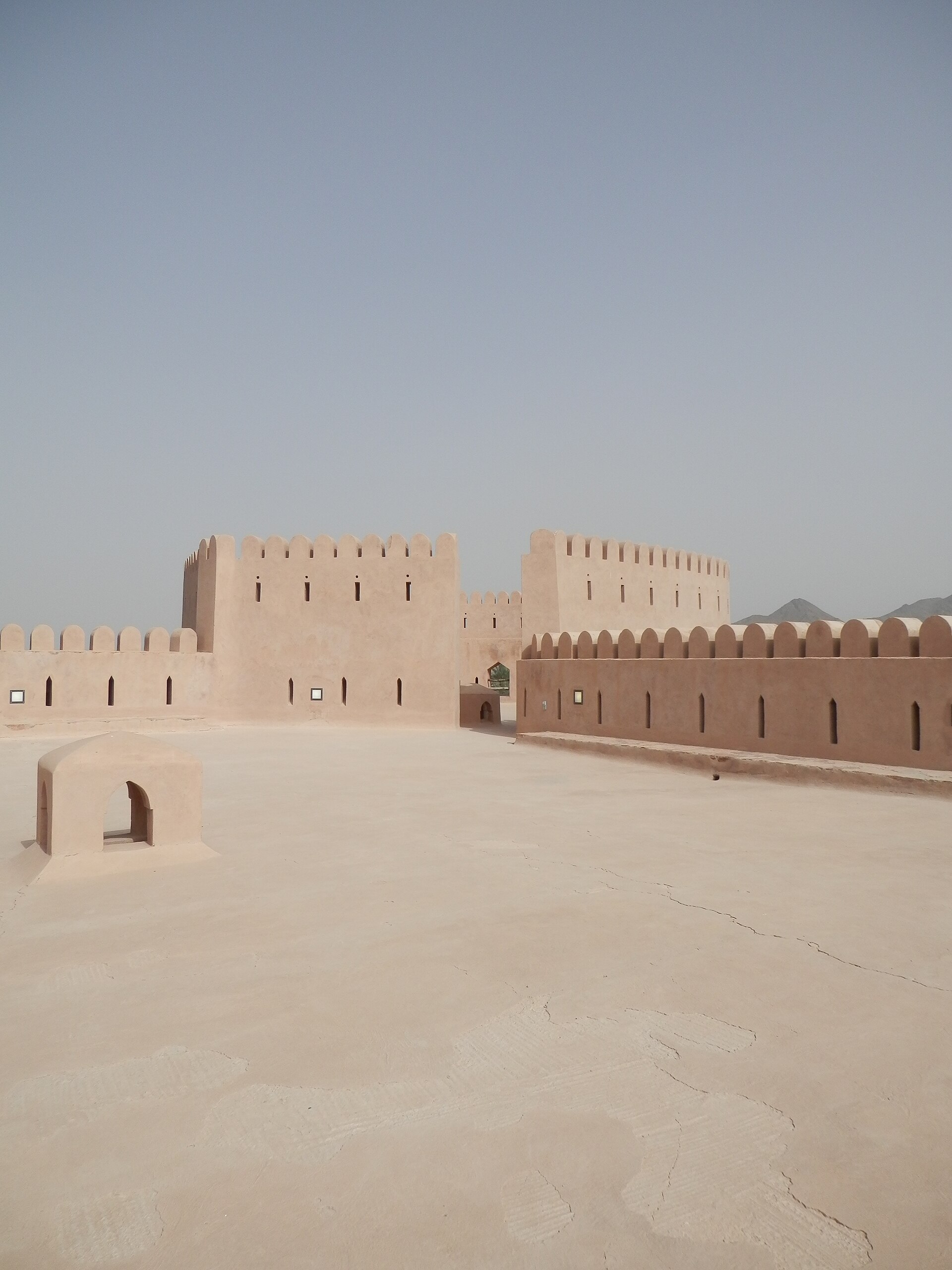
Just beyond the park stands Ar-Rustaq Fort, one of Oman’s most imposing fortresses. Its thick walls and towering battlements have watched over the town for centuries, a silent witness to the rise and fall of dynasties. From the top of the hill, the view stretches across palm groves and terraced fields, the landscape unfolding in layers of green and brown. Inside, the fort is a maze of courtyards, reception halls, and old prison cells, its stone walls telling stories of battles, trade, and the slow march of time. The fort and the park together offer a glimpse into the town’s past, when Ar-Rustaq was the capital of Oman under the Yaruba dynasty. In the 17th century, this was the heart of a kingdom that drove out the Portuguese and united the tribes, a center of learning and commerce where scholars and merchants gathered.
The old quarter of Ar-Rustaq still carries traces of that era. Narrow streets wind between mud-brick houses, their wooden doors carved with intricate patterns. Minarets rise above the rooftops, their call to prayer echoing across the town at dawn and dusk. The buildings here are built to last, their thick walls keeping out the heat of the day and the chill of the night. It’s a place where history isn’t just preserved in museums—it’s lived in, walked past every day.
The park’s design is simple, almost unassuming. There are no grand fountains or manicured gardens, just straight paths lined with benches and the occasional gazebo where people can sit and talk. The real magic lies in the falaj system, the network of channels that has carried water from the mountains for centuries. This ancient method of irrigation is a cornerstone of Omani life, a system so efficient that it has sustained communities through droughts and wars. The water flows steadily, dividing and subdividing until it reaches every corner of the park, nourishing the trees and keeping the air cool.
Ar-Rustaq is often called the gateway to the Hajar Mountains, and the park makes for a natural starting point for anyone heading into the highlands. Just beyond the town, the landscape shifts dramatically—dry riverbeds give way to steep gorges, and villages cling to the sides of cliffs, their terraced fields carved into the rock. The roads wind upward, passing through towns where time seems to have stood still. It’s a stark contrast to the quiet of the park, but one that feels natural, as if the town is simply taking a breath before the journey begins.
What makes Al-Rustaq Park special isn’t anything you’ll find in a guidebook. There are no grand monuments or famous landmarks, no crowds of tourists snapping photos. Instead, it’s the kind of place where you can sit on a bench and watch the light filter through the palm fronds, or listen to the rustle of leaves in the wind. It’s a reminder that sometimes the most memorable places aren’t the ones that shout for attention, but the ones that let you discover them at your own pace. In a country often defined by its dramatic landscapes and ancient forts, this little park offers something simpler: a moment of stillness in a town that has always known how to take its time.