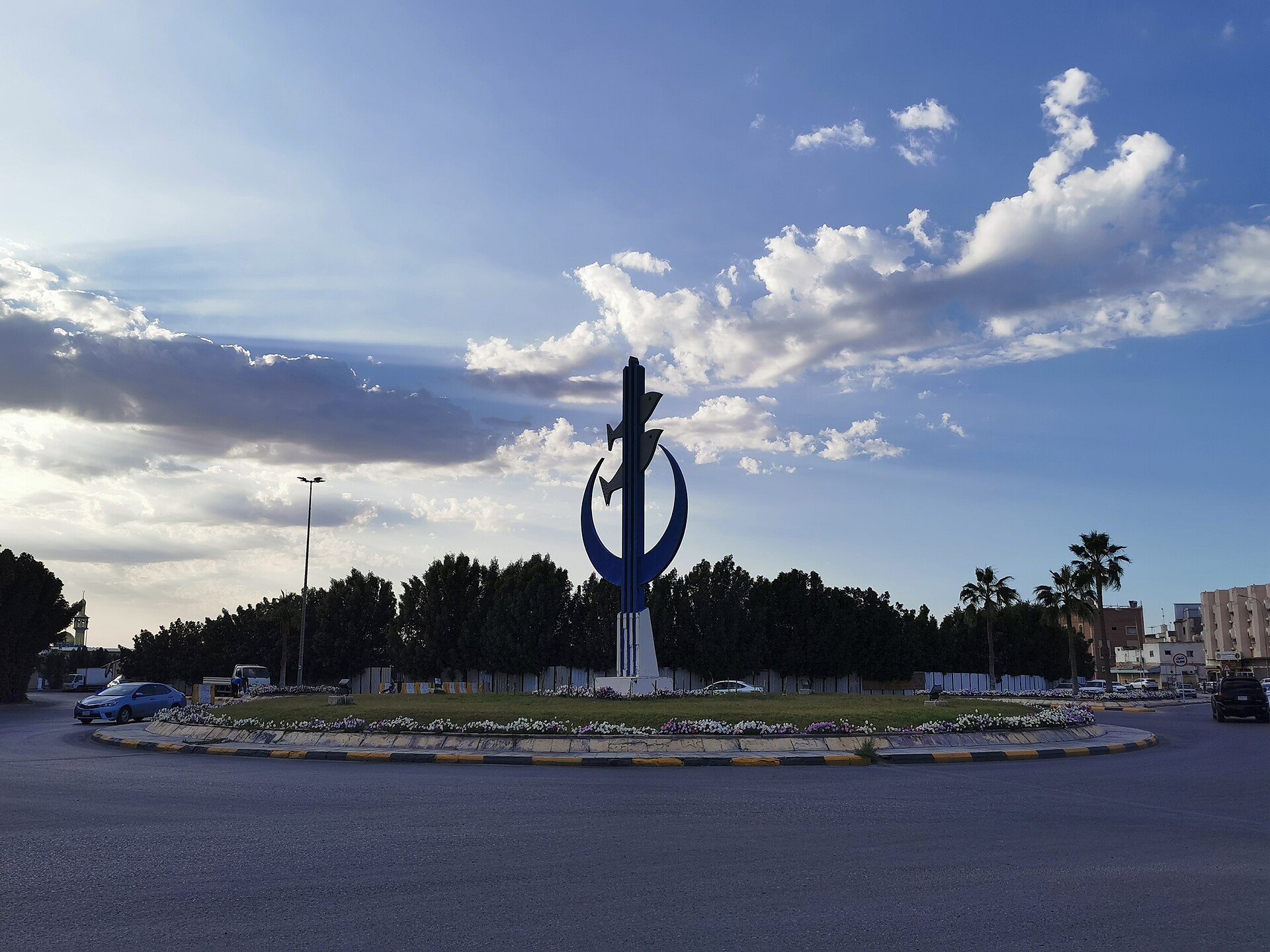
Tarut Island sits off Saudi Arabia’s Eastern Province, away from the country’s familiar skylines. People have lived here since the Bronze Age, trading dates, pearls, and spices between Mesopotamia and the Arabian Peninsula. The island’s shipbuilders once crafted vessels that crossed the Persian Gulf long before modern ports appeared. Today, the pace remains slow, as if history itself has settled into the land.
Al-Ahsa Park lies at the heart of this stillness.
Al-Ahsa is one of the world’s largest oases—a vast network of palm groves, springs, and fertile land that has sustained life in this desert for thousands of years. The park is a small, cared-for piece of that oasis, where sand gives way to shade and the sound of rustling fronds. The same trees that stand today once sheltered passing caravans.
The oasis covers nearly eight thousand square kilometers. Hundreds of natural springs feed the groves, allowing citrus trees, vegetables, and Al-Ahsa dates to grow. For centuries, this was a meeting point for travelers from the interior and those arriving by sea. Ancient texts mention its abundance, and poets celebrated it as proof of life’s persistence where water is rare. The park continues that tradition, offering a place to gather and remember the customs that shaped the region.
Al-Ahsa Park doesn’t announce itself. There are no grand monuments, just paths, ponds, and shaded spots that fit naturally into the surroundings. Stone benches, small bridges over streams, and wooden pergolas provide places to sit. The palm trees, some decades old, filter sunlight into shifting patterns on the ground. On weekends, locals come to escape the heat—children play on swings, while older generations sip cardamom coffee or mint tea from nearby cafes.
The design is quiet, almost unnoticed. Low stone walls line the paths, and wooden screens offer shade while letting the breeze through. In the evenings, lanterns cast warm light over the walkways, reflecting in the still water. Time feels different here, as if the park exists just beyond the reach of highways and high-rises.
Al-Ahsa is more than a destination. The oasis has inspired generations, appearing in folklore and poetry as a symbol of resilience and welcome. The park sometimes hosts local festivals celebrating the date harvest with music, food, and traditional crafts. You might see artisans working with palm leaves or preparing dishes handed down through families. These gatherings are small, personal—nothing like the crowds at bigger attractions. They show how life here remains tied to its roots.
For visitors, the park offers a different side of Saudi Arabia. No crowds, no tour buses. Instead, it feels like a place for the community, where life moves at the pace of the springs. In the mornings, elderly men play backgammon, their laughter mixing with birdsong. In the afternoons, children race along the paths. At sunset, the air fills with the scent of grilled meat and spices from nearby stalls, and the park takes on a festive mood.
What lingers after a visit is the sense of connection. The past isn’t locked away in museums—it lives in how people use the land and treat each other. The park doesn’t pretend to be anything more than a quiet corner of an ancient oasis, where shade, water, and company are enough. For those who want to see Saudi Arabia beyond its modern face, it’s a reminder that the most meaningful places aren’t always the loudest.