Great Znamyanka is a quiet village in southern Ukraine, where life moves at its own unhurried pace. There are no bustling avenues or towering buildings here, just endless steppes, winding streets, and people who carry their history with them. Among the village’s modest landmarks, the monument to Taras Shevchenko stands out—not as a mere statue, but as a place where past and present intersect, where poetry and memory become part of everyday life.
The monument wasn’t placed here by chance. This region has long been a crossroads of cultures, where Cossacks, farmers, and settlers from across Ukraine and Russia once lived side by side. For the people of Great Znamyanka, Shevchenko isn’t just a national symbol; he’s part of their own story. His verses about the hardships of peasant life and love for the land resonated deeply with those who knew struggle firsthand. The monument was erected as a tribute to a poet whose words gave strength in difficult times.
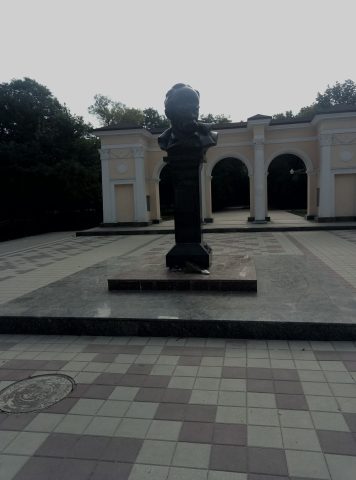
The sculpture follows the familiar style of Shevchenko monuments—he stands with his head bare, lost in thought, his long coat draped over his frame. His expression is serious, his gaze distant, as if contemplating the fate of his people. The statue isn’t grand in size, but that only makes it feel more intimate. Perched on a small hill, surrounded by trees, Shevchenko seems less like a visitor and more like a local, someone who might strike up a conversation with passersby in their own language.
Around the monument, a small park offers a place for villagers to relax. In summer, the shade of the trees keeps the area cool, while in autumn, fallen leaves rustle underfoot. Schoolchildren sometimes come here for literature lessons, reading Shevchenko’s poems aloud beneath the open sky. For them, it’s more than an assignment—it’s a chance to connect with history, to feel the thread that ties them to those who came before. Adults, too, visit the spot, sitting on benches to think, chat with neighbors, or simply enjoy the quiet.
The Shevchenko monument in Great Znamyanka is more than a tribute to a great poet; it’s a reminder that culture and art thrive beyond big cities. Here, far from the capital’s rush, people preserve the memory of those who shaped history. Shevchenko isn’t a museum piece to them—he’s a living voice, present in songs, conversations, and the quiet moments shared over tea. His words about freedom, justice, and love for one’s homeland still carry weight, especially in places where life moves slowly but deeply.
Great Znamyanka isn’t a place for tourist crowds or souvenir stands. The monument isn’t here for photos—it’s a spot for reflection. That’s why it fits so naturally into the landscape. It doesn’t demand attention, yet it’s impossible to ignore. It simply stands on its hill, a quiet testament to the idea that true culture doesn’t need grandeur to matter.
For visitors, the monument might prompt deeper thoughts. About how little it takes to find peace—a quiet corner where you can be alone with history. About how great figures don’t always come from great cities, and how their words find meaning in the most ordinary places. And about how memory isn’t just something kept in museums, but something that lives in people’s hearts, passed down through generations.
In winter, the monument takes on a particularly poignant air. Snow settles on Shevchenko’s shoulders and the branches around him, as if time itself has paused. Locals say the silence here is especially profound on such days, as if even the wind hesitates to disturb it. In summer, when the trees are lush and flowers bloom, the statue seems almost alive—surrounded by butterflies, birdsong, and the sense that the poet might smile at any moment.
Great Znamyanka isn’t a place for flashy experiences. That’s precisely why it lingers in the memory. Here, you can feel the weight of history without the noise of crowds. The Shevchenko monument is just one point on this invisible map of remembrance, but perhaps the most meaningful. It serves as a reminder that true culture knows no borders, and that great ideas aren’t born only in capitals, but in ordinary villages where people live simply, yet fully.