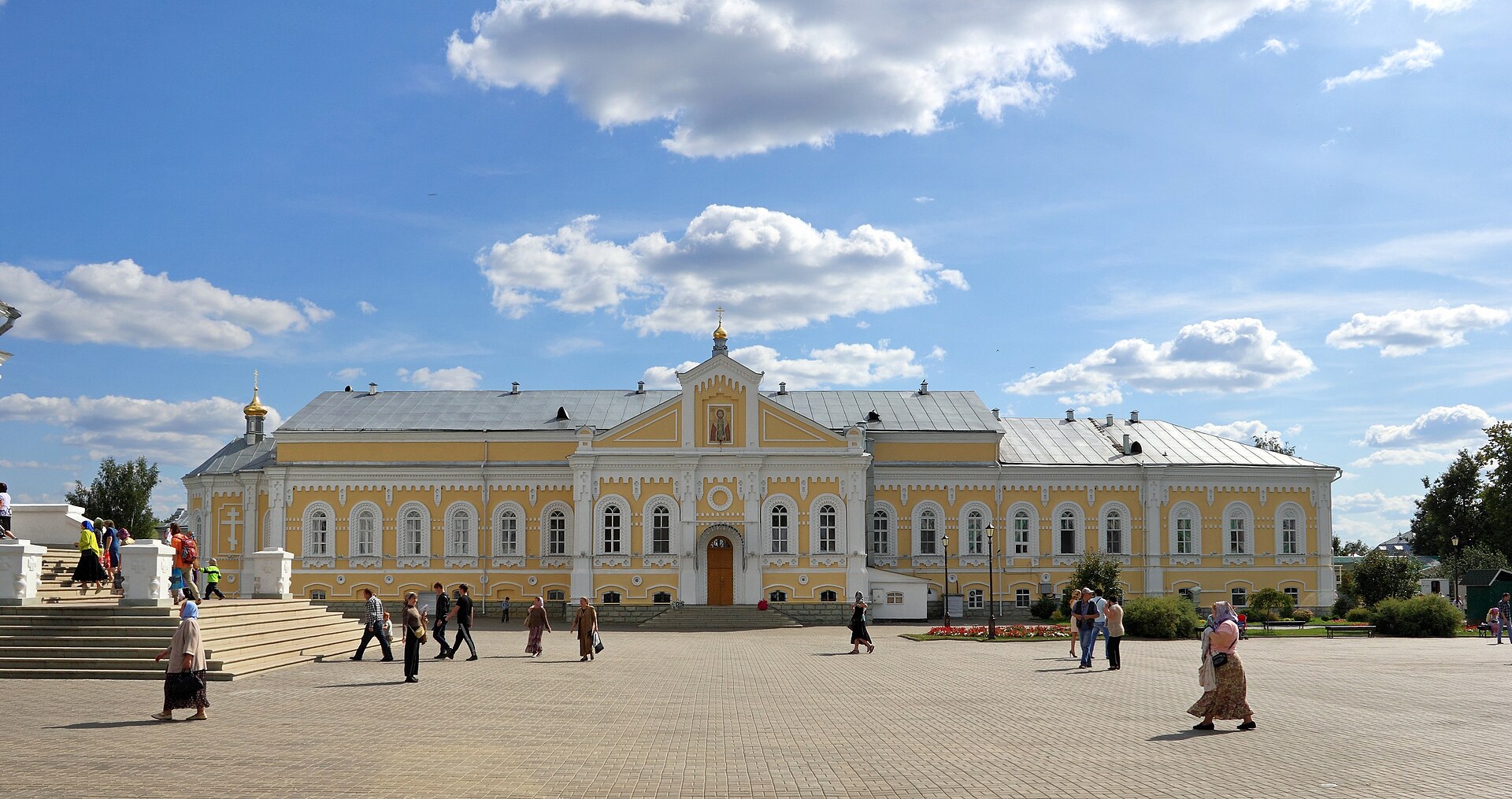
Diveyevo feels like a place where time slows down, where faith and history blend so seamlessly into everyday life that you sense it in the air, in the quiet rustle of leaves, in the way people move through the streets. This small village in Nizhny Novgorod region is home to one of Russia’s most revered Orthodox sites, the Serafimo-Diveyevo Monastery. But even beyond its walls, the presence of Saint Seraphim of Sarov lingers in subtle ways—like the monument standing in the heart of the village, a quiet tribute to a man whose life and teachings shaped this land.
Saint Seraphim lived in the late 18th and early 19th centuries, a time when Russia was still deeply rooted in its spiritual traditions. His life was one of devotion—years spent in prayer, solitude, and service to others. After his death in 1833, his remains were found incorrupt, a sign that only deepened the reverence surrounding him. He had foreseen the creation of a women’s monastery in Diveyevo, a vision that later became the sprawling complex that draws pilgrims today. The monument isn’t just a memorial; it’s a reminder of the bond between the saint and those who come here seeking solace, guidance, or simply a moment of reflection.
The statue captures Seraphim in a way that feels both timeless and intimate. He stands in his monastic robes, holding a staff, his expression gentle yet firm—a man who knew both the weight of faith and the lightness of grace. The sculpture avoids grand gestures, opting instead for a quiet realism that makes him feel approachable. Visitors gather around at all hours: some pause to pray, others study the details of the statue, and a few sit on the nearby benches, lost in thought or simply soaking in the atmosphere. There’s no rush here, no expectation—just the quiet hum of life unfolding at its own pace.
The monument stands in a small square near the center of Diveyevo, close enough to the monastery to feel connected yet far enough to have its own presence. The area around it is unassuming—old wooden houses, narrow streets, the occasional sound of church bells drifting through the air. Flowerbeds and trees soften the space, and in the evenings, lamplight casts a warm glow over the scene. It’s the kind of place that invites you to slow down, to look around, to notice the small things—the way the light filters through the leaves, the scent of grass after rain, the distant murmur of voices.
For many who visit, the monument is a stop on a longer journey. Pilgrims come not just for the monastery but to walk the same paths Seraphim once did, to feel the history that still lingers here. He was known for his kindness, his ability to listen, and his belief in the goodness of people. That spirit seems to linger in Diveyevo, in the way strangers nod to each other in passing, in the quiet conversations held by the monument. Some leave candles at its base, their flames flickering in the breeze; others stand in silence, as if waiting for an answer they can’t quite name.
The village itself is a place where the past feels alive. Many of the houses date back to the 19th century, their wooden facades weathered by time but still standing. The monastery’s buildings, with their traditional Russian architecture, blend seamlessly into the landscape, their golden domes catching the sunlight. The monument fits right in—it doesn’t feel like an addition but like something that has always been here, a natural part of the scenery. There’s a harmony to Diveyevo, a sense that everything, from the oldest church to the newest sapling, belongs.
This isn’t just a destination for the devout. Diveyevo offers something quieter, something harder to define—a sense of stepping outside the rush of modern life. The monument to Seraphim stands as a kind of anchor, a reminder that there are still places where time moves differently. For some, it’s a chance to connect with history; for others, a moment of peace in a busy world. And for a few, it’s simply a place to sit and think, to watch the clouds drift overhead without worrying about what comes next.
The seasons change the way the monument feels. In winter, snow dusts the statue’s shoulders, and the world around it turns soft and white. Spring brings blooming flowers, their colors bright against the muted tones of the village. Summer is lush and green, while autumn paints the trees in gold and amber. But no matter the time of year, the atmosphere remains the same—calm, unhurried, as if the village itself is breathing slowly. That’s why people return, year after year. Not for grand spectacles, but for the quiet certainty that some places, like some people, have a way of making you feel at home.
Diveyevo and its monument to Saint Seraphim aren’t just landmarks; they’re part of a living story. For some, this is a place of pilgrimage, a connection to something greater. For others, it’s a glimpse into Russia’s spiritual past, a chance to understand the traditions that have shaped the country. And for a few, it’s just a quiet corner of the world where the noise fades and the heart finds its rhythm again. Whatever brings you here, it’s hard to leave without feeling that you’ve touched something rare—a place where time, faith, and history come together in a way that lingers long after you’ve gone.